
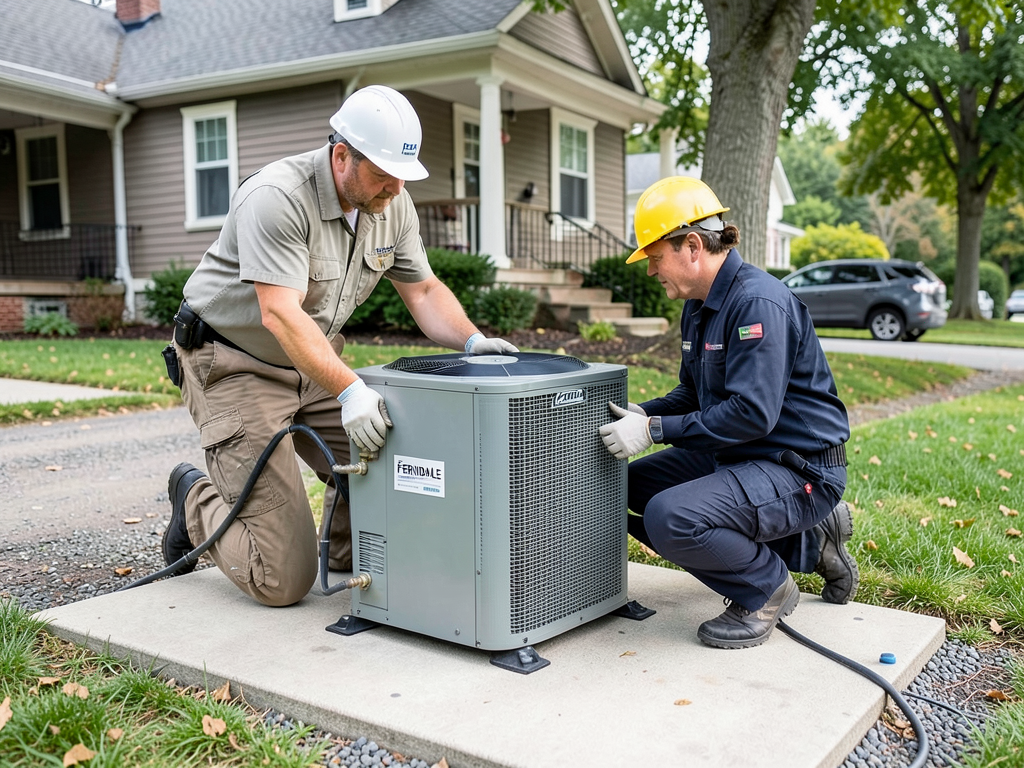
Why Switching From Window Units to Central Air is More Affordable Than You Think in Ferndale
Replacing window air conditioners with a central cooling system in Ferndale homes often costs less than homeowners expect once you factor in energy savings and available rebates. Many older Ferndale bungalows built in the 1920s and 1930s were designed without ductwork making the upgrade seem daunting. Modern installation techniques and Michigan energy incentives can reduce the total investment significantly. Michigan Mechanical Code.
The upfront cost for a complete central air system including equipment and installation typically ranges from $5,000 to $12,000 for homes under 2,000 square feet. This price covers the outdoor condensing unit indoor evaporator coil and basic modifications to accommodate the new system. The exact cost depends on your home’s layout electrical capacity and whether new ductwork is required. The Best Local AC Installation Specialists for Homeowners in Royal Oak.
Understanding the True Cost of Central Air Installation
Several factors influence the final price of switching from window units to central air. The size of your home plays a major role since larger spaces require more powerful equipment. A 1,500 square foot Ferndale bungalow might need a 2.5 to 3 ton system while a 2,500 square foot colonial could require 4 to 5 tons of cooling capacity.
Ductwork represents one of the biggest cost variables. Homes with existing forced-air heating systems can often reuse the ducts for cooling. If your home lacks ductwork installation costs increase substantially. New duct installation typically adds $2,000 to $4,000 to the project depending on the number of runs and complexity of routing through walls and ceilings.
Electrical upgrades sometimes become necessary when switching to central air. Most window units operate on standard 120-volt circuits but central systems require dedicated 240-volt circuits. Older Ferndale homes with 60 or 100-amp electrical service may need a panel upgrade to 200 amps which costs between $1,500 and $3,000. Why You Need a Dedicated Air Conditioning Repair Service in Birmingham Michigan.
Comparing Central Air Options for Older Ferndale Homes
Traditional central air systems work well for many Ferndale homes but three alternatives may better suit specific situations. High-velocity mini-duct systems use small flexible tubing that fits in tight wall cavities making them ideal for homes where conventional ductwork would be difficult to install. These systems cost 15 to 25 percent more than standard central air but avoid extensive demolition.
Ductless mini-split systems offer another option for homes without existing ductwork. These systems use individual air handlers in each room connected to an outdoor compressor. While more expensive per cooling zone than central air they provide excellent zone control and installation flexibility. A whole-house mini-split system typically costs $8,000 to $15,000.
Packaged terminal air conditioners represent a third option for additions or rooms where extending existing ductwork proves impractical. These through-the-wall units cost $2,000 to $4,000 installed per room and work well for finished basements or sunrooms.
Labor and Permitting Costs in Ferndale
Professional installation represents about 40 to 60 percent of the total project cost. Licensed HVAC contractors in Ferndale typically charge $75 to $125 per hour for installation work. A complete central air installation usually requires two to three days of labor for a crew of two to three technicians. Fast and Professional Boiler Repair Services in Corktown and Midtown Detroit.
Mechanical permits from the City of Ferndale cost approximately $150 to $300 depending on the project scope. The permit process ensures your installation meets Michigan Mechanical Code requirements and includes proper refrigerant handling and electrical connections. Some homeowners attempt DIY installation but this violates Michigan law and can create safety hazards.
Older Ferndale homes often present unique challenges during installation. Plaster walls require careful cutting to avoid cracking. Knob-and-tube wiring may need complete replacement before adding central air. These unexpected issues can add $500 to $2,000 to the project cost.
Energy Savings That Offset Installation Costs
Modern central air systems operate at 16 to 20 SEER efficiency ratings while window units typically achieve only 8 to 12 SEER. This efficiency difference translates to significant energy savings especially during Ferndale’s humid summers. A typical 2,000 square foot home switching from window units to central air can save $300 to $600 annually on cooling costs. Modern HVAC Solutions for Historic Grosse Pointe Homes (Without Ruining the Aesthetics).
SEER2 ratings now measure real-world efficiency more accurately than the old SEER standard. Equipment manufactured after January 1, 2023, must meet these updated efficiency requirements. Higher SEER2 ratings mean lower utility bills but also higher upfront equipment costs.
DTE Energy rates in Ferndale average 14 to 16 cents per kilowatt-hour making efficiency improvements particularly valuable. Running a central air system at 18 SEER2 costs significantly less than operating multiple window units that draw more power and create more heat inside your home. DTE Energy rebates.
Available Rebates and Tax Credits
Several programs help offset the cost of upgrading to central air. DTE Energy offers rebates of $50 to $300 for high-efficiency air conditioning equipment depending on the SEER2 rating. These rebates apply to both central air and mini-split systems installed by licensed contractors.
The federal Inflation Reduction Act provides tax credits of up to $600 for qualifying HVAC equipment installed in 2023 and 2024. These credits cover 30 percent of the equipment cost up to the maximum amount. Heat pumps qualify for even larger credits under the same program.
Wayne County occasionally offers additional energy efficiency rebates through its weatherization programs. These programs target low-to-moderate income homeowners and can cover 50 percent or more of installation costs for qualifying improvements. Wayne County weatherization programs.
” />
Impact on Home Value and Comfort
Central air conditioning significantly increases property value in Ferndale’s competitive real estate market. Homes with central air typically sell for 5 to 10 percent more than comparable homes with only window units. The investment often pays for itself through increased resale value and improved marketability.
Beyond financial considerations central air provides superior comfort compared to window units. Even cooling eliminates hot spots and cold spots throughout your home. Quieter operation means no more window rattling or nighttime noise disturbances. Better air filtration removes allergens and improves indoor air quality.
Modern programmable thermostats allow precise temperature control and scheduling. You can set different temperatures for different times of day reducing energy waste. Smart thermostats learn your preferences and adjust automatically for maximum efficiency.
Financing Options for Ferndale Homeowners
Several financing options make central air installation more affordable. Many HVAC contractors offer 12 to 60 month financing plans with competitive interest rates. These plans allow you to spread the cost over time while enjoying immediate comfort benefits.
Michigan Saves provides low-interest energy efficiency loans specifically for HVAC upgrades. These loans feature fixed rates and terms up to 10 years making monthly payments manageable. The program partners with local contractors to ensure quality installation.
Home equity loans or lines of credit offer another financing option with potentially lower interest rates. Since central air increases home value these improvements may qualify for favorable loan terms. Some lenders offer specific home improvement loans with quick approval processes.
Making the Right Choice for Your Ferndale Home
The best cooling solution depends on your home’s specific characteristics and your budget. Homes with existing ductwork and adequate electrical service benefit most from traditional central air systems. The lower installation complexity keeps costs down while providing reliable performance. How to Find Reliable Emergency Furnace Repair in Detroit Before the Next Deep Freeze.
Homes without ductwork but with open floor plans might prefer ductless mini-splits. These systems avoid the cost and disruption of installing new ducts while providing excellent cooling. The higher equipment cost often balances against lower installation expenses.
High-velocity systems work well for historic homes where preserving original architecture matters. The small ducts fit within existing wall cavities without major modifications. While more expensive these systems maintain your home’s character while adding modern comfort.
Call (313) 552-7177 today to schedule your inspection.
Installation Timeline and Process
A typical central air installation follows a predictable timeline. The initial consultation and estimate takes one to two hours. The contractor evaluates your home’s cooling needs electrical capacity and installation options. This visit includes measuring rooms calculating heat load and discussing equipment choices.
Equipment ordering and permit acquisition takes one to two weeks. Most contractors stock common equipment sizes but custom configurations may require longer lead times. Permit approval typically takes three to five business days in Ferndale.
Installation day requires full access to your home’s mechanical areas. The crew needs space to work around the furnace area and access to the exterior for the condenser unit. Installation typically takes one to two days depending on complexity.
Final inspection and testing ensures proper operation. The contractor verifies refrigerant charge airflow and thermostat function. They also demonstrate system operation and answer questions about maintenance and operation.
Maintenance Considerations
Central air systems require annual maintenance to maintain efficiency and prevent breakdowns. Professional tune-ups cost $100 to $200 and include cleaning coils checking refrigerant levels and testing electrical components. Regular maintenance extends system life and prevents costly repairs.
Air filter replacement represents the most important homeowner maintenance task. Standard filters need replacement every one to three months depending on usage and household conditions. High-efficiency filters may last longer but cost more initially.
Seasonal preparation helps ensure reliable operation. Before summer begins clear debris from around the outdoor unit and verify proper drainage. Check thermostat batteries and test system operation when temperatures first warm up.
Common Installation Challenges
Several issues commonly arise during central air installation in Ferndale homes. Limited outdoor space may restrict condenser unit placement. Local codes require specific clearances from property lines and neighboring structures. Condenser units need solid pads with proper drainage.
Older homes often have inadequate return air pathways. Adding central air without addressing return air flow can create pressure imbalances and reduced efficiency. Additional return vents or duct modifications may be necessary.
Noise concerns affect some installations. Proper equipment selection and mounting techniques minimize operational noise. Vibration isolation pads and sound barriers help reduce noise transmission to living spaces.
Weather delays occasionally impact outdoor installation work. Most contractors monitor forecasts and schedule accordingly but Michigan’s unpredictable spring weather can cause delays. Indoor work continues during weather delays minimizing overall project impact.
Energy Efficiency Best Practices
Maximizing your central air system’s efficiency starts with proper sizing. Oversized units short cycle reducing efficiency and comfort. Undersized units run constantly struggling to cool your home. Professional load calculations ensure proper equipment selection.
Programmable thermostats optimize energy use by adjusting temperatures when you’re asleep or away. Setting back temperatures 7 to 10 degrees for eight hours daily can reduce cooling costs by 10 percent or more.
Proper home insulation and air sealing complement your cooling system. Reducing heat gain through windows walls and attics decreases cooling load allowing your system to operate more efficiently.
Regular maintenance keeps your system operating at peak efficiency. Clean coils improved airflow and proper refrigerant charge can reduce energy consumption by 5 to 15 percent compared to neglected systems.
Comparing Operating Costs
Window units typically cost $50 to $150 per month to operate during peak summer months. A whole-house central air system might cost $100 to $250 monthly but provides cooling for your entire home rather than individual rooms.
Energy consumption varies significantly based on usage patterns home size and equipment efficiency. A 2,000 square foot home might use 1,000 to 2,000 kilowatt-hours monthly for cooling depending on these factors.
Time-of-use electricity rates can affect operating costs. DTE Energy offers optional time-of-use rates that charge more during peak hours. Smart thermostats can help manage usage during expensive rate periods.
Humidity control represents an often-overlooked benefit of central air. Window units remove some moisture but central systems provide superior dehumidification improving comfort and preventing mold growth.
Frequently Asked Questions
How long does a central air installation take?
Most installations require one to three days depending on project complexity. Simple replacements might finish in a single day while new installations with ductwork can take three days or longer.
Can I keep my existing furnace when adding central air?
Yes if your furnace is in good condition and properly sized. The indoor coil mounts to your existing furnace and shares the blower and ductwork. However very old furnaces may benefit from replacement to ensure compatibility and efficiency.
What size central air system do I need?
System size depends on your home’s square footage insulation quality and local climate. A professional load calculation considers all these factors. Guessing at size often leads to poor performance and wasted energy.
Are there any tax incentives for central air installation?
Yes federal tax credits up to $600 apply to qualifying high-efficiency equipment. DTE Energy also offers rebates of $50 to $300 for qualifying systems. These incentives can significantly reduce your net cost.
How often should I replace my central air system?
Most central air systems last 15 to 20 years with proper maintenance. However efficiency improvements in newer equipment often justify replacement after 12 to 15 years even if the old system still works.
Will central air work with my existing ductwork?
If you have forced-air heating yes the same ducts can distribute cool air. The contractor will evaluate your existing ductwork for proper sizing and condition. Some modifications may be necessary for optimal performance.
What maintenance does central air require?
Annual professional maintenance plus regular filter changes constitute the main requirements. The outdoor unit needs occasional cleaning and the condensate drain line requires periodic inspection to prevent clogs.
Can I install central air myself?
DIY installation violates Michigan mechanical codes and can create safety hazards. Central air installation requires EPA certification for refrigerant handling electrical expertise and knowledge of mechanical codes. Professional installation ensures safety and warranty protection.
Pick up the phone and call (313) 552-7177 before the next storm hits.