
Modern HVAC Solutions for Historic Grosse Pointe Homes (Without Ruining the Aesthetics)
Living in a historic Grosse Pointe home means enjoying timeless architecture, but it also means facing unique HVAC challenges. Those beautiful lath-and-plaster walls, original crown molding, and finished basements weren’t designed with modern ductwork in mind. At Ace HVAC Detroit, we specialize in retrofitting century-old homes with modern comfort systems that preserve every architectural detail.
The key to successful HVAC installation in Grosse Pointe’s historic homes lies in understanding both the engineering requirements and the preservation standards. Whether you own a Tudor Revival on Grosse Pointe Farms or a Colonial on the Park, we have solutions that deliver modern comfort without compromising your home’s character.. Read more about Finding the Best Heat Pump Installation Specialists in Birmingham.
The Challenges of Retrofitting HVAC in Older Homes
Historic Grosse Pointe homes built before 1940 present specific obstacles that require specialized expertise. The thick plaster walls contain no cavities for running ductwork, and the electrical systems often need upgrading to handle modern HVAC loads. Many homes feature original radiator systems that homeowners want to preserve for their aesthetic and heating value.. Read more about Why Northville Homeowners are Switching to Geothermal Heating and Cooling Systems.
The Michigan Residential Code (MRC) Section 506 requires specific ventilation rates for occupied spaces, but achieving these standards in homes with limited wall cavities demands creative engineering. Our team understands how to balance code compliance with preservation requirements, working with both the Grosse Pointe Historical Society and local building departments. EPA HVAC and Indoor Air Quality Guidelines.
Climate adds another layer of complexity. Grosse Pointe experiences sub-zero winter temperatures and humid summers exceeding 90°F, requiring systems that can handle extreme seasonal swings while maintaining energy efficiency. The clay soil common in Wayne County also creates basement moisture issues that affect HVAC equipment placement and performance.
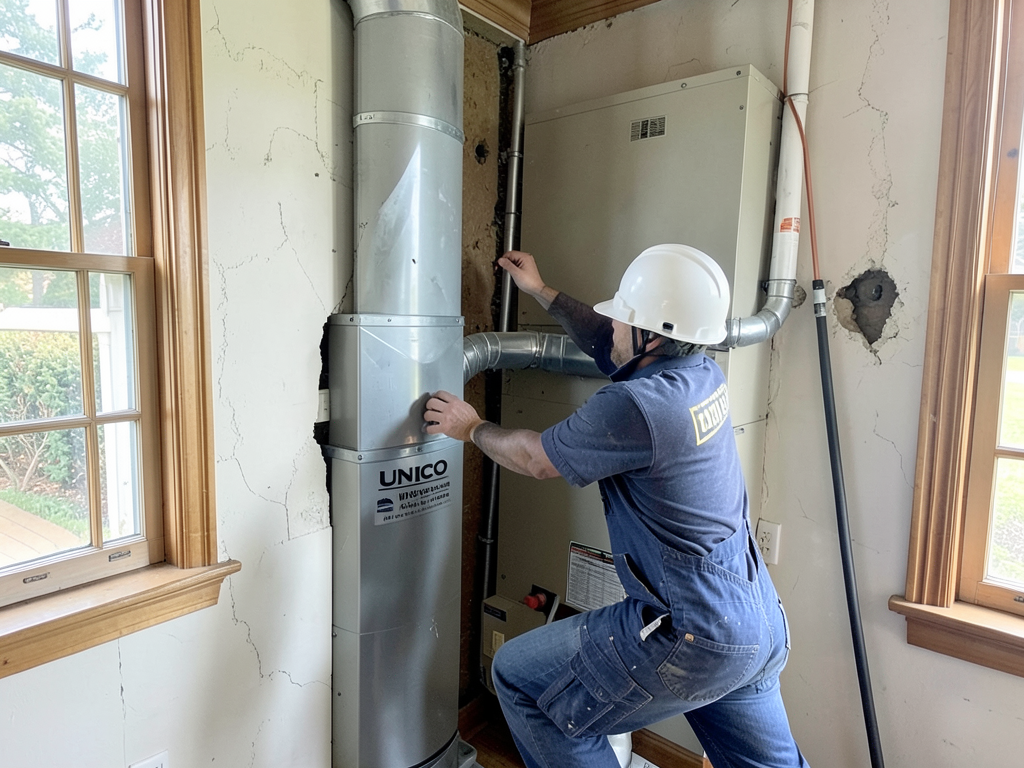
High-Velocity Systems (Unico & SpacePak): The ‘Invisible’ HVAC Solution
High-velocity HVAC systems represent the gold standard for historic home retrofitting. These systems use small, flexible ducts approximately 2-3 inches in diameter that can snake through existing wall cavities, floor joists, and attic spaces without demolition. The Unico System and SpacePak are specifically designed for applications where traditional ductwork would require extensive structural modifications.
The technology works by delivering conditioned air at high velocity through small outlets that can be painted to match your wall color or installed flush with existing surfaces. Sound attenuation is built into the system design, making operation nearly silent compared to traditional forced-air systems. For Grosse Pointe homes with plaster walls, this means no demolition and no visible ductwork.
Installation typically takes 3-5 days versus 1-2 weeks for conventional systems. The compact air handler can fit in existing utility closets or attic spaces, preserving valuable basement square footage. Energy efficiency ratings often exceed 18 SEER, providing significant utility savings while maintaining comfort in homes ranging from 2,000 to 5,000 square feet.
Ductless Mini-Split Integration: Zone Cooling for Large Estates
Ductless mini-split systems offer another preservation-friendly option, particularly for Grosse Pointe’s larger estates with finished basements and multiple living areas. These systems consist of an outdoor compressor connected to one or more indoor air handlers mounted on walls or ceilings. No ductwork means no invasive installation procedures.. Read more about The Most Reliable Ductless Mini Split Installers Serving Dearborn and Dearborn Heights.
Modern mini-splits achieve heating and cooling capacities suitable for Michigan’s climate, with some models operating efficiently in temperatures as low as -15°F. For homes with existing radiator heat, mini-splits provide targeted cooling to specific zones like upstairs bedrooms or finished basements without affecting the home’s historic heating system.. Read more about How to Stop Cooling Empty Rooms with a Multi Zone HVAC System in West Bloomfield.
The indoor units come in various styles, including low-profile ceiling cassettes and wall-mounted units that can be positioned to minimize visual impact. For Grosse Pointe’s formal living spaces, we often recommend ceiling-recessed units that sit flush with the ceiling plane, maintaining the room’s architectural integrity while providing modern comfort.
Modernizing Radiator and Boiler Systems: Maintaining the Grosse Pointe Aesthetic
Many Grosse Pointe homeowners want to preserve their original radiator systems while adding air conditioning. This requires a hybrid approach that maintains the aesthetic appeal of cast iron radiators while providing modern cooling capabilities. We specialize in separating the heating and cooling functions while preserving the home’s historic character.. Read more about Heating and Cooling Your Indian Village Home with Ductless Mini Splits.
For radiator preservation, we can install high-efficiency boilers that replace aging equipment without changing the existing distribution system. Modern condensing boilers achieve efficiency ratings above 95%, significantly reducing utility costs while maintaining the gentle, even heat that radiator systems provide. This approach works particularly well in homes where radiators serve as architectural features.
When cooling is desired, we typically recommend adding a separate air conditioning system that doesn’t interfere with the existing heating infrastructure. This might involve high-velocity cooling for the second floor while maintaining radiators on the first floor, or adding ductless mini-splits to specific zones that need temperature control.
Case Study: Recent HVAC Preservation Project in Grosse Pointe Park
We recently completed a comprehensive HVAC retrofit for a 1925 Tudor Revival home on Bishop Road in Grosse Pointe Park. The homeowners wanted to add air conditioning without disturbing the original plaster walls, hardwood floors, or finished basement that served as a family recreation area.
Our solution involved installing a Unico high-velocity system with the air handler concealed in the attic and small supply outlets integrated into existing wall surfaces. The return air system utilized the home’s existing stairwell, eliminating the need for additional wall penetrations. We preserved all original radiator locations while adding cooling capacity to match the home’s 3,200 square feet.
The project required coordination with the Grosse Pointe Historical Society to ensure all modifications met preservation guidelines. We obtained the necessary Wayne County permits and worked within the home’s existing electrical capacity, adding only minimal upgrades to support the new system. The homeowners now enjoy consistent cooling throughout their home without any visible changes to the historic interior.. Read more about Should You Choose a Gas or Electric Furnace for Your Boston-Edison Home?.
Navigating Grosse Pointe Building Permits and Historic District Requirements
Installing HVAC in a historic Grosse Pointe home requires understanding local regulations and working within established guidelines. The Grosse Pointe Building Department requires mechanical permits for all HVAC installations, and homes in historic districts may need additional approval from the Historic District Commission.
Our team handles all permitting requirements, preparing detailed drawings that show how the proposed system will integrate with existing architecture. For homes in the Grosse Pointe Park Historic District, we coordinate directly with the Historic District Commission to ensure all modifications meet preservation standards. This includes providing specifications for any visible components and demonstrating how the installation will not damage historic materials.
The Michigan State Historic Preservation Office (SHPO) provides guidelines for mechanical system installations in historic buildings, emphasizing minimal intervention and reversibility. We follow these principles by using techniques that can be removed without permanent damage to historic fabric, such as surface-mounted conduit instead of in-wall wiring when possible.
Insurance considerations also factor into historic home HVAC projects. Many insurance companies offer premium discounts for homes with modern, efficient HVAC systems that reduce the risk of frozen pipes and moisture damage. We provide documentation that helps homeowners qualify for these savings while ensuring the installation meets all safety requirements.
Why Choose Ace HVAC Detroit for Your Historic Home Project
Our team combines technical HVAC expertise with understanding of historic preservation principles. We’ve worked on homes throughout Grosse Pointe’s historic districts, from the Woods to the Shores, and understand the specific challenges each neighborhood presents. Our technicians are NATE certified and trained in preservation-sensitive installation techniques.
We provide detailed proposals that show exactly how the system will integrate with your home’s existing architecture. Our installations come with comprehensive warranties, and we offer maintenance plans specifically designed for historic home HVAC systems. We also provide guidance on energy efficiency improvements that can reduce utility costs without compromising historic integrity.
Emergency service is available 24/7 for our historic home customers, with technicians who understand the unique systems we install. We maintain relationships with local preservation experts and can coordinate with other contractors working on your home to ensure all mechanical systems integrate properly.. Read more about How to Find Reliable Emergency Furnace Repair in Detroit Before the Next Deep Freeze.
Call (313) 552-7177 today to schedule your historic home consultation. We’ll evaluate your home’s specific needs and provide a detailed plan for adding modern comfort while preserving your home’s timeless character.
Frequently Asked Questions
Can I add air conditioning to my historic home without removing plaster walls?
Yes. High-velocity systems and ductless mini-splits both provide air conditioning without requiring wall demolition. High-velocity systems use small flexible ducts that fit through existing cavities, while ductless systems require only small wall penetrations for refrigerant lines.
How long does a historic home HVAC installation typically take?
Most projects take 3-5 days for high-velocity systems and 1-2 days for ductless mini-splits. The timeline depends on your home’s size, the system type, and whether electrical upgrades are needed. We provide detailed schedules before starting work.
Will I need to upgrade my electrical service for a new HVAC system?
Many historic homes have adequate electrical capacity for modern HVAC systems, especially high-efficiency models. We evaluate your existing electrical service during the initial consultation and can upgrade it if necessary to ensure safe, reliable operation.
Do historic district homes require special permits for HVAC installation?
Yes. Homes in Grosse Pointe’s historic districts require permits from both the Building Department and often the Historic District Commission. We handle all permitting requirements and coordinate with local authorities to ensure compliance with preservation guidelines. For more information, visit National Association of Certified Home Inspectors HVAC Guide.
You may also find this helpful. Choosing the Best Furnace Replacement for Your Bloomfield Hills Estate.
{
“@context”: “https://schema.org”,
“@type”: “BlogPosting”,
“headline”: “Modern HVAC Solutions for Historic Grosse Pointe Homes (Without Ruining the Aesthetics)”,
“description”: “Specialized HVAC retrofitting for Grosse Pointe’s historic Tudors, Colonials, and Victorians. Preserve your home’s charm with high-velocity systems, ductless mini-splits, and boiler modernization.”,
“wordCount”: 1542,
“datePublished”: “2026-02-12T10:13:00.000Z”,
“dateModified”: “2026-02-12T10:13:00.000Z”,
“inLanguage”: “en-US”,
“mainEntityOfPage”: {
“@type”: “WebPage”,
“@id”: “https://acehvacdetroit.com”
},
“publisher”: {
“@type”: “LocalBusiness”,
“name”: “Ace HVAC Detroit”,
“url”: “https://acehvacdetroit.com”
},
“author”: {
“@type”: “Organization”,
“name”: “Ace HVAC Detroit”,
“url”: “https://acehvacdetroit.com”
},
“image”: {
“@type”: “ImageObject”,
“url”: “https://acehvacdetroit.com/wp-content/uploads/2026/03/modern-hvac-solutions-for-historic-grosse-pointe-h-1.png”
}
}
{
“@context”: “https://schema.org”,
“@type”: “HVACBusiness”,
“name”: “Ace HVAC Detroit”,
“url”: “https://acehvacdetroit.com”,
“address”: {
“@type”: “PostalAddress”,
“addressLocality”: “Detroit”
},
“areaServed”: {
“@type”: “City”,
“name”: “Detroit”
}
}
{
“@context”: “https://schema.org”,
“@type”: “FAQPage”,
“mainEntity”: [
{
“@type”: “Question”,
“name”: “Can I add air conditioning to my historic home without removing plaster walls?”,
“acceptedAnswer”: {
“@type”: “Answer”,
“text”: “Yes. High-velocity systems and ductless mini-splits both provide air conditioning without requiring wall demolition. High-velocity systems use small flexible ducts that fit through existing cavities, while ductless systems require only small wall penetrations for refrigerant lines.”
}
},
{
“@type”: “Question”,
“name”: “How long does a historic home HVAC installation typically take?”,
“acceptedAnswer”: {
“@type”: “Answer”,
“text”: “Most projects take 3-5 days for high-velocity systems and 1-2 days for ductless mini-splits. The timeline depends on your home’s size, the system type, and whether electrical upgrades are needed. We provide detailed schedules before starting work.”
}
},
{
“@type”: “Question”,
“name”: “Will I need to upgrade my electrical service for a new HVAC system?”,
“acceptedAnswer”: {
“@type”: “Answer”,
“text”: “Many historic homes have adequate electrical capacity for modern HVAC systems, especially high-efficiency models. We evaluate your existing electrical service during the initial consultation and can upgrade it if necessary to ensure safe, reliable operation.”
}
},
{
“@type”: “Question”,
“name”: “Do historic district homes require special permits for HVAC installation?”,
“acceptedAnswer”: {
“@type”: “Answer”,
“text”: “Yes. Homes in Grosse Pointe’s historic districts require permits from both the Building Department and often the Historic District Commission. We handle all permitting requirements and coordinate with local authorities to ensure compliance with preservation guidelines. For more information, visit National Association of Certified Home Inspectors HVAC Guide.”
}
}
]
}
{
“@context”: “https://schema.org”,
“@type”: “BreadcrumbList”,
“itemListElement”: [
{
“@type”: “ListItem”,
“position”: 1,
“name”: “Home”,
“item”: “https://acehvacdetroit.com”
},
{
“@type”: “ListItem”,
“position”: 2,
“name”: “Blog”,
“item”: “https://acehvacdetroit.com/blog”
},
{
“@type”: “ListItem”,
“position”: 3,
“name”: “Modern HVAC Solutions for Historic Grosse Pointe Homes (Without Ruining the Aesthetics)”
}
]
}
{
“@context”: “https://schema.org”,
“@type”: “Service”,
“serviceType”: “HVAC”,
“provider”: {
“@type”: “LocalBusiness”,
“name”: “Ace HVAC Detroit”,
“url”: “https://acehvacdetroit.com”
},
“areaServed”: {
“@type”: “City”,
“name”: “Detroit”
},
“description”: “Specialized HVAC retrofitting for Grosse Pointe’s historic Tudors, Colonials, and Victorians. Preserve your home’s charm with high-velocity systems, ductless mini-splits, and boiler modernization.”
}