Menu

Iced Up Evaporator Coil in Detroit – Expert Diagnosis and Permanent Fixes

When your air conditioner coil freezes up, you need technicians who understand Detroit's humidity swings and aging infrastructure. We identify the root cause and restore proper airflow fast.

Slider Image 1
Slider Image 2
Slider Image 3
Slider Image 4
Slider Image 5
Slider Image 7
Slider Image 8
Slider Image 9
Slider Image 10
Slider Image 11

Why Detroit AC Systems Ice Over During Summer

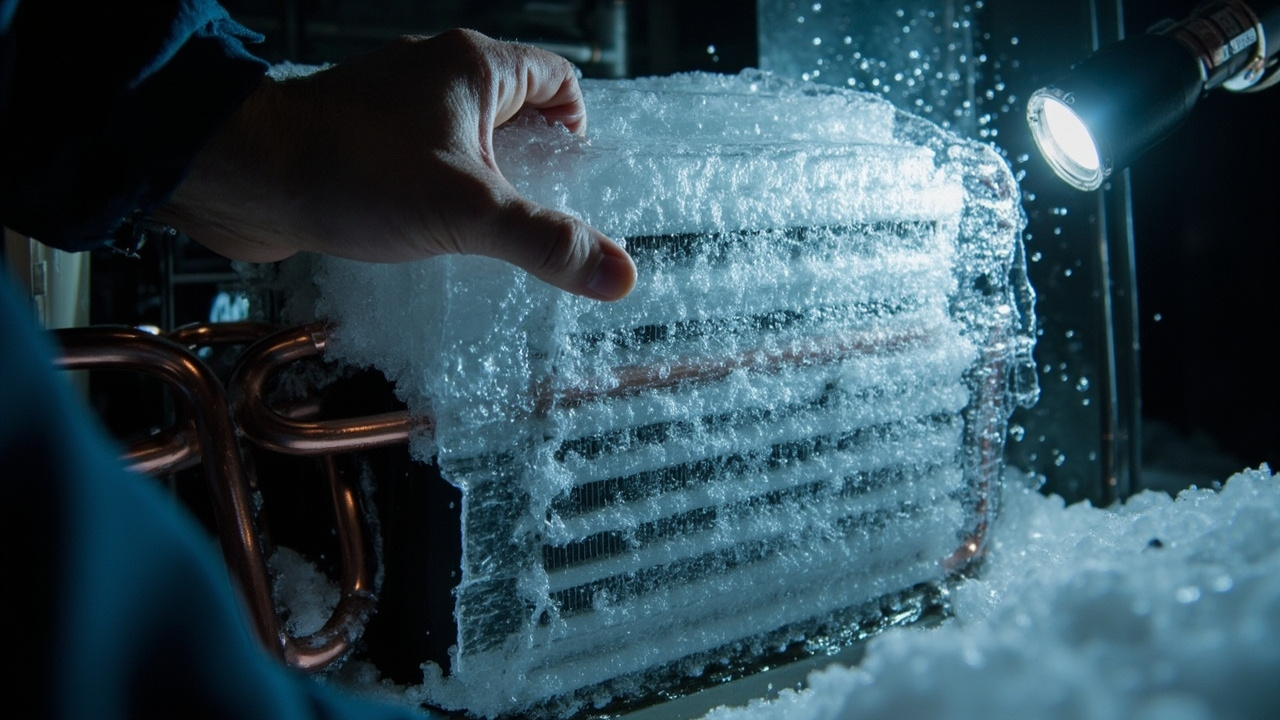
You walk downstairs on a humid July afternoon, and your AC is blowing warm air. You check the unit and see a block of ice coating the evaporator coil. This is not normal, and it is not random.

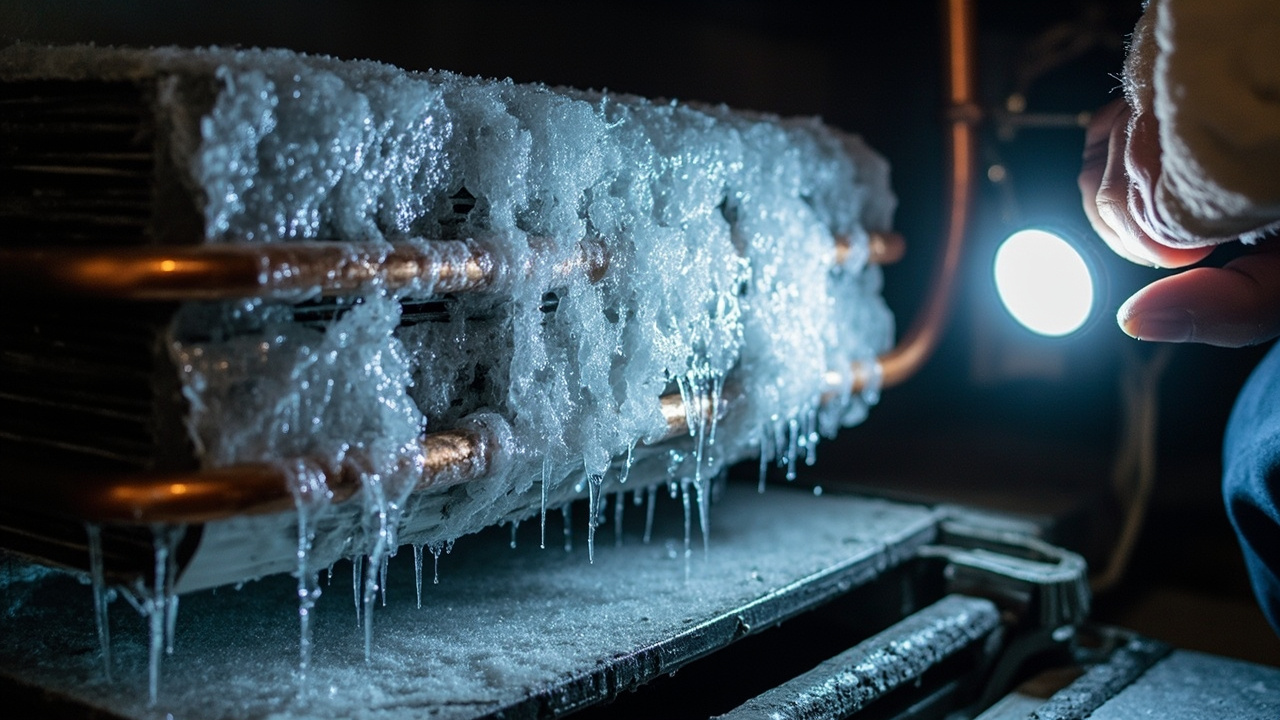
Detroit's climate creates the perfect storm for frozen cooling coils. Summer humidity levels routinely hit 70 to 80 percent. When refrigerant flow becomes restricted or airflow drops, condensation on the evaporator coil freezes instead of draining. The ice builds layer by layer until the coil becomes a solid block.

Older homes in neighborhoods like Corktown and Indian Village often have undersized ductwork or failing insulation. This forces the system to work harder, which accelerates coil icing. Dirty filters are the number one cause, but refrigerant leaks, blower motor failures, and clogged drain lines also trigger the freeze.

An iced over evaporator coil is not just an inconvenience. It is a symptom of a deeper failure in the refrigeration cycle. If you keep running the system, you risk compressor burnout, which turns a $200 repair into a $2,500 replacement.

Detroit homes built before 1980 often have original ductwork with decades of dust buildup. This restricts return airflow and drops the coil temperature below freezing. The air conditioner coil freezing up is the system telling you it cannot breathe. When you see ice on the evaporator coil, shut the system down and call a technician. Running it frozen will not cool your home, and it will damage the compressor.

Why Detroit AC Systems Ice Over During Summer
How We Fix a Frozen AC Evaporator Coil the Right Way

How We Fix a Frozen AC Evaporator Coil the Right Way

We do not just thaw the ice and send you a bill. That fixes nothing. A frozen ac evaporator coil is a diagnostic flag, and we treat it that way.

First, we shut down the system and let the coil thaw completely. Forcing warm air over ice creates water damage and does not address the underlying cause. While the coil defrosts, we inspect the air filter, blower motor, capacitor, and ductwork for airflow restrictions.

Next, we check refrigerant levels with manifold gauges. Low refrigerant means a leak somewhere in the system. We use electronic leak detectors and UV dye to find the breach, repair it, and recharge the system to manufacturer specifications. Guessing at refrigerant levels leads to inefficient cooling and repeat freeze-ups.

We also inspect the evaporator drain pan and condensate line. A clogged drain causes water to back up and freeze on the coil. Detroit's hard water leaves mineral deposits that block drain lines over time. We flush the line with a wet-dry vacuum and treat it with algaecide tablets to prevent future clogs.

Blower motor issues are common in systems over 10 years old. A failing motor cannot move enough air across the coil, which drops the temperature and triggers icing. We test the motor with an amp meter and replace it if the draw is out of spec.

After repairs, we run the system through a full cooling cycle and monitor coil temperature with an infrared thermometer. We verify the temperature differential between supply and return air is within the 15 to 20 degree range. If it is not, we dig deeper.

What Happens When You Call Us for Coil Icing

Iced Up Evaporator Coil in Detroit – Expert Diagnosis and Permanent Fixes
01

Emergency Shutdown and Diagnosis

We arrive within two hours and immediately shut down the system to prevent compressor damage. While the frozen cooling coils thaw naturally, we inspect the air filter, blower assembly, and ductwork. We use airflow meters to measure CFM at each register and identify restrictions that caused the freeze.
02

Refrigerant and Component Testing

We connect manifold gauges to check subcooling and superheat levels. Low refrigerant triggers a full leak inspection using electronic detectors and UV dye. We test the blower motor capacitor, measure amp draw, and inspect the condensate drain line for blockages. Every component that affects airflow or refrigerant pressure gets checked.
03

Repair and System Verification

After fixing the root cause, whether it is a refrigerant leak, bad capacitor, or clogged drain, we cycle the system and monitor coil temperature for 30 minutes. We verify the temperature split between supply and return air is correct and check that no ice reforms. You get a written report of what failed and what we fixed.

Why Detroit Homeowners Trust Ace HVAC for Coil Icing Issues

Detroit's HVAC challenges are not the same as the suburbs. Homes in Midtown and Eastern Market have forced-air systems installed in the 1960s and 1970s. These systems were not designed for today's humidity levels or the efficiency standards of modern refrigerants.

We have diagnosed frozen evaporator coils in every type of Detroit home, from brick bungalows in Bagley to high-rises downtown. We know which systems are prone to airflow issues and which brands have weak capacitors. This local knowledge saves you time and prevents repeat service calls.

Most HVAC companies will tell you the filter was dirty and charge you a diagnostic fee. We go deeper. We check the ductwork for leaks, the blower wheel for buildup, and the metering device for restriction. A frozen coil is never just a dirty filter, especially in homes with older ductwork.

Detroit's hard water is another factor most technicians ignore. Mineral buildup in the condensate drain pan creates a dam that forces water back onto the coil. We flush the drain line and treat it with tablets that prevent algae and mineral deposits. This is standard procedure for us, not an upsell.

We also understand Detroit's summer humidity patterns. When outdoor dew points hit 70 degrees, your AC works overtime to remove moisture. If the system is even slightly low on refrigerant or restricted on airflow, the coil will ice over. We size our repairs to handle peak humidity days, not just average conditions.

You will not get a one-size-fits-all diagnosis from Ace HVAC Detroit. We fix the actual problem.

What You Get When You Hire Us for Frozen Coil Repair

Same-Day Emergency Response

A frozen evaporator coil is an emergency because running the system frozen will destroy the compressor. We dispatch a technician within two hours of your call. You will get a text with the technician's name, photo, and estimated arrival time. We do not make you wait three days for an appointment while your home heats up.

Complete System Diagnostics

We do not just fix the symptom. We test airflow with a manometer, check refrigerant charge with manifold gauges, and inspect the blower motor with an amp meter. You get a written diagnostic report that explains what failed, why it failed, and what we did to fix it. No guessing, no upselling, no return trips.

Permanent Repairs, Not Band-Aids

If the coil froze because of a refrigerant leak, we find the leak, repair it, and recharge the system to factory specifications. If it froze because of a failing blower motor, we replace the motor and capacitor. We fix the root cause so the problem does not come back next week. You pay once for a permanent solution.

Follow-Up and Prevention Plan

After the repair, we schedule a follow-up check within 30 days to verify the system is running clean. We also provide a maintenance plan that includes seasonal filter changes, drain line treatments, and refrigerant level checks. Preventing coil icing is cheaper than repairing compressor damage. We keep your system running right year-round.

Frequently Asked Questions

You Have Questions,
We Have Answers

Why is my evaporator coil icing up? +

Your evaporator coil ices up when airflow gets restricted or refrigerant levels drop. Dirty air filters block airflow, forcing the coil temperature below freezing. Clogged return vents or closed registers create the same problem. Low refrigerant from a leak causes the coil to over-expand and freeze. In Detroit homes, high humidity during summer months makes ice buildup worse. A failing blower motor or dirty coil itself can also trigger icing. The coil needs proper airflow and correct refrigerant charge to work right. Turn off your system immediately when you spot ice to prevent compressor damage.

What is the best way to thaw out an iced up evaporator coil? +

Turn off your AC at the thermostat immediately. Switch the fan setting to ON to circulate air and speed thawing. The safest method is letting the coil thaw naturally, which takes 8 to 24 hours depending on ice thickness. Place towels or a drain pan under your air handler to catch melt water. Never chip away ice or use heat guns, you will damage the delicate coil fins. Once thawed completely, check your air filter and replace it if dirty. Call a technician before restarting to diagnose why icing happened, or you will face the same problem again.

Will low refrigerant cause an evaporator to ice up? +

Yes. Low refrigerant is a common cause of evaporator coil icing. When refrigerant charge drops from a leak, the remaining refrigerant expands too much inside the coil. This over-expansion causes the coil temperature to plummet below freezing, even when your thermostat is set normally. You might notice weak cooling before ice forms. Detroit's humid summers make this worse because moisture in the air freezes instantly on the super-cold coil. Low refrigerant never fixes itself. You need a technician to find the leak, repair it, and recharge your system to the correct pressure.

What is the likely cause for heavy icing in the evaporator coil? +

Heavy ice buildup points to severely restricted airflow or a significant refrigerant leak. A completely clogged filter is the most common culprit in Detroit homes. Blocked return air grilles or closed vents in multiple rooms create the same problem. A dirty evaporator coil covered in dust acts like insulation, trapping cold and forming thick ice. Failed blower motors or broken fan belts stop airflow entirely. On the refrigerant side, a major leak drops pressure fast and causes rapid icing. Undersized ductwork or crushed flex ducts in crawl spaces also contribute to heavy ice formation.

Will a frozen evaporator coil fix itself? +

No. A frozen evaporator coil will not fix itself. The ice is a symptom of an underlying problem that continues even after thawing. If you restart your system without addressing the root cause, the coil will freeze again within hours or days. The problem gets worse over time. Repeated freeze and thaw cycles stress your compressor and can cause permanent damage. Detroit homeowners who ignore frozen coils end up with failed compressors and expensive replacements. You must identify why the coil froze, whether dirty filters, low refrigerant, or airflow restrictions, and fix that issue before running your AC again.

What is the 3 minute rule for AC? +

The 3 minute rule prevents compressor damage during rapid cycling. After your AC shuts off, wait at least 3 minutes before restarting it. This allows refrigerant pressures to equalize between the high and low sides of your system. Starting too soon forces the compressor to work against unbalanced pressure, which strains internal components and can burn out the motor. This rule applies after power outages, thermostat adjustments, or any shutdown. Detroit homes with older AC units especially need this protection because compressors lack modern hard-start kits that handle pressure imbalances better.

How long does it take for a frozen evaporator coil to thaw? +

A frozen evaporator coil takes 8 to 24 hours to thaw completely. Thin frost might melt in 8 hours with the fan running. Thick ice buildup, especially in Detroit's humid climate, can take a full day. The thaw time depends on ice thickness, ambient temperature, and whether you run the fan to circulate warm air. Never try to speed the process with external heat sources. You risk damaging the coil fins or causing uneven expansion that leads to refrigerant leaks. Patience protects your equipment. Once fully thawed, inspect for water damage and address the root cause.

How would you remove frost on an evaporator coil? +

Turn off your AC and let the coil thaw naturally with the fan running. Once all ice melts, turn off power at the breaker. Remove the access panel to reach the coil. Use a soft brush or vacuum with a brush attachment to gently clean dust from the fins. Work carefully because coil fins bend easily. For stubborn buildup, spray commercial coil cleaner following product directions. Rinse with water if the cleaner requires it, but ensure proper drainage. In Detroit, annual coil cleaning prevents frost from reforming. Never scrape ice or use sharp tools that puncture the coil.

Can I pour warm water on my frozen AC unit? +

No. Pouring warm water on your frozen outdoor condenser unit can crack the coil or damage electrical components. Rapid temperature changes stress metal, causing warping or leaks. Water can also seep into the compressor or electrical connections, creating short circuits. The outdoor unit is not usually the problem anyway. Evaporator coil icing happens inside your air handler, not outside. Turn off your system and let it thaw naturally. If your outdoor unit is covered in ice during winter, that indicates a heat pump defrost issue requiring professional diagnosis. Patience always beats forced thawing in Detroit's climate.

What is the $5000 AC rule? +

The $5000 AC rule is a replacement guideline, not a repair rule. Multiply the repair cost by your system age in years. If that number exceeds $5000, consider replacing instead of repairing. For example, a $500 repair on a 12 year old unit equals $6000, suggesting replacement makes more financial sense. This rule factors in efficiency gains, future repair likelihood, and remaining lifespan. Detroit homeowners with systems over 15 years old usually benefit from replacement because newer units handle our humid summers better and cut energy bills significantly. Always get multiple quotes before deciding.

How Detroit's Humidity and Aging Homes Cause Chronic Coil Icing

Detroit's summer dew points average 65 to 70 degrees, which means your AC is pulling gallons of moisture out of the air every day. Older homes in Woodbridge and Palmer Park have ductwork that was never sealed properly, which reduces airflow by 20 to 30 percent. When airflow drops, the evaporator coil temperature falls below 32 degrees, and condensation freezes instead of draining. Homes built before 1980 are especially vulnerable because the original duct sizing was based on lower humidity levels and less insulation.

Ace HVAC Detroit has been repairing frozen coils in Detroit since 2008. We understand the city's aging housing stock, the quirks of vintage forced-air systems, and the seasonal humidity swings that stress older equipment. We are not a franchise sending undertrained technicians to your door. We are Detroit natives who know the difference between a quick thaw and a real fix. When you call us, you get someone who has seen your exact problem in your exact neighborhood.
HVAC Services in The Detroit Area

We invite you to explore our service area and locate our business on the map. Ace HVAC is strategically positioned to efficiently serve all residential and commercial clients within the Detroit metropolitan area and surrounding communities, ensuring prompt response times and convenient access to our expert heating and cooling solutions whenever you need us.

Address:
Ace HVAC Detroit, 7300 Woodward Ave, Detroit, MI, 48202

Additional Services We Offer

Our news updates

Latest Articles & News from The Blogs

Why Financing Your Detroit HVAC System Makes Sense Detroit homeowners face extreme seasonal swings. Winter lows can drop below zero…

How to Choose an HVAC Financing Plan That Won't Break Your Monthly Budget

Why Financing Your Detroit HVAC System Makes Sense Detroit homeowners face extreme seasonal swings. Winter lows can drop below zero…

Why Your New Center Apartment Smells Like Burning Dust Every Time the Heat Kicks On

Why Your New Center Apartment Smells Like Burning Dust Every Time the Heat Kicks On That burning dust smell when…

Comparing the Most Reliable Furnace Brands for the Harsh Winters in Shelby Township

Comparing the Most Reliable Furnace Brands for the Harsh Winters in Shelby Township\n\nWhen a January Polar Vortex hits Shelby Township…

Contact Us

Do not wait for the compressor to fail. Call Ace HVAC Detroit at (313) 552-7177 right now. We will diagnose the freeze, fix the root cause, and have your system cooling within hours.