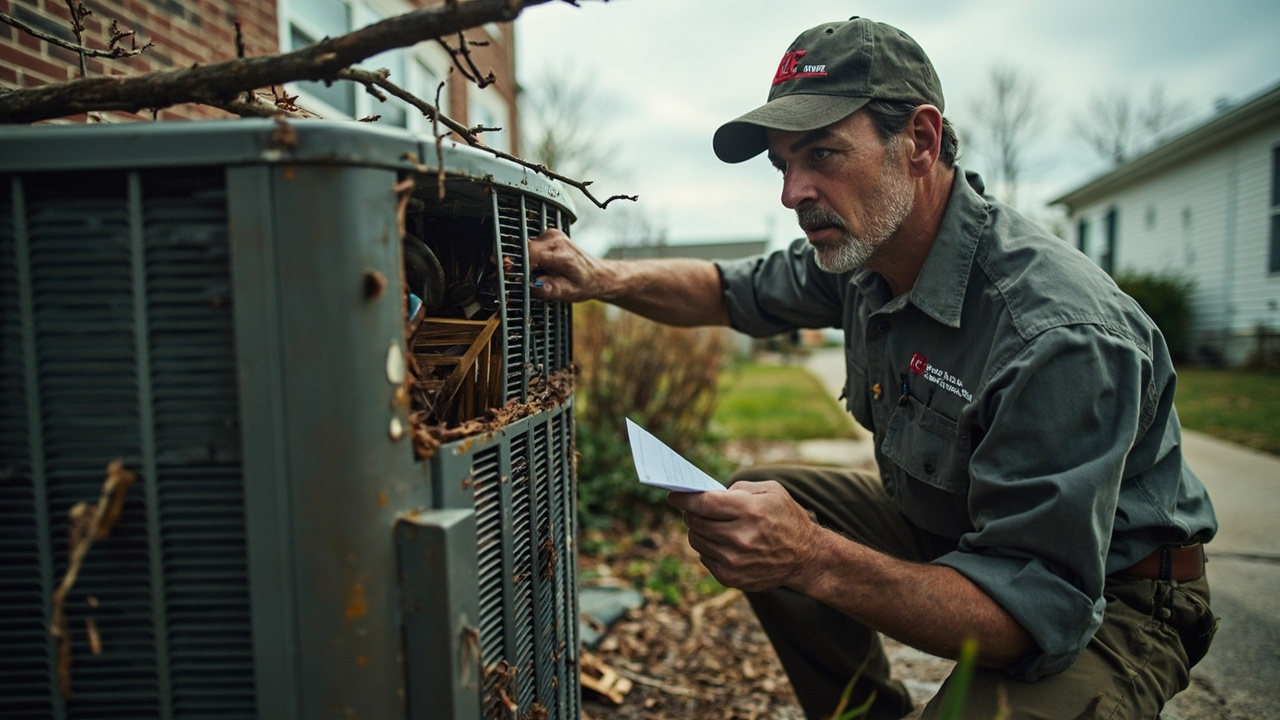
Detroit sits in a weather transition zone where cold Canadian air masses collide with warm Gulf moisture. This creates the severe thunderstorms that pound Wayne County between April and September. Wind shear conditions produce straight-line winds exceeding 60 mph multiple times each summer. These winds turn patio furniture, tree branches, and roof shingles into projectiles that strike outdoor HVAC equipment. The Great Lakes amplify storm intensity and increase hail frequency across Metro Detroit. Your condensing unit faces more extreme weather events than equipment in most American cities.
Detroit's aging housing stock creates additional storm damage vulnerability. Many homes in neighborhoods like Indian Village and Boston Edison have HVAC equipment installed decades ago without modern surge protection. Older electrical services lack the grounding and protection circuits that prevent lightning damage. Local HVAC contractors who understand Detroit's specific building characteristics recognize these vulnerabilities immediately. They know which system configurations fail first during storms and which protection upgrades matter most. This local knowledge means faster diagnosis and more effective repairs.