Menu

24/7 Emergency AC Repair in Detroit | Technicians Dispatched in 60 Minutes or Less

When your air conditioner fails during Detroit's humid summer nights or sweltering weekends, you need immediate relief. Our emergency HVAC technicians arrive fast with fully stocked service vehicles to restore your cooling system and stop the heat from damaging your home or health.

Slider Image 1
Slider Image 2
Slider Image 3
Slider Image 4
Slider Image 5
Slider Image 7
Slider Image 8
Slider Image 9
Slider Image 10
Slider Image 11

Why AC Failures Hit Detroit Homes Harder Than Most Cities

Detroit's summer humidity sits at 70 percent or higher on average, which means your air conditioner works overtime just to maintain comfort. When temperatures spike into the 90s and your AC quits, indoor temperatures can reach 100 degrees within hours. The combination of high humidity and heat creates dangerous conditions for children, elderly residents, and anyone with respiratory issues.

The freeze-thaw cycles that define Detroit winters also stress your AC components before summer even arrives. Your outdoor condenser unit sits exposed to snow, ice, and temperature swings that can crack housing, damage electrical connections, and weaken refrigerant lines. When your system finally powers up in May or June, these hidden failures reveal themselves at the worst possible time.

Detroit's older housing stock compounds the problem. Many homes in neighborhoods like Corktown, Woodbridge, and Indian Village lack adequate insulation or modern ductwork. When your AC fails in a 1920s brick home with poor air circulation, heat becomes trapped and oppressive within minutes.

You need 24 hour ac repair that understands these local challenges. Emergency air conditioning repair in Detroit requires technicians who know how humidity affects compressor performance, how our electrical grids handle summer peak loads, and which AC components fail first in our climate. Urgent air conditioner service means more than just showing up. It means diagnosing the real problem fast and fixing it right the first time.

Why AC Failures Hit Detroit Homes Harder Than Most Cities
How We Restore Your Cooling System During Critical Failures

How We Restore Your Cooling System During Critical Failures

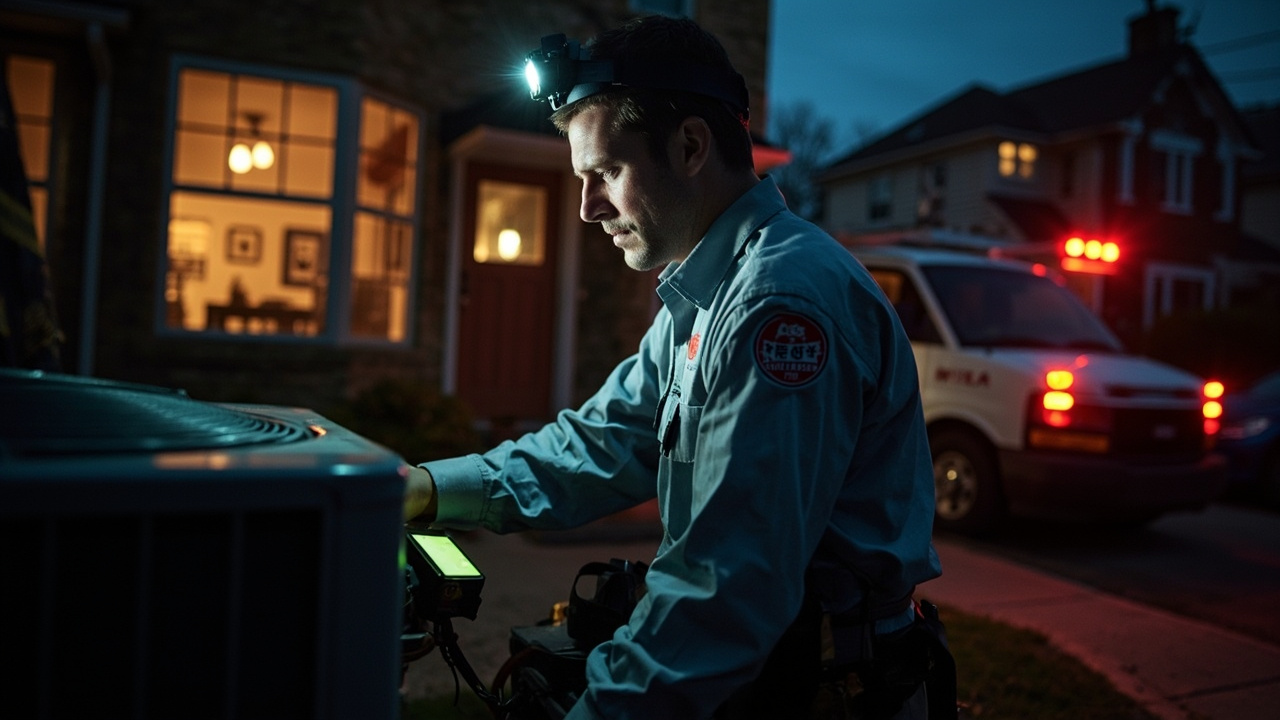
After hours ac repair demands a different approach than scheduled maintenance. Our emergency technicians carry diagnostic equipment that identifies compressor failures, refrigerant leaks, capacitor shorts, and blower motor seizures within minutes of arrival. We stock the most failure-prone components for Detroit's climate, which means we repair your system on the first visit instead of ordering parts while you sweat.

We start every emergency hvac repair call with a full electrical analysis. Your AC draws significant amperage during startup, and Detroit's aging electrical infrastructure can cause voltage sags that damage sensitive components like control boards and contactors. We measure voltage at your breaker panel and at the unit itself to confirm your system has clean power before we replace any failed parts.

Refrigerant issues require precision. We use electronic leak detectors and UV dye to locate pinhole leaks in evaporator coils and condensing units. Once we find the leak, we perform a proper repair, pull a vacuum to remove moisture and air, and recharge your system to manufacturer specifications. Guessing at refrigerant levels creates more problems than it solves.

Blower motor and capacitor failures account for 40 percent of emergency calls in Detroit. When your indoor fan stops moving air, your evaporator coil freezes and blocks airflow completely. We verify capacitor microfarad ratings with precision meters, check motor windings for shorts, and inspect your blower wheel for debris accumulation. If your ductwork shows restrictions or your filter has been neglected, we identify those issues before they cause another failure.

What Happens When You Call for Emergency AC Service

24/7 Emergency AC Repair in Detroit | Technicians Dispatched in 60 Minutes or Less
01

Immediate Phone Assessment

You call our dispatch line and speak with a trained technician, not an answering service. We ask specific questions about your symptoms: Is the outdoor unit running? Do you hear clicking or humming? Is the thermostat display functioning? These answers help us determine if your issue requires refrigerant, electrical repair, or mechanical replacement. We give you an accurate arrival window and send a technician with the right equipment and parts already loaded.
02

On-Site Diagnosis and Repair

Our technician arrives with a fully equipped service vehicle containing compressors, motors, capacitors, contactors, and refrigerant. We perform electrical testing, refrigerant pressure analysis, and airflow measurements to isolate the failure point. You receive a clear explanation of what failed, why it failed, and what we need to do to fix it. Most emergency repairs finish within two hours because we carry the parts Detroit systems need most.
03

System Testing and Prevention

After completing repairs, we run your AC through a full cooling cycle to verify proper operation. We measure supply air temperature, check refrigerant superheat and subcooling, and confirm your electrical draw matches specifications. Before we leave, we inspect your air filter, clean your condensate drain, and identify any secondary issues that could cause future failures. You get a detailed service report explaining what we fixed and what needs attention later.

Why Detroit Residents Choose Ace HVAC for Emergency Cooling Problems

Emergency air conditioning repair requires more than fast response times. You need technicians who understand how Detroit's infrastructure affects your HVAC system. Our team knows which neighborhoods experience voltage fluctuations during peak demand, which housing types suffer from inadequate return air, and which AC brands perform best in our humid climate.

We have worked on every type of home in Detroit, from the Queen Anne Victorians in West Village to the mid-century ranches in Rosedale Park. Older homes require careful attention to electrical capacity and ductwork compatibility. Modern systems demand proper refrigerant handling and digital control expertise. Our technicians receive ongoing training on both legacy equipment and current technology, so we fix any system regardless of age or complexity.

Detroit's building codes require specific electrical disconnects, refrigerant recovery procedures, and condensate drainage methods. We follow these codes on every repair because shortcuts create liability and future failures. When we install a new compressor or evaporator coil during an emergency call, the work meets the same standards as a planned replacement.

Our service vehicles function as mobile repair shops. We stock OEM and high-quality aftermarket parts because some repairs cannot wait for special orders. If your capacitor fails at 9 PM on Saturday, you need a replacement now, not Monday afternoon. We maintain inventory depth that most HVAC companies cannot justify because emergency service is our specialty, not a side offering.

You also get honest assessments. If your AC system has reached end of life and pouring money into repairs makes no sense, we tell you. We explain your options clearly so you can make informed decisions about repair versus replacement.

What You Can Expect From Our Emergency AC Service

Response Time and Availability

We dispatch emergency technicians within 60 minutes of your call, seven days a week, 365 days a year. Our average arrival time for Detroit addresses is 45 minutes, though distance and traffic affect exact timing. You receive a phone call when your technician is 15 minutes away, and you can track arrival status through text updates. Night and weekend calls receive the same priority as weekday emergencies because heat does not wait for business hours. We staff enough technicians to handle multiple simultaneous calls during heat waves without extending wait times.

Diagnostic Process and Transparency

Your technician explains findings in plain language before starting any repair work. We show you the failed component, explain why it failed, and discuss whether other parts need attention to prevent repeat failures. You receive a written estimate before we proceed with repairs. Our diagnostic fee applies toward repair costs if you choose to move forward. We use calibrated test equipment to measure electrical values, refrigerant pressures, and airflow volumes, so our diagnosis relies on data rather than guesswork. You see the evidence and understand exactly what needs fixing.

Quality of Repairs and Parts

Emergency repairs meet the same quality standards as scheduled installations. We use OEM parts when available and premium aftermarket components when OEM parts cannot be sourced immediately. All refrigerant work includes proper recovery, evacuation, and charging procedures using manifold gauges and electronic scales. Electrical connections receive proper crimping and heat shrink protection. Capacitors and contactors get replaced as matched sets when one component fails because the other has experienced the same stress. Your repair includes cleanup of the work area and removal of all failed components and packaging materials.

Service Follow-Up and Support

Emergency repairs include a follow-up check within 48 hours to verify your system continues operating correctly. We call to confirm your comfort levels and answer any questions about system operation or maintenance. You receive a detailed service report showing what we repaired, which parts we replaced, and recommendations for future maintenance. We keep your service history on file so future technicians understand your system's repair record. If you experience any issues related to our emergency repair, we return at no additional diagnostic charge to make it right.

Frequently Asked Questions

You Have Questions,
We Have Answers

What is considered an emergency for AC? +

An AC emergency means your home is unsafe or unlivable. Complete system failure during extreme Detroit heat waves qualifies. So does refrigerant leakage, which poses health risks and damages the compressor. Electrical issues like sparking, burning smells, or tripped breakers demand immediate attention to prevent fires. Water flooding from a clogged condensate line can damage floors and walls. If your home exceeds 85 degrees, vulnerable family members face heat exhaustion. Strange noises like grinding or squealing signal mechanical failure. Do not wait. These issues worsen fast in Detroit's humid summers.

How much does emergency AC service cost? +

Emergency AC service costs more than regular repairs because you need help now, not next week. After-hours calls, weekends, and holidays increase labor rates. Expect diagnostic fees between standard and premium rates depending on timing. The actual repair cost depends on the problem. A simple capacitor swap differs from compressor replacement. Detroit technicians charge for rapid response and immediate parts sourcing. Most companies waive diagnostic fees if you approve the repair. Do not let cost delay your call during dangerous heat. Ask about financing options when you call.

What is the $5000 AC rule? +

The 5000 dollar rule is a decision tool. Multiply your unit's age by the repair cost. If the total exceeds 5000, replace the system instead of repairing it. For example, a 12-year-old unit needing a 500 dollar repair equals 6000, so replacement makes financial sense. This rule helps Detroit homeowners avoid throwing money at dying equipment. Older systems use outdated refrigerants and run inefficiently, driving up electric bills. A new high-efficiency unit often pays for itself through energy savings. Use this formula to make smart decisions during stressful breakdowns.

How to cool a house without AC at night? +

Open windows on opposite sides of your home after sunset to create cross-ventilation. Detroit temperatures drop significantly at night, especially near the Detroit River. Place box fans in windows facing outward on the upper floor to pull hot air out. Position fans facing inward on the lower floor to draw cool air in. Sleep on the lowest floor where cool air settles. Dampen sheets slightly or use cooling towels on your neck. Close blinds and curtains during the day to block heat. Avoid using ovens or dryers that generate heat.

What is the 3 minute rule for AC? +

The 3 minute rule prevents compressor damage during power interruptions or thermostat cycling. Wait 3 minutes after your AC shuts off before restarting it. This allows refrigerant pressure to equalize between the high and low sides of the system. Restarting too quickly forces the compressor to work against unequal pressure, causing strain and potential failure. Detroit's electrical grid can experience brief outages during summer storms. If your breaker trips or you lose power, wait at least 3 minutes before restoring power to your unit. This simple pause extends compressor life.

How to cool down a house with a broken AC? +

Close all blinds and curtains to block solar heat gain. Seal gaps around doors and windows with towels to trap cooler air. Use portable fans strategically to move air throughout your home. Place a bowl of ice in front of fans to create makeshift evaporative cooling. Stay on the lowest floor where temperatures stay coolest. Drink cold water frequently and wear light clothing. Avoid heat-generating activities like cooking or using the dryer. Open windows at night when Detroit temperatures drop. If indoor temperatures become dangerous, relocate to public cooling centers immediately.

Is it cheaper to repair or replace an AC unit? +

Repair costs less upfront, but replacement saves money long-term if your unit is old. Units over 10 years old with major component failures usually warrant replacement. Detroit's humid climate stresses AC systems, shortening their lifespan. New systems run 30 to 50 percent more efficiently, cutting electric bills substantially. Factor in rising repair frequency as units age. If you face multiple service calls yearly, replacement stops the bleeding. Units using R-22 refrigerant should be replaced because that refrigerant is phased out and expensive. Calculate total ownership cost, not just immediate expense.

What is the most expensive part of the AC unit to fix? +

The compressor is the most expensive AC component to replace. It pumps refrigerant through the system and handles extreme pressure changes. Compressor failure often stems from electrical issues, refrigerant leaks, or lack of maintenance. Replacement requires recovering refrigerant, unsoldering lines, and installing a new unit. Labor is intensive and parts cost hundreds to over a thousand dollars depending on tonnage. In Detroit's climate, compressors work overtime during humid summers. If your compressor fails and your unit is old, replacement often makes more financial sense than this costly repair.

Is a broken AC covered by insurance? +

Homeowners insurance typically covers AC damage from sudden events like lightning strikes, fallen trees, or vandalism. Normal wear and tear, age-related failure, and lack of maintenance are excluded. If a storm damages your outdoor condenser unit, you can file a claim. Document everything with photos and keep repair estimates. Detroit homeowners should review their policy for equipment breakdown coverage, which extends protection to mechanical failures. Your deductible applies, so weigh claim costs against out-of-pocket repair costs. Consult your insurance agent before filing to understand coverage limits and potential rate increases.

Can I write off my new AC unit on my taxes? +

You can claim a federal tax credit for qualifying high-efficiency AC units under the Inflation Reduction Act. Units must meet specific SEER2 efficiency ratings to qualify. The credit covers a percentage of equipment and installation costs, capped at a maximum amount per year. Keep all receipts and manufacturer certification statements for tax filing. Michigan may offer additional state rebates or utility company incentives for energy-efficient upgrades. Consult a tax professional to verify eligibility based on your specific situation. Credits apply only to existing homes, not new construction. This benefit offsets replacement costs significantly.

How Detroit's Humidity and Summer Heat Patterns Make AC Failures Critical

Detroit experiences some of the most oppressive summer humidity in the Midwest, with dew points regularly hitting 70 degrees during July and August. This moisture-saturated air makes your AC work harder to remove humidity before it can cool your home effectively. When your system fails during these conditions, indoor humidity can climb above 80 percent within hours, creating mold growth conditions and making sleep nearly impossible. Emergency air conditioning repair becomes a health issue, not just a comfort preference. Detroit's heat island effect, concentrated in areas like downtown and Midtown, adds another 5 to 8 degrees to ambient temperatures, which means AC failures in these neighborhoods create genuinely dangerous indoor conditions for vulnerable residents.

Ace HVAC Detroit has served this city's residential and commercial properties for years, which means we understand how local factors affect your cooling system. We know which neighborhoods experience the highest humidity levels, which areas have the oldest electrical infrastructure, and which housing types present unique HVAC challenges. Our technicians live and work in Detroit, so we respond quickly because we are already close to your location. We maintain relationships with local suppliers to source emergency parts fast, and we understand Detroit's building permit and code requirements for HVAC work. When you need after hours ac repair, choosing a company with deep local expertise means faster diagnosis, proper repairs, and solutions that account for Detroit's specific climate challenges.
HVAC Services in The Detroit Area

We invite you to explore our service area and locate our business on the map. Ace HVAC is strategically positioned to efficiently serve all residential and commercial clients within the Detroit metropolitan area and surrounding communities, ensuring prompt response times and convenient access to our expert heating and cooling solutions whenever you need us.

Address:
Ace HVAC Detroit, 7300 Woodward Ave, Detroit, MI, 48202

Additional Services We Offer

Our news updates

Latest Articles & News from The Blogs

Why Financing Your Detroit HVAC System Makes Sense Detroit homeowners face extreme seasonal swings. Winter lows can drop below zero…

How to Choose an HVAC Financing Plan That Won't Break Your Monthly Budget

Why Financing Your Detroit HVAC System Makes Sense Detroit homeowners face extreme seasonal swings. Winter lows can drop below zero…

Why Your New Center Apartment Smells Like Burning Dust Every Time the Heat Kicks On

Why Your New Center Apartment Smells Like Burning Dust Every Time the Heat Kicks On That burning dust smell when…

Comparing the Most Reliable Furnace Brands for the Harsh Winters in Shelby Township

Comparing the Most Reliable Furnace Brands for the Harsh Winters in Shelby Township\n\nWhen a January Polar Vortex hits Shelby Township…

Contact Us

Your home should not feel like an oven. Call Ace HVAC Detroit now at (313) 552-7177 for emergency AC repair with technicians dispatched in 60 minutes or less. We answer our phones 24 hours a day, seven days a week. Stop suffering and start cooling down.