
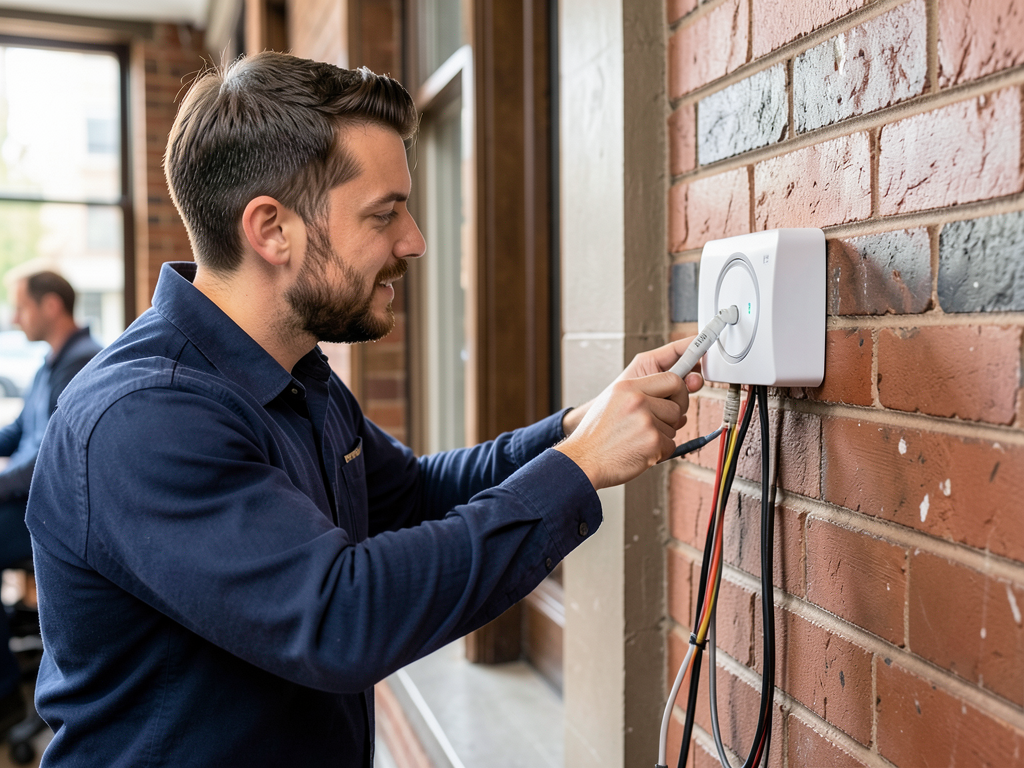
Connecting Your Smart Home Ecosystem to Your HVAC System in West Village
Smart home technology is transforming how Detroit homeowners control their comfort. In West Village’s historic brick bungalows and mid-century ranches, integrating your HVAC system with smart home platforms can cut energy bills by 10-12% while giving you remote control from anywhere in the city. Energy Star smart thermostat requirements.
The process involves more than just swapping a thermostat. You need to consider your home’s wiring, your existing HVAC brand, and Detroit’s extreme seasonal swings from humid 90°F summers to sub-zero winters. This guide walks you through every step of creating a connected system that works reliably in our unique climate.
Why Smart HVAC Integration Makes Sense in West Village
West Village homes built between 1920 and 1950 often have original narrow ductwork and aging furnaces. These systems waste energy and struggle with Detroit’s humidity spikes. A smart HVAC setup addresses both problems by adding precision control and real-time monitoring.
Smart thermostats learn your schedule and adjust automatically. When you leave for work at the Fisher Building, your system can enter eco-mode. When you head home past Belle Isle Park, it can warm or cool your house before you arrive. This isn’t just convenience—it’s measurable savings on your DTE Energy bill. DTE Energy smart thermostat rebates.
Humidity control becomes critical in July and August when West Village’s tree-lined streets trap moisture. Smart systems can activate whole-house dehumidifiers automatically when indoor humidity exceeds 55%, preventing mold growth in your century-old plaster walls.
Compatibility: Will Your Current System Work?
Most West Village homes have one of three HVAC setups: forced-air furnaces with central AC, steam radiators with window units, or boiler systems with baseboard heat. Each requires different smart integration approaches. Fast and Professional Boiler Repair Services in Corktown and Midtown Detroit.
For forced-air systems common in post-1940s homes, you’ll need a smart thermostat compatible with your furnace brand. Here’s how major brands stack up:
| HVAC Brand | Smart Thermostat Compatibility | Special Requirements |
|---|---|---|
| Carrier | Nest, Ecobee, Honeywell HomeKit | C-wire required for full functionality |
| Trane | Nest Learning, Ecobee Premium | May need proprietary adapter |
| Lennox | iComfort compatible models only | Requires Lennox S30 or S40 thermostat |
| York | Most smart thermostats | Check for communicating vs non-communicating |
Steam radiator systems in pre-1940s West Village homes present a different challenge. These require smart radiator valves or electric actuators that can control individual room temperatures. The good news is you can zone your heating without replacing the entire system.
Boiler systems with baseboard heat need specialized smart controllers that can manage multiple zones. Look for models that support outdoor temperature reset, which adjusts water temperature based on Detroit’s current weather—a feature that can save 15% on heating costs.
Technical Integration: Beyond the Basic Thermostat
A complete smart HVAC ecosystem includes components most homeowners don’t consider. Smart vents can redirect airflow to rooms you actually use, eliminating hot and cold spots common in West Village’s older homes.
Indoor air quality sensors monitor CO2 levels, VOCs, and particulate matter. During Detroit’s summer ozone alerts, your system can automatically increase ventilation when outdoor air quality improves. This protects your family while maintaining efficiency.
Whole-house humidifiers integrate with smart controls to maintain optimal winter humidity levels. Detroit’s January air often drops below 20% relative humidity, causing static shocks and respiratory irritation. Smart humidifiers can keep levels between 30-40%, improving comfort without wasting energy.
The C-wire question comes up in every West Village smart thermostat installation. Many homes built before 1980 lack this common wire needed for smart thermostat power. Without it, your thermostat may lose Wi-Fi connection or fail to control your system properly. The Best Local AC Installation Specialists for Homeowners in Royal Oak.
Installing a C-wire in plaster-and-lath walls requires experience. Technicians must fish wires through tight spaces without damaging original woodwork. Some homes need a C-wire power adapter instead, which plugs into your furnace’s control board.
Local Rebates and Incentives
DTE Energy offers rebates up to $100 for smart thermostats that meet Energy Star requirements. The program specifically targets homes in Detroit’s older neighborhoods where energy waste is highest. You must use a certified contractor for installation to qualify.
The federal Inflation Reduction Act provides tax credits for energy-efficient HVAC upgrades. Smart thermostats qualify for up to $150 in credits when installed as part of a broader efficiency project. Keep your receipts and contractor’s certification statement for tax filing.
Detroit’s Green Demolition Program sometimes offers additional incentives for homes undergoing major renovations. If you’re replacing your HVAC system while renovating, you might qualify for bundled rebates that cover both projects.
Consumers Energy customers in nearby suburbs can access similar programs. The key is timing your installation during rebate seasons, typically spring and fall when demand is lower.
The Professional Installation Process
DIY smart thermostat installation often fails in West Village homes. The process requires more than basic electrical skills. Here’s what professional installation includes:
- System Assessment
Technician evaluates your current HVAC setup, wiring configuration, and Wi-Fi strength. They check for Michigan Mechanical Code compliance and identify any safety issues like carbon monoxide risks.
- Wiring Preparation
If your home lacks a C-wire, the technician installs one or configures a power adapter. This step often involves accessing your furnace’s control board in the basement.
- Thermostat Mounting
The new device mounts level and plumb, with wires dressed neatly to prevent interference with the wall plate. For plaster walls, special anchors prevent cracking.
- System Integration
The technician connects your smart device to your home’s Wi-Fi network, configures app settings, and tests all heating and cooling functions. They verify geofencing works properly for your specific address near Mack Avenue.
- Optimization
Final adjustments include setting up energy-saving schedules, humidity control points, and air quality triggers. The technician shows you how to use the app and answers questions about maintenance alerts.
Professional installation includes a 30-day optimization period. If your system doesn’t perform as promised, the technician returns to adjust settings at no additional charge.
Voice Assistant Integration and Automation
Smart HVAC works best when integrated with your broader home automation. Amazon Alexa, Google Assistant, and Apple HomeKit all support HVAC control, but each has different strengths.
Alexa excels at multi-room audio and works well with most smart thermostat brands. You can say “Alexa, set living room to 72 degrees” and it adjusts the vent serving that space. Google Assistant offers superior natural language processing and integrates seamlessly with Nest products.
Apple HomeKit provides the strongest security but works with fewer HVAC devices. If you use iPhones and iPads throughout your home, HomeKit’s encrypted communication might be worth the compatibility limitations.
Automation routines can trigger HVAC changes based on multiple factors. When your security system arms for vacation mode, your smart home can raise cooling temperatures by 8 degrees and activate humidity monitoring. When you unlock your front door after 6 PM, the system can begin warming the house for your arrival.
Humidity Control and Dehumidifier Integration
Detroit’s climate creates unique humidity challenges. Summer afternoons often exceed 85% relative humidity, while winter indoor air can drop below 15%. Smart HVAC systems manage both extremes automatically.
Whole-house dehumidifiers connect to your smart system through dedicated controls. When outdoor dew points exceed 65°F, the system activates dehumidification independently of cooling. This prevents overcooling while removing moisture—a common problem in West Village’s older homes with poor insulation. Why You Need a Dedicated Air Conditioning Repair Service in Birmingham Michigan.
Winter humidification requires careful control to prevent condensation on windows and walls. Smart systems use outdoor temperature sensors to adjust output, preventing the moisture problems that plague many Detroit homes during cold snaps.
Air quality sensors can trigger ventilation when CO2 levels exceed 1,000 ppm. This happens quickly in sealed West Village homes during winter. Smart systems bring in fresh air when outdoor conditions permit, then switch to recirculation during high pollen or pollution events.
Predictive Maintenance and Diagnostic Alerts
Smart HVAC systems can detect problems before they cause failures. They monitor run times, temperature differentials, and electrical current draw to identify developing issues.
A failing capacitor might cause your AC to struggle on a 95°F day. Smart systems detect the reduced efficiency and send an alert before complete failure occurs. This early warning can prevent emergency service calls during Detroit’s hottest weeks. How to Find Reliable Emergency Furnace Repair in Detroit Before the Next Deep Freeze.
Air filter monitoring tracks actual usage rather than calendar time. A home with pets or located near busy streets might need filter changes every 45 days instead of every 90. Smart systems notify you when performance drops due to restricted airflow.
Refrigerant level monitoring can identify leaks before they damage your compressor. Smart systems measure superheat and subcooling to determine if your AC operates at peak efficiency. Detroit’s high humidity makes proper refrigerant charge especially important for comfort.
Remote Monitoring for Michigan Snowbirds
Many West Village residents head south during Michigan winters. Smart HVAC systems provide peace of mind through remote monitoring and automatic freeze protection.
Temperature sensors in key areas can detect furnace failures within minutes. The system sends alerts to your phone and can automatically contact your HVAC provider if temperatures drop below 40°F. This prevents the frozen pipe disasters common when furnaces fail during January polar vortex events.
Humidity monitoring prevents the condensation problems that occur when homes sit unused. Smart systems maintain optimal levels to protect wood floors, musical instruments, and artwork from Detroit’s seasonal moisture swings.
Energy usage reports help you identify waste patterns. A second home might show unusually high usage, indicating a problem like a failing seal or malfunctioning component that needs attention before it causes major damage.
Security and Privacy Considerations
Smart home devices create potential security vulnerabilities. Choose systems from established manufacturers with strong encryption and regular security updates. Avoid off-brand devices that might compromise your home network.
Two-factor authentication adds protection against unauthorized access. Set up alerts for login attempts from unfamiliar locations. If you live near Wayne State University, you might receive more attempted intrusions from student hackers testing networks.
Network segmentation keeps your HVAC system isolated from other smart devices. If a thermostat gets compromised, it can’t access your security cameras or financial information. Most modern routers support creating separate IoT networks for smart home devices. Modern HVAC Solutions for Historic Grosse Pointe Homes (Without Ruining the Aesthetics).
Data privacy policies vary significantly between manufacturers. Some companies use your energy usage data for marketing, while others treat it as strictly confidential. Read privacy policies before committing to a platform, especially if you value your energy consumption remaining private.
Cost-Benefit Analysis for West Village Homes
The initial investment for smart HVAC integration ranges from $400 to $2,500 depending on your current system and desired features. Here’s what drives those costs in West Village:
Basic smart thermostat installation in a home with existing C-wire: $400-600. This includes the device, professional installation, and basic app setup.
Complete system with zoning and IAQ sensors: $1,800-2,500. This covers multiple thermostats, smart vents, air quality monitors, and professional zoning design.
C-wire installation in plaster walls: $200-400 additional. The age and construction of West Village homes makes this more complex than in newer construction.
Annual energy savings typically range from $150 to $400 depending on your home size and usage patterns. Most systems pay for themselves within 3-5 years through reduced energy bills and prevented repairs.
Increased home value represents another benefit. Smart home features appeal to younger buyers moving into West Village’s historic homes. Energy-efficient systems can increase appraisal values by 2-3% in Detroit’s competitive market.
Common Integration Challenges and Solutions
Wi-Fi coverage problems plague many West Village homes. Thick plaster walls and original wood lath interfere with wireless signals. A mesh Wi-Fi system or dedicated access point near your HVAC equipment often solves connectivity issues.
Power outages during summer storms can reset smart devices. Choose systems with battery backup or manual override capabilities. Some smart thermostats retain programming for 24-48 hours without power.
Software compatibility issues arise when mixing devices from different manufacturers. Stick to one ecosystem when possible, or verify cross-platform compatibility before purchasing. Apple HomeKit generally offers the best third-party integration but supports fewer devices.
Voice control misunderstandings frustrate some users. Train your system with specific room names and practice clear commands. Instead of “make it warmer,” try “set living room thermostat to 72 degrees.”
Professional support availability matters more than you might expect. Choose a Detroit-based provider who can respond within 24 hours if your system malfunctions during extreme weather. Local technicians understand West Village’s specific challenges better than national chains.
Future-Proofing Your Smart HVAC Investment
Technology evolves rapidly, but HVAC systems last 15-20 years. Choose platforms with strong track records and regular software updates. Google’s Nest and Amazon’s Alexa ecosystems receive frequent improvements and support the widest range of devices.
Open standards like Matter promise better cross-platform compatibility in coming years. If you’re starting fresh, consider devices that support these emerging protocols to protect your investment as technology changes.
Scalable systems allow gradual upgrades. Start with a smart thermostat, then add zoning or air quality monitoring as your budget allows. This approach spreads costs while still delivering immediate benefits.
Professional assessment helps identify which features provide the best return on investment for your specific home. A Victorian near Indian Village has different needs than a 1950s ranch in nearby Grosse Pointe Park.
Regular software updates keep your system secure and add new features over time. Enable automatic updates and check for new capabilities annually. Manufacturers often add energy-saving features through software rather than requiring hardware upgrades.
Getting Started with Your Smart HVAC Project
Begin with a professional assessment of your current system. A qualified HVAC technician can identify compatibility issues, wiring needs, and optimization opportunities specific to your West Village home.
Consider your primary goals. Are you focused on energy savings, comfort improvements, or air quality? Different priorities lead to different system configurations and investment levels.
Check your home’s Wi-Fi coverage before purchasing devices. Poor connectivity causes more smart thermostat failures than any other factor. A signal strength test near your furnace location prevents disappointment.
Review available rebates and incentives before making final decisions. DTE Energy’s program changes annually, and timing your installation during rebate seasons can save hundreds of dollars.
Professional installation ensures proper setup and provides warranty coverage. DIY installation might seem cheaper, but mistakes can damage expensive HVAC equipment or create safety hazards in your century-old home.
Ready to transform your West Village home’s comfort and efficiency? Call (313) 552-7177 today to schedule your smart HVAC consultation. Our Detroit-based technicians understand the unique challenges of historic homes and can design a system that works perfectly with your lifestyle and budget.
Frequently Asked Questions
Can I install a smart thermostat myself in my West Village home?
DIY installation works for some homes, but West Village’s older construction often presents challenges. Homes built before 1980 frequently lack C-wires, and plaster walls make wiring difficult. Professional installation ensures proper setup and maintains your HVAC warranty.
Will smart HVAC integration work with my historic radiator system?
Yes, but you’ll need smart radiator valves or electric actuators instead of a traditional thermostat. These devices control individual room temperatures and integrate with most smart home platforms. The investment is higher than forced-air systems, but you gain room-by-room control without replacing your entire heating system.
How much can I really save on my DTE Energy bill?
Most Detroit homeowners save 10-12% on heating and cooling costs after smart integration. Homes with significant zoning or severe temperature imbalances often save 15-20%. Your actual savings depend on your home’s current efficiency, Detroit’s seasonal weather patterns, and how effectively you use the smart features.
What happens during a power outage?
Smart thermostats without battery backup lose all functionality during outages. Models with batteries retain programming for 24-48 hours. Consider a whole-house surge protector to prevent damage from Detroit’s frequent summer thunderstorms. Manual override options ensure you can control your system even if smart features fail.
Are smart HVAC systems secure from hackers?
Reputable brands use bank-level encryption and receive regular security updates. Enable two-factor authentication and use strong Wi-Fi passwords. Avoid off-brand devices that might compromise your network. Network segmentation keeps your HVAC system isolated from other smart devices if a breach occurs.
How long does professional installation take?
Basic smart thermostat installation takes 1-2 hours. Complete system integration with zoning and IAQ sensors requires 4-6 hours. C-wire installation in plaster walls adds 1-2 hours. Most West Village homes need the full installation to address wiring and compatibility issues common in historic construction.
Don’t wait for the next Detroit heatwave or polar vortex to upgrade your comfort. Call (313) 552-7177 now to schedule your smart HVAC consultation. Our expert technicians will assess your West Village home and design a system that delivers comfort, efficiency, and peace of mind all year long.