
Heating and Cooling Your New Backyard ADU or Tiny Home in Detroit
Detroit’s backyard ADUs and tiny homes face unique climate challenges. The city’s extreme temperature swings from sub-zero winters to humid 90-degree summers demand specialized HVAC solutions. This guide covers everything you need to know about keeping your small space comfortable year-round while meeting local building codes and maximizing energy efficiency. Modern HVAC Solutions for Historic Grosse Pointe Homes (Without Ruining the Aesthetics).
The Unique Challenges of Tiny Home Climate Control in Detroit
Detroit’s Zone 5 climate creates specific HVAC demands. Your tiny home loses heat 3-4 times faster than a standard house due to increased surface area to volume ratio. The clay-heavy soil in areas like Dearborn and Dearborn Heights causes moisture migration that affects basement-level HVAC equipment. Detroit’s combined sewer systems in older neighborhoods can flood during heavy rains, damaging basement-located furnaces.
Common tiny home construction methods like SIP panels or metal framing create tight envelopes. Without proper ventilation, these spaces trap moisture leading to mold growth during humid Michigan summers. The Michigan Residential Code requires mechanical ventilation for spaces under 500 square feet when they exceed 4 ACH (air changes per hour). Michigan Department of Licensing and Regulatory Affairs.
Top 4 HVAC Solutions for Small Spaces
Choosing the right system depends on your specific needs. Here’s how each option performs in Detroit’s climate:
| System Type | Best For | Detroit Winter Performance | Space Requirements |
|---|---|---|---|
| Ductless Mini-Split | Year-round comfort | Excellent (down to -15°F) | Wall or ceiling mount |
| PTAC Unit | Budget builds | Poor (needs backup heat) | Through-wall installation |
| High-Velocity System | Retrofits | Good with proper sizing | Small ductwork |
| Electric Heat Pump | Off-grid setups | Fair (needs auxiliary heat) | Outdoor compressor space |
Ductless Mini-Split Systems
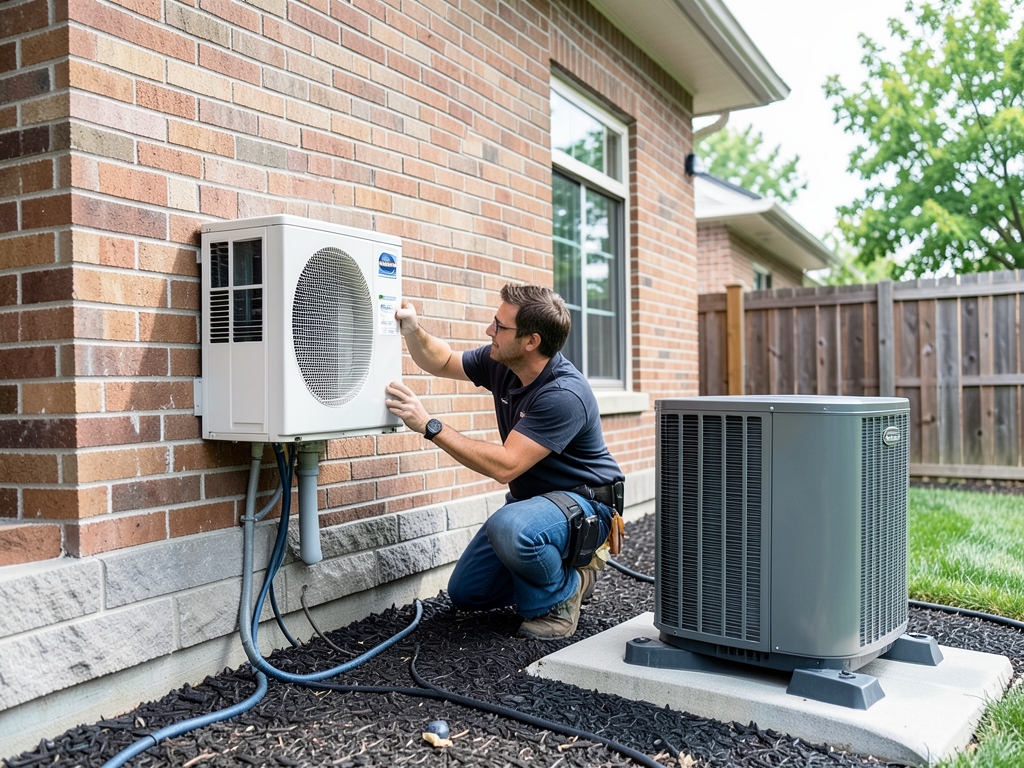
Mini-splits dominate tiny home HVAC for good reason. Modern cold-climate models from Mitsubishi and Daikin maintain 100% heating capacity down to -15°F. The outdoor compressor needs 12 inches of clearance from walls and 24 inches above for proper airflow. Indoor units range from 6,000 to 24,000 BTU, perfect for spaces under 600 square feet.
Installation requires mounting brackets rated for your wall type. Detroit’s older brick homes in areas like Boston-Edison need specialized anchors. The line set runs through a 3-inch hole, which must be sealed with expanding foam to prevent air infiltration. The Best Local AC Installation Specialists for Homeowners in Royal Oak.
Cold Climate Heat Pumps
Detroit’s 2024 building code amendments now require cold-climate heat pumps for new ADUs. These units use variable-speed compressors and enhanced defrost cycles. Look for models with HSPF2 ratings above 8.5 for Michigan winters. The outdoor unit needs a snow shelter or be mounted at least 12 inches above expected snow levels.
Energy recovery ventilators (ERVs) become essential with these tight systems. They transfer heat from exhaust air to incoming fresh air, reducing heating loads by up to 30%. The Michigan Department of Licensing and Regulatory Affairs mandates ERVs for spaces under 400 square feet with air tightness below 3 ACH.
Sizing Your Unit: BTU Calculations for Detroit Winters
Proper sizing prevents short cycling and ensures comfort. Detroit’s design temperature of -5°F means standard BTU charts underestimate heating needs. Add 20% to manufacturer recommendations for local conditions.
| Square Footage | Insulation Level | Required BTUs (Heating) | Required BTUs (Cooling) |
|---|---|---|---|
| 200-300 | Standard | 6,000-8,000 | 5,000-6,000 |
| 300-400 | Standard | 8,000-10,000 | 6,000-8,000 |
| 400-500 | Standard | 10,000-12,000 | 8,000-10,000 |
| 500-600 | Standard | 12,000-15,000 | 10,000-12,000 |
Detroit’s humidity peaks at 78% in August. Your cooling system must handle latent heat removal. Systems under 12,000 BTU often struggle with moisture control. Look for SEER2 ratings above 16 for energy efficiency.
Off-Grid vs. On-Grid Considerations
Off-grid tiny homes in Detroit’s metro area face unique challenges. A typical 12,000 BTU mini-split draws 3-4 amps at 240 volts during heating mode. Solar PV systems need 1.5 kW minimum to run HVAC loads plus battery storage for nighttime operation.
Propane furnaces offer reliable backup. A 20,000 BTU propane wall furnace consumes 0.22 gallons per hour at maximum output. Detroit’s average January temperature of 24°F means 8-10 hours of furnace operation daily, consuming 2-3 gallons of propane. How to Find Reliable Emergency Furnace Repair in Detroit Before the Next Deep Freeze.
Wood stoves provide emergency heat but require proper clearance from walls. Michigan fire code mandates 36-inch clearance from combustible materials. The chimney must extend 3 feet above the roof surface and 2 feet higher than any structure within 10 feet.
Local Regulations & Tiny House Zoning in Detroit
Detroit’s zoning ordinance 61-04-10 permits ADUs on properties with existing single-family homes. The unit cannot exceed 960 square feet or 50% of the primary dwelling’s living area. All HVAC installations require mechanical permits from the Buildings, Safety Engineering and Environmental Department.
Detroit’s carbon monoxide detector law (Section 6-2-7) mandates detectors within 15 feet of all sleeping areas. For tiny homes under 500 square feet, one detector suffices. Smoke detectors must be interconnected when multiple units are present.
The Michigan Plumbing Board requires licensed plumbers for gas line connections to furnaces or stoves. Electrical work must comply with NEC Article 424 for fixed space heating equipment. Outdoor compressors need concrete pads extending 6 inches beyond the unit dimensions.
Installation Cost Breakdown for Detroit Market
Detroit’s 2024 HVAC installation costs vary by system type and home location. Labor rates in Detroit proper average $85-115 per hour versus $75-95 in suburban areas like Dearborn or Southfield.
- Initial Assessment
Technician evaluates space, insulation, and existing infrastructure. Takes 1-2 hours. Costs $150-250.
- Permit Acquisition
Submit plans to Detroit Buildings Department. Processing takes 3-5 business days. Fee: $75-200.
- Equipment Installation
Mount indoor unit, run line set, install outdoor compressor. Takes 6-8 hours for mini-split. Costs $2,500-4,500.
- System Testing
Check refrigerant levels, verify airflow, test thermostat operation. Takes 2-3 hours. Included in installation.
DTE Energy offers rebates up to $500 for high-efficiency heat pumps meeting SEER2 thresholds. Federal tax credits through 2032 cover 30% of equipment costs up to $2,000 for qualifying heat pumps. DTE Energy Rebates.
Winterization and Maintenance for Detroit’s Climate
Detroit’s freeze-thaw cycles damage outdoor equipment. Ice buildup on condenser coils reduces efficiency by up to 40%. Install a roof or shelter extending 18 inches beyond the unit. Elevation prevents snow blockage of the base pan.
Fall maintenance includes cleaning the outdoor coil with a no-rinse coil cleaner. Check refrigerant lines for insulation gaps. Test the defrost cycle by running the system in heat mode when outdoor temperatures exceed 50°F.
Winter preparation involves switching the system to cooling mode for 10 minutes monthly. This prevents refrigerant oil from settling in the compressor. Clear snow from around the outdoor unit after each storm, maintaining 2-foot clearance.
Air Quality and Ventilation in Small Spaces
Tiny homes trap pollutants quickly. CO2 levels exceed 1,000 ppm within 30 minutes of occupancy without ventilation. ERVs exchange stale indoor air with fresh outdoor air while transferring heat. In Detroit’s climate, they recover 70-80% of heating energy.
High-efficiency filters capture allergens common to Detroit’s urban environment. MERV 13 filters remove 90% of particles 1-3 microns, including pollen and mold spores. Replace filters every 60-90 days in tiny homes due to higher air turnover rates.
Humidity control prevents condensation on windows during winter. Ideal indoor humidity ranges from 30-50%. Dehumidifiers remove 20-30 pints daily in Detroit’s humid summers. Some mini-split systems include dry mode for moisture removal without significant cooling.
Smart Controls and Energy Management
Wi-Fi enabled thermostats optimize HVAC operation. Geofencing turns systems down when you leave and restores comfort before return. Detroit’s time-of-use rates from DTE Energy make scheduling critical. Run high-energy tasks during off-peak hours (after 8 PM weekdays).
Smart vents direct conditioned air to occupied zones. Battery-powered units install without wiring. Each vent contains a temperature sensor and motor for precise control. Systems reduce energy consumption by 20-30% in multi-room tiny homes.
Energy monitoring tracks consumption patterns. Real-time data identifies efficiency opportunities. Many systems integrate with solar inverters for whole-home energy management. Detroit’s average electricity rate of $0.16/kWh makes efficiency financially beneficial.
Emergency Heating Options for Detroit Winters
Detroit experiences week-long cold snaps where temperatures remain below 0°F. Backup heating becomes essential. Electric space heaters provide point-of-use heat but require 15-amp circuits. A 1,500-watt heater draws 12.5 amps, limiting use to one unit per standard outlet.
Kerosene heaters offer portable emergency heat. Modern units burn 99.9% efficiently, producing minimal carbon monoxide. Still, maintain a window slightly open for fresh air. Store kerosene in approved containers away from living spaces.
Gas fireplaces heat without electricity. Direct-vent models draw combustion air from outside and exhaust through a coaxial pipe. Efficiency reaches 70-85%. The standing pilot light consumes 5-7 therms monthly when not actively heating.
Sound Considerations for Tiny Home HVAC
Noise levels matter in small spaces. Indoor mini-split units operate at 25-35 decibels on low speed, quieter than a whisper. Outdoor compressors produce 50-60 decibels at 10 feet, similar to normal conversation. Locate compressors away from bedroom windows.
Sound barriers reduce compressor noise. Mass-loaded vinyl barriers mounted on fence panels decrease noise transmission by 10-15 decibels. Vegetation also absorbs sound. Dense evergreen shrubs planted 3 feet from the unit provide year-round noise reduction.
Indoor unit placement affects perceived noise. Mount high on walls to direct airflow away from seating areas. Night setback modes reduce fan speed and noise during sleeping hours. Some units offer dedicated sleep modes running at 19-22 decibels. Why You Need a Dedicated Air Conditioning Repair Service in Birmingham Michigan.
Choosing the Right HVAC Contractor in Detroit
Detroit’s building codes and climate require experienced contractors. Look for NATE certification and Michigan mechanical contractor licenses. Verify workers’ compensation and liability insurance. Request references from similar tiny home projects.
Local experience matters. Detroit’s clay soil and freeze-thaw cycles create unique installation challenges. Contractors familiar with the area understand local permitting processes and DTE Energy rebate requirements. They know which equipment performs best in Michigan’s climate.
Ask about warranty coverage. Most manufacturers offer 5-10 year parts warranties. Quality contractors provide 1-2 year labor warranties. Some offer maintenance plans covering annual inspections and priority service.
Future-Proofing Your Tiny Home HVAC
Technology advances rapidly. Choose equipment with upgradeable controls and compatible smart home platforms. Heat pump technology improves yearly, with 2025 models expected to operate at -25°F without backup heat.
Consider zoning capabilities even in small spaces. Single-zone systems work for open layouts, but pocket doors or room dividers might justify multi-zone systems later. Install adequate line set capacity for potential future expansion.
Energy efficiency standards tighten periodically. Equipment meeting 2025 standards may be required by 2028. Investing in higher efficiency now prepares your home for future regulations and provides immediate utility savings.
Frequently Asked Questions
What size HVAC system do I need for a 400 square foot tiny home in Detroit?
A 400 square foot tiny home in Detroit typically needs 8,000-10,000 BTU for heating and 6,000-8,000 BTU for cooling. Add 20% to standard calculations for Detroit’s extreme climate. Consider a 12,000 BTU unit for better humidity control during humid summers.
Do I need a permit to install HVAC in my Detroit backyard ADU?
Yes. Detroit requires mechanical permits for all HVAC installations. Submit plans to the Buildings, Safety Engineering and Environmental Department. Processing takes 3-5 business days with fees ranging from $75-200 depending on project scope. Work without permits risks fines and inspection failures.
Can a mini-split handle Detroit’s coldest winter nights?
Modern cold-climate mini-splits maintain heating capacity down to -15°F. During Detroit’s occasional -20°F nights, efficiency drops but the system still operates. For absolute reliability, pair with a backup electric or propane heater. Most Detroit winters see only 3-5 days below 0°F.
How much does HVAC installation cost for a tiny home in Detroit?
Detroit HVAC installation costs range from $3,500-6,500 for a complete mini-split system including equipment, labor, and permits. High-end cold-climate units with smart controls cost $5,000-7,500. Factor in $500-1,000 for electrical upgrades if your panel lacks capacity.
What maintenance does tiny home HVAC require?
Change filters every 60-90 days. Clean outdoor coils annually before heating season. Check refrigerant lines for leaks each spring. Test defrost cycles in fall. Professional maintenance once yearly costs $150-250 and prevents 90% of system failures. Fast and Professional Boiler Repair Services in Corktown and Midtown Detroit.
Ready to install the perfect HVAC system for your Detroit tiny home or ADU? Call (313) 552-7177 today to schedule your consultation. Our Detroit-based experts understand local codes, climate challenges, and the unique needs of small space heating and cooling. Don’t wait until the next cold snap or heat wave – get comfortable year-round with the right system installed by professionals who know Detroit.
Pick up the phone and call (313) 552-7177 before the next storm hits. We’ll help you choose the perfect HVAC solution for your tiny home, handle all permits, and ensure your system performs flawlessly through Detroit’s harshest weather.
{
“@context”: “https://schema.org”,
“@type”: “BlogPosting”,
“headline”: “Heating and Cooling Your New Backyard ADU or Tiny Home in Detroit”,
“description”: “Learn how to properly heat and cool your Detroit backyard ADU or tiny home. Get expert HVAC solutions for Michigan’s extreme weather and local building codes.”,
“wordCount”: 2123,
“datePublished”: “2026-05-10T11:07:00.000Z”,
“dateModified”: “2026-05-10T11:07:00.000Z”,
“inLanguage”: “en-US”,
“mainEntityOfPage”: {
“@type”: “WebPage”,
“@id”: “https://acehvacdetroit.com”
},
“publisher”: {
“@type”: “LocalBusiness”,
“name”: “Ace HVAC Detroit”,
“url”: “https://acehvacdetroit.com”
},
“author”: {
“@type”: “Organization”,
“name”: “Ace HVAC Detroit”,
“url”: “https://acehvacdetroit.com”
},
“image”: {
“@type”: “ImageObject”,
“url”: “https://acehvacdetroit.com/wp-content/uploads/2026/03/heating-and-cooling-your-new-backyard-adu-or-tiny-1-1.png”
}
}
{
“@context”: “https://schema.org”,
“@type”: “HVACBusiness”,
“name”: “Ace HVAC Detroit”,
“url”: “https://acehvacdetroit.com”,
“address”: {
“@type”: “PostalAddress”,
“addressLocality”: “Detroit”
},
“areaServed”: {
“@type”: “City”,
“name”: “Detroit”
}
}
{
“@context”: “https://schema.org”,
“@type”: “FAQPage”,
“mainEntity”: [
{
“@type”: “Question”,
“name”: “What size HVAC system do I need for a 400 square foot tiny home in Detroit?”,
“acceptedAnswer”: {
“@type”: “Answer”,
“text”: “A 400 square foot tiny home in Detroit typically needs 8,000-10,000 BTU for heating and 6,000-8,000 BTU for cooling. Add 20% to standard calculations for Detroit’s extreme climate. Consider a 12,000 BTU unit for better humidity control during humid summers.”
}
},
{
“@type”: “Question”,
“name”: “Do I need a permit to install HVAC in my Detroit backyard ADU?”,
“acceptedAnswer”: {
“@type”: “Answer”,
“text”: “Yes. Detroit requires mechanical permits for all HVAC installations. Submit plans to the Buildings, Safety Engineering and Environmental Department. Processing takes 3-5 business days with fees ranging from $75-200 depending on project scope. Work without permits risks fines and inspection failures.”
}
},
{
“@type”: “Question”,
“name”: “Can a mini-split handle Detroit’s coldest winter nights?”,
“acceptedAnswer”: {
“@type”: “Answer”,
“text”: “Modern cold-climate mini-splits maintain heating capacity down to -15°F. During Detroit’s occasional -20°F nights, efficiency drops but the system still operates. For absolute reliability, pair with a backup electric or propane heater. Most Detroit winters see only 3-5 days below 0°F.”
}
},
{
“@type”: “Question”,
“name”: “How much does HVAC installation cost for a tiny home in Detroit?”,
“acceptedAnswer”: {
“@type”: “Answer”,
“text”: “Detroit HVAC installation costs range from $3,500-6,500 for a complete mini-split system including equipment, labor, and permits. High-end cold-climate units with smart controls cost $5,000-7,500. Factor in $500-1,000 for electrical upgrades if your panel lacks capacity.”
}
},
{
“@type”: “Question”,
“name”: “What maintenance does tiny home HVAC require?”,
“acceptedAnswer”: {
“@type”: “Answer”,
“text”: “Change filters every 60-90 days. Clean outdoor coils annually before heating season. Check refrigerant lines for leaks each spring. Test defrost cycles in fall. Professional maintenance once yearly costs $150-250 and prevents 90% of system failures. Fast and Professional Boiler Repair Services in Corktown and Midtown Detroit.”
}
}
]
}
{
“@context”: “https://schema.org”,
“@type”: “HowTo”,
“name”: “HVAC Installation Process”,
“step”: [
{
“@type”: “HowToStep”,
“position”: 1,
“name”: “Initial Assessment”,
“text”: “Technician evaluates space, insulation, and existing infrastructure. Takes 1-2 hours. Costs $150-250.”
},
{
“@type”: “HowToStep”,
“position”: 2,
“name”: “Permit Acquisition”,
“text”: “Submit plans to Detroit Buildings Department. Processing takes 3-5 business days. Fee: $75-200.”
},
{
“@type”: “HowToStep”,
“position”: 3,
“name”: “Equipment Installation”,
“text”: “Mount indoor unit, run line set, install outdoor compressor. Takes 6-8 hours for mini-split. Costs $2,500-4,500.”
},
{
“@type”: “HowToStep”,
“position”: 4,
“name”: “System Testing”,
“text”: “Check refrigerant levels, verify airflow, test thermostat operation. Takes 2-3 hours. Included in installation.”
}
],
“image”: “https://acehvacdetroit.com/wp-content/uploads/2026/03/heating-and-cooling-your-new-backyard-adu-or-tiny-1-1.png”
}
{
“@context”: “https://schema.org”,
“@type”: “BreadcrumbList”,
“itemListElement”: [
{
“@type”: “ListItem”,
“position”: 1,
“name”: “Home”,
“item”: “https://acehvacdetroit.com”
},
{
“@type”: “ListItem”,
“position”: 2,
“name”: “Blog”,
“item”: “https://acehvacdetroit.com/blog”
},
{
“@type”: “ListItem”,
“position”: 3,
“name”: “Heating and Cooling Your New Backyard ADU or Tiny Home in Detroit”
}
]
}
{
“@context”: “https://schema.org”,
“@type”: “Service”,
“serviceType”: “HVAC”,
“provider”: {
“@type”: “LocalBusiness”,
“name”: “Ace HVAC Detroit”,
“url”: “https://acehvacdetroit.com”
},
“areaServed”: {
“@type”: “City”,
“name”: “Detroit”
},
“description”: “Learn how to properly heat and cool your Detroit backyard ADU or tiny home. Get expert HVAC solutions for Michigan’s extreme weather and local building codes.”
}