
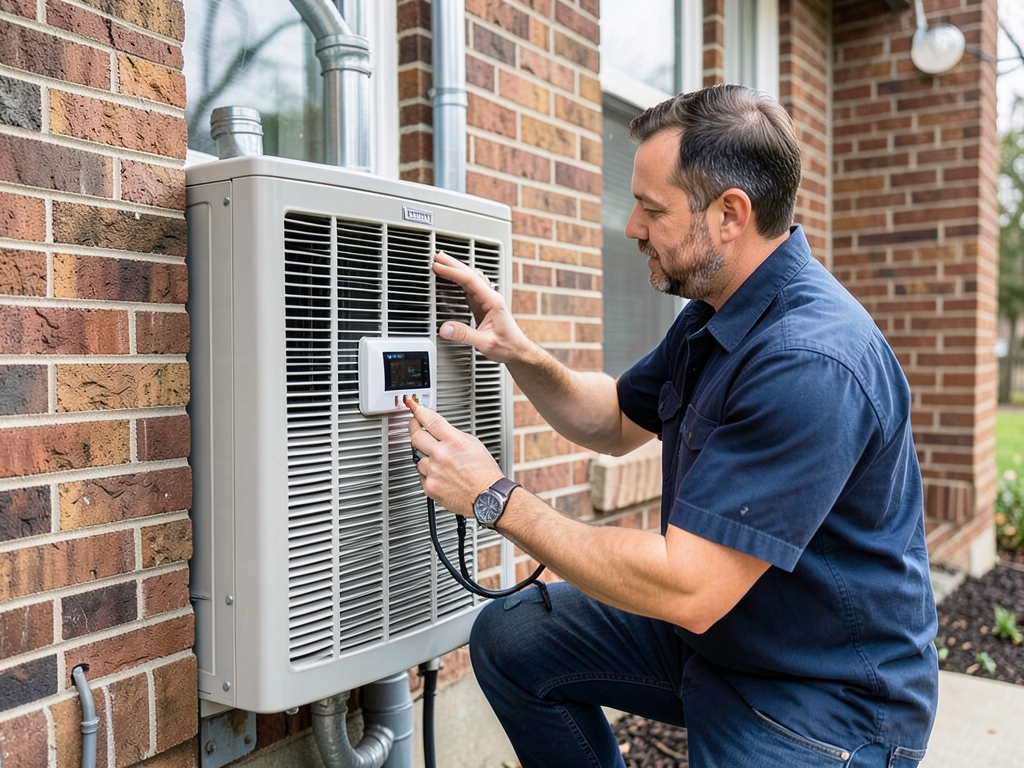
Choosing the right air conditioning system for your Detroit home means understanding how different technologies handle Michigan’s extreme summer humidity and cold winters. Single-stage units operate at one speed while inverter technology adjusts compressor speed to match cooling demand. This fundamental difference affects everything from your monthly DTE Energy bill to how consistently your home stays cool during August heatwaves. DTE Energy.
The Core Difference: Constant Speed vs. Variable Precision
Single-stage air conditioners run at 100% capacity whenever they’re on. They blast cold air until the thermostat reaches the set temperature then shut off completely. This on-off cycling creates temperature swings and wastes energy during mild weather. Inverter-driven units use a variable-speed compressor that can operate anywhere from 30% to 100% capacity. When outdoor temperatures are moderate the system runs at low speed continuously maintaining steady indoor temperatures while using less electricity.
The technology difference matters in Detroit’s climate. Our summers feature high humidity levels that single-stage units struggle to remove efficiently. Inverter systems can run longer at lower speeds pulling more moisture from the air before it reaches the cooling coil. This prevents the short cycling that leaves Detroit homes feeling clammy even when the thermostat reads the right temperature.
During a typical installation in Detroit’s Boston-Edison district technicians report hearing a distinct hum from single-stage compressors as they cycle on and off compared to the steady whisper of inverter units. The inverter systems maintain consistent airflow that homeowners describe as a gentle breeze rather than the abrupt blasts from single-stage units. The Best Local AC Installation Specialists for Homeowners in Royal Oak.
Single-Stage AC: Pros Cons and Best Use Cases in Michigan
Single-stage air conditioners cost less upfront typically $3000 to $5000 installed for a standard 2-3 ton unit. They feature simpler controls and fewer moving parts which means lower repair costs over time. For Detroit homeowners in older neighborhoods like Rosedale Park or Grandmont-Rosedale with tight budgets this reliability matters.
Single-stage units have significant drawbacks in our climate. They struggle with humidity control often leaving homes feeling sticky during July and August. The constant on-off cycling creates temperature variations of 2-4 degrees throughout the day. In Detroit’s older housing stock with original ductwork from the 1940s and 1950s these temperature swings feel even more pronounced.
Single-stage systems work best for smaller homes under 1500 square feet homes with good natural shade or as budget replacements when the existing system fails. They also suit homeowners planning to move within five years who won’t benefit from long-term energy savings.
Inverter Technology: How It Battles Detroit’s Summer Humidity
Inverter air conditioners use a variable-frequency drive to control compressor motor speed. Instead of the binary on-off operation the compressor can ramp up or down in precise increments. This allows the system to match cooling output to actual demand within 0.1 degree accuracy.
The dehumidification advantage becomes critical during Detroit’s humid summers. Standard single-stage units might run for 15-20 minutes remove some moisture then shut off. When they restart the coil has warmed up and can’t extract humidity as effectively. Inverter systems run continuously at low speed keeping the coil cold and removing 30-40% more moisture per hour.
Sound levels also differ significantly. Single-stage units generate 70-80 decibels when operating – similar to a vacuum cleaner. Inverter systems typically operate at 50-60 decibels about as loud as normal conversation. For homes in dense Detroit neighborhoods like Sherwood Forest or Palmer Woods this noise reduction matters.
Modern inverter units achieve SEER2 ratings of 18-26 compared to 13-16 for standard single-stage models. The federal Department of Energy implemented SEER2 testing standards in 2023 to provide more accurate real-world efficiency measurements. Under these standards inverter systems show even greater advantages in humid climates like Michigan’s. Department of Energy.
Detroit building code Section 13-96-5 requires all new HVAC installations to meet minimum efficiency standards. Inverter systems exceed these requirements by 30-40% making them the preferred choice for new construction in areas like Midtown and New Center.
Direct Comparison: Efficiency Comfort and Lifespan
Energy efficiency represents the biggest operational difference. A typical Detroit home using a single-stage 16 SEER unit might spend $120-150 monthly on cooling during July and August. The same home with a 20+ SEER inverter system often sees bills drop to $80-100 monthly – a 30-40% reduction.
Temperature consistency improves dramatically with inverter technology. Single-stage systems create 2-4 degree swings as they cycle. Inverter units maintain temperatures within 0.5 degrees of the setpoint. For Detroit’s older homes with poor insulation common in areas like Boston-Edison this consistency reduces hot spots and cold drafts.
Longevity varies by usage patterns. Single-stage compressors endure stress from constant starts and stops. Each startup draws 5-7 times normal power and creates mechanical wear. Inverter compressors start gently and run continuously experiencing less thermal and mechanical stress. Many inverter units last 15-20 years versus 12-15 years for single-stage models.
Maintenance requirements differ slightly. Both need annual professional service but inverter systems have more sophisticated controls that require specialized diagnostic tools. However their ability to detect problems early through built-in monitoring often prevents catastrophic failures. Fast and Professional Boiler Repair Services in Corktown and Midtown Detroit.
Financial Breakdown: Upfront Costs vs. Long-term Energy Savings in Detroit
Inverter air conditioning systems cost $5000 to $8000 installed for comparable capacity to single-stage units. The price difference reflects advanced electronics variable-speed motors and enhanced corrosion protection needed for Michigan’s climate. Why You Need a Dedicated Air Conditioning Repair Service in Birmingham Michigan.
Energy savings calculations for Detroit homes show compelling returns. With DTE Energy’s current residential rate around 16-18 cents per kilowatt-hour a typical 2000-square-foot home saves $40-60 monthly during cooling season. Over a five-year period these savings often offset the higher initial investment.
Operating cost comparison for a 2.5-ton system over 10 years:
| System Type | Initial Cost | 10-Year Energy Cost | Total 10-Year Cost | Annual Energy Use (kWh) |
|---|---|---|---|---|
| Single-Stage 16 SEER | $4500 | $8400 | $12900 | 5200 |
| Inverter 20+ SEER | $6500 | $5500 | $12000 | 3400 |
These calculations assume 1000 cooling hours annually and current DTE rates. Actual savings vary based on home insulation thermostat programming and local weather patterns.
Local Rebates and Incentives (DTE & Consumers Energy)
DTE Energy offers rebates up to $500 for high-efficiency air conditioning systems meeting specific SEER2 requirements. For inverter-driven units with SEER2 ratings above 18 the rebate increases to $600. Consumers Energy provides similar incentives with maximum rebates of $400 for qualifying systems. Consumers Energy.
Both utilities require installation by certified contractors and specific efficiency thresholds. The systems must include smart thermostats for full rebate eligibility. These programs aim to reduce peak summer demand that strains Detroit’s electrical grid during heatwaves.
Federal tax credits through 2032 provide additional savings. Homeowners can claim 30% of installation costs up to $2000 for qualifying high-efficiency HVAC systems. This credit applies to both equipment and installation labor making inverter systems more affordable.
Local HVAC contractors often bundle these incentives into package pricing. Some offer zero-interest financing for 12-24 months on qualifying systems spreading the higher upfront cost over time while energy savings begin immediately.
Final Verdict: Which System Should You Choose for Your Neighborhood?
For most Detroit homeowners inverter technology provides the best long-term value. The systems handle our humid summers better operate more quietly for urban living and deliver substantial energy savings that offset the higher purchase price within 3-5 years.
Single-stage units still make sense for specific situations. If your home has existing ductwork in poor condition replacing just the outdoor unit with a single-stage model might be most cost-effective. Similarly if you’re on a fixed income and need immediate replacement the lower upfront cost provides peace of mind.
Consider your home’s characteristics when deciding. Older brick homes in neighborhoods like Indian Village or East English Village benefit more from inverter dehumidification due to their tendency to hold moisture. Modern homes with good insulation in suburbs like Dearborn or Livonia see excellent performance from either system type. Modern HVAC Solutions for Historic Grosse Pointe Homes (Without Ruining the Aesthetics).
The Michigan climate heavily influences this decision. Our combination of high humidity temperature extremes and relatively short cooling season makes inverter technology’s ability to modulate output particularly valuable. During shoulder seasons in May and September inverter systems can maintain comfort while single-stage units would cycle inefficiently.
Ready to upgrade your home’s cooling system? Call (313) 552-7177 today to schedule your inspection. Our NATE-certified technicians will evaluate your home’s specific needs and help you choose the right system for Detroit’s climate.
Frequently Asked Questions
How much can I save on my electric bill with an inverter AC?
Detroit homeowners typically save 30-40% on cooling costs with inverter systems compared to single-stage units. For a typical 2000-square-foot home this means $40-60 less per month during peak summer months.
Do inverter AC units work during power outages?
No inverter air conditioners require continuous electrical power to operate. However they work exceptionally well with whole-home generators drawing less power than single-stage units when running.
How long do inverter AC compressors last?
With proper maintenance inverter compressor units typically last 15-20 years. Their variable-speed operation reduces wear compared to single-stage compressors that endure constant starts and stops.
Are inverter AC units noisy?
Inverter systems operate at 50-60 decibels much quieter than single-stage units at 70-80 decibels. This makes them ideal for Detroit’s dense neighborhoods where outdoor equipment noise affects nearby homes.
What SEER rating should I look for?
For Detroit’s climate look for SEER2 ratings of 18 or higher. The new SEER2 standards implemented in 2023 provide more accurate efficiency measurements for real-world conditions especially important in humid climates.