
Dealing With That Weird Dirty Sock Smell Coming From Your Berkley AC Unit
That foul gym-locker odor hitting you when your AC kicks on isn’t your imagination. It’s a real HVAC problem called dirty sock syndrome and it’s especially common in Berkley Michigan homes thanks to our humid summers and older housing stock. This guide explains what causes it, why it’s more than just a nuisance, and how to get rid of it for good.
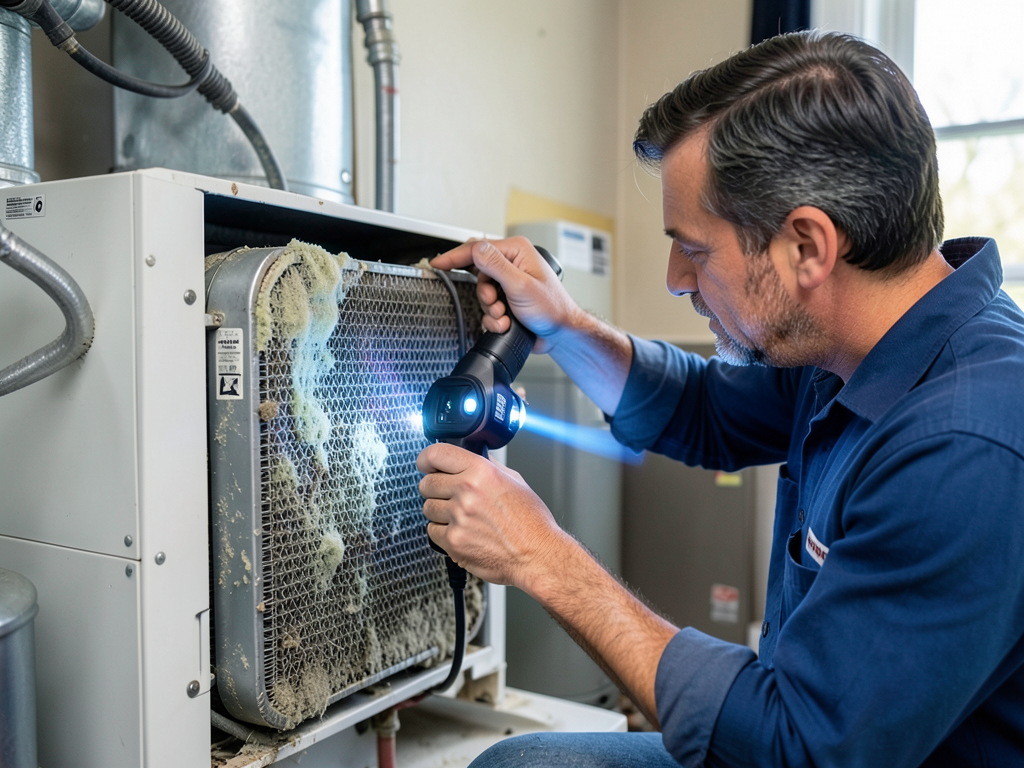
The smell comes from bacteria and mold growing on your evaporator coil. When moisture builds up during cooling cycles these microorganisms multiply creating that unmistakable musty odor. Left untreated it can spread throughout your home and even trigger allergy symptoms.
Why Your AC Smells: The Science of Biofilm and Bacteria on Evaporator Coils
Your evaporator coil sits inside your air handler unit. It’s constantly wet during Michigan’s humid summers. This creates perfect conditions for biofilm formation. Biofilm is a slimy layer of bacteria that protects the organisms underneath from cleaning agents.
Here’s what happens inside your system:
- Moisture Accumulation
Warm air passes over the cold coil creating condensation. In Berkley’s 80-90% summer humidity levels this moisture never fully dries.
- Bacterial Colonization
Dust and organic particles in the air provide food for bacteria. They multiply rapidly on the wet coil surface.
- Biofilm Development
Bacteria secrete protective slime creating a barrier that makes them resistant to standard cleaning.
- Odor Release
As the colony grows it releases volatile organic compounds creating that dirty sock smell.
According to EPA guidelines for indoor air quality biofilm growth can occur in as little as 24-48 hours under optimal conditions. Berkley’s climate provides those conditions from June through September. EPA Indoor Air Quality Guidelines.
Is Dirty Sock Syndrome Dangerous? Addressing Mold Spores and Respiratory Health
While dirty sock syndrome won’t damage your AC unit it can affect your health. The bacteria and mold spores circulating through your home may trigger respiratory issues especially for people with allergies or asthma. Storm Damage HVAC Repair.
Common symptoms include:
- Runny nose and sneezing
- Itchy or watery eyes
- Coughing or throat irritation
- Worsening asthma symptoms
Children and elderly residents are most vulnerable. The Michigan Department of Health and Human Services recommends addressing any persistent indoor air quality issues within 48 hours of detection.
How to Get Rid of the Smell: Professional Cleaning vs. UV Germicidal Lights
Getting rid of dirty sock syndrome requires eliminating the bacteria at its source. Here are your main options:
| Method | Effectiveness | Cost Range | Best For |
|---|---|---|---|
| Professional Coil Cleaning | 85-90% | $250-$450 | Recent onset mild cases |
| UV Germicidal Lights | 95-99% | $600-$1200 | Recurring problems older systems |
| Coil Replacement | 100% | $1500-$2500 | Severe long-term buildup |
| Epoxy Coated Coils | 90-95% | $800-$1500 | New installations prevention |
Professional cleaning involves removing the coil and using EPA-registered non-acidic cleaners that penetrate biofilm. The technician also cleans the condensate drain line which can harbor bacteria. Fast and Professional Boiler Repair Services in Corktown and Midtown Detroit.
UV germicidal lights install inside your air handler. They emit ultraviolet light that kills bacteria and mold on contact. The lights run continuously providing 24/7 protection.. Read more about Do UV Lights in Your HVAC System Really Kill Bacteria for Shelby Township Families?.
Preventative Maintenance Tips: Air Filter Ratings and Annual Inspections
Prevention is easier than treatment. These steps help prevent dirty sock syndrome:
- Upgrade Your Air Filter
Use MERV 11 or higher filters. They capture smaller particles that feed bacteria. Replace every 30-60 days during cooling season.
- Install a UV Light System
Preventative UV installation costs less than treating an existing problem. The lights pay for themselves through improved efficiency. The Best Local AC Installation Specialists for Homeowners in Royal Oak.
- Schedule Annual Maintenance
Professional cleaning before summer removes early buildup. Technicians check for drainage issues that promote moisture retention.
- Adjust Fan Settings
Set your thermostat to keep the fan running for 30-60 seconds after cooling cycles. This helps dry the coil.
According to ASHRAE standards proper filtration is the first line of defense against indoor air quality issues. A MERV 11 filter captures particles as small as 1-3 microns including many bacteria. ASHRAE Filtration Standards.
Schedule a Dirty Sock Syndrome Inspection in Detroit Today
Don’t let that smell get worse. The longer bacteria grows the harder it is to eliminate. Berkley homes with 15+ year old AC units are especially vulnerable.
Our NATE-certified technicians serve Berkley and surrounding Oakland County areas. We use EPA-registered cleaning agents and provide before/after photos of your coil condition.
Call (313) 552-7177 today to schedule your inspection. We offer same-day service for severe cases and provide a written treatment plan with upfront pricing.
Don’t wait until the smell spreads through your entire home. Pick up the phone and call (313) 552-7177 before the next heat wave hits.
Frequently Asked Questions
Can I clean the coil myself?
DIY cleaning often spreads bacteria and can damage delicate coil fins. Professional cleaning uses specialized equipment and EPA-approved chemicals that home improvement stores don’t carry.
How long does professional cleaning take?
Most coil cleaning services take 2-3 hours including inspection and testing. UV light installation typically requires 3-4 hours.
Will this fix other AC smells?
Different odors indicate different problems. Burning smells suggest electrical issues. Rotten egg odors could mean a gas leak. Our technicians diagnose the specific cause before recommending treatment.
How much does UV light maintenance cost?
UV bulbs need replacement every 12-24 months. Replacement bulbs cost $100-$200 plus installation. Annual maintenance checks ensure optimal performance.
Is this covered by warranty?
Most manufacturer warranties don’t cover dirty sock syndrome since it results from environmental conditions rather than equipment defects. However, some extended warranties include indoor air quality coverage.
{
“@context”: “https://schema.org”,
“@type”: “BlogPosting”,
“headline”: “Dealing With That Weird Dirty Sock Smell Coming From Your Berkley AC Unit”,
“description”: “Learn why your AC smells like dirty socks and how to fix it. Expert HVAC advice for Berkley MI homeowners dealing with evaporator coil bacteria and mold.”,
“wordCount”: 925,
“datePublished”: “2026-05-03T12:21:00.000Z”,
“dateModified”: “2026-05-03T12:21:00.000Z”,
“inLanguage”: “en-US”,
“mainEntityOfPage”: {
“@type”: “WebPage”,
“@id”: “https://acehvacdetroit.com”
},
“publisher”: {
“@type”: “LocalBusiness”,
“name”: “Ace HVAC Detroit”,
“url”: “https://acehvacdetroit.com”
},
“author”: {
“@type”: “Organization”,
“name”: “Ace HVAC Detroit”,
“url”: “https://acehvacdetroit.com”
},
“image”: {
“@type”: “ImageObject”,
“url”: “https://acehvacdetroit.com/wp-content/uploads/2026/03/dealing-with-that-weird-dirty-sock-smell-coming-fr-1.png”
}
}
{
“@context”: “https://schema.org”,
“@type”: “HVACBusiness”,
“name”: “Ace HVAC Detroit”,
“url”: “https://acehvacdetroit.com”,
“address”: {
“@type”: “PostalAddress”,
“addressLocality”: “Detroit”
},
“areaServed”: {
“@type”: “City”,
“name”: “Detroit”
}
}
{
“@context”: “https://schema.org”,
“@type”: “FAQPage”,
“mainEntity”: [
{
“@type”: “Question”,
“name”: “Can I clean the coil myself?”,
“acceptedAnswer”: {
“@type”: “Answer”,
“text”: “DIY cleaning often spreads bacteria and can damage delicate coil fins. Professional cleaning uses specialized equipment and EPA-approved chemicals that home improvement stores don’t carry.”
}
},
{
“@type”: “Question”,
“name”: “How long does professional cleaning take?”,
“acceptedAnswer”: {
“@type”: “Answer”,
“text”: “Most coil cleaning services take 2-3 hours including inspection and testing. UV light installation typically requires 3-4 hours.”
}
},
{
“@type”: “Question”,
“name”: “How much does UV light maintenance cost?”,
“acceptedAnswer”: {
“@type”: “Answer”,
“text”: “UV bulbs need replacement every 12-24 months. Replacement bulbs cost $100-$200 plus installation. Annual maintenance checks ensure optimal performance.”
}
},
{
“@type”: “Question”,
“name”: “Is this covered by warranty?”,
“acceptedAnswer”: {
“@type”: “Answer”,
“text”: “Most manufacturer warranties don’t cover dirty sock syndrome since it results from environmental conditions rather than equipment defects. However, some extended warranties include indoor air quality coverage.”
}
}
]
}
{
“@context”: “https://schema.org”,
“@type”: “HowTo”,
“name”: “Biofilm Formation Process”,
“step”: [
{
“@type”: “HowToStep”,
“position”: 1,
“name”: “Moisture Accumulation”,
“text”: “Warm air passes over the cold coil creating condensation. In Berkley’s 80-90% summer humidity levels this moisture never fully dries.”
},
{
“@type”: “HowToStep”,
“position”: 2,
“name”: “Bacterial Colonization”,
“text”: “Dust and organic particles in the air provide food for bacteria. They multiply rapidly on the wet coil surface.”
},
{
“@type”: “HowToStep”,
“position”: 3,
“name”: “Biofilm Development”,
“text”: “Bacteria secrete protective slime creating a barrier that makes them resistant to standard cleaning.”
},
{
“@type”: “HowToStep”,
“position”: 4,
“name”: “Odor Release”,
“text”: “As the colony grows it releases volatile organic compounds creating that dirty sock smell.”
}
],
“image”: “https://acehvacdetroit.com/wp-content/uploads/2026/03/dealing-with-that-weird-dirty-sock-smell-coming-fr-1.png”
}
{
“@context”: “https://schema.org”,
“@type”: “BreadcrumbList”,
“itemListElement”: [
{
“@type”: “ListItem”,
“position”: 1,
“name”: “Home”,
“item”: “https://acehvacdetroit.com”
},
{
“@type”: “ListItem”,
“position”: 2,
“name”: “Blog”,
“item”: “https://acehvacdetroit.com/blog”
},
{
“@type”: “ListItem”,
“position”: 3,
“name”: “Dealing With That Weird Dirty Sock Smell Coming From Your Berkley AC Unit”
}
]
}
{
“@context”: “https://schema.org”,
“@type”: “Service”,
“serviceType”: “HVAC”,
“provider”: {
“@type”: “LocalBusiness”,
“name”: “Ace HVAC Detroit”,
“url”: “https://acehvacdetroit.com”
},
“areaServed”: {
“@type”: “City”,
“name”: “Detroit”
},
“description”: “Learn why your AC smells like dirty socks and how to fix it. Expert HVAC advice for Berkley MI homeowners dealing with evaporator coil bacteria and mold.”
}