
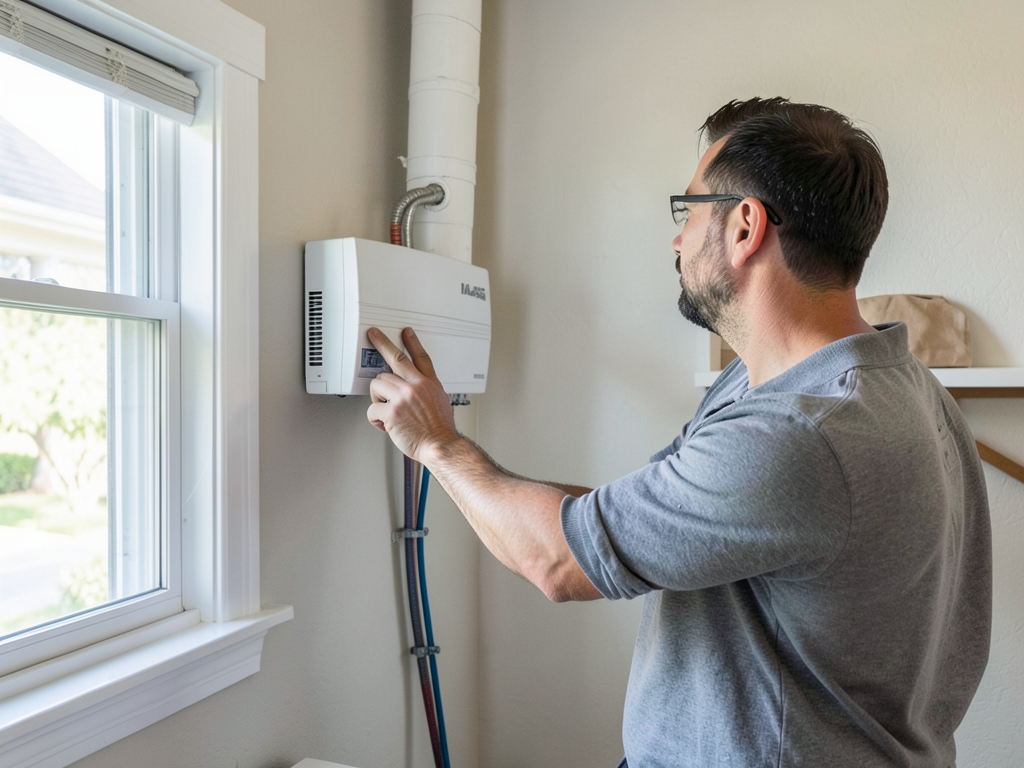
Fixing the Unbearable Second Floor Heat in Berkley Cape Cod Homes
The second floor of your Berkley Cape Cod feels like a sauna while the first floor stays comfortable. You’re not imagining it. Cape Cod homes built in the 1940s and 1950s have a notorious design flaw that traps heat in the upper level. The combination of sloped ceilings, knee walls, and inadequate insulation creates a perfect storm for heat retention that makes those upstairs bedrooms nearly unusable during Detroit’s humid summers. Storm Damage HVAC Repair.
The physics are simple but frustrating. Heat rises naturally, and in a Cape Cod with its characteristic dormer windows and angled ceilings, that rising heat gets trapped in the upper level with nowhere to go. The knee walls that create those charming sloped ceilings also create thermal bridges that conduct heat from the hot attic space directly into your living area. Add Detroit’s summer humidity and you’ve got a recipe for unbearable conditions upstairs.
Understanding the specific challenges of your Berkley Cape Cod is the first step toward finding a solution that actually works. Let’s examine why these homes struggle and what you can do about it.
Why Cape Cod Houses Are Notoriously Hard to Cool
Cape Cod homes were designed for a different era with different priorities. Built primarily between 1940 and 1960, these homes emphasized charm, efficient use of space, and cost-effective construction during the post-war building boom. Air conditioning wasn’t standard equipment, so builders didn’t design these homes with modern cooling needs in mind. Modern HVAC Solutions for Historic Grosse Pointe Homes (Without Ruining the Aesthetics).
The architectural features that make Cape Cods so charming also make them cooling nightmares. The characteristic gambrel or side-gable roof creates a compact attic space that heats up dramatically in summer sun. That heat conducts through the ceiling and walls into the living space below. The dormer windows that add character and light also create additional heat gain through solar radiation.
Detroit’s climate makes these problems even worse. Our summers bring high humidity levels that make heat feel more oppressive. When temperatures climb into the 80s and 90s with humidity above 70%, your second floor can easily run 8-12 degrees warmer than the first floor. The stack effect, where warm air rises and gets trapped, is amplified in these homes with their open stairwells and limited second-floor ventilation.
The original ductwork in many Berkley Cape Cods was designed for basic heating, not modern cooling demands. Narrow ducts with minimal insulation struggle to deliver enough cool air to the upper level. By the time conditioned air reaches the second floor, it’s often lost much of its cooling capacity through the duct walls.
The Role of Knee Walls and Sloped Ceilings in Heat Retention
Knee walls are the primary culprit in Cape Cod heat problems. These short walls that meet the sloped ceiling create a thermal bridge between your living space and the unconditioned attic. In many Berkley homes, the original insulation in these knee wall cavities has settled or deteriorated over the past 70+ years, leaving gaps that allow heat transfer.
The R-value of insulation degrades over time. What might have been R-13 fiberglass batts in 1955 could now be providing only R-5 or less of actual resistance to heat flow. That’s like having a single-pane window in your wall. The sloped ceiling sections often have even less insulation because they’re harder to access and insulate properly.
Air sealing is another major issue in knee wall construction. The junction between the knee wall and the sloped ceiling, and between the knee wall and the floor, often has gaps that allow conditioned air to escape into the attic and hot attic air to infiltrate the living space. These leaks can account for 20-30% of your cooling losses.
Attic ventilation compounds the problem. Many older Cape Cods have inadequate attic venting, allowing temperatures in the attic to soar to 140-150 degrees on sunny summer days. That super-heated air conducts through the ceiling and walls, turning your second floor into an oven.
Top 4 HVAC Solutions for Cape Cod Second Floors
Based on field experience with hundreds of Berkley Cape Cods, here are the four most effective solutions for second-floor heat problems. Each has different cost implications, installation requirements, and effectiveness levels. The Best Local AC Installation Specialists for Homeowners in Royal Oak.
1. Ductless Mini-Split Systems (The Gold Standard)
Ductless mini-splits have revolutionized cooling for Cape Cod homes. These systems consist of an outdoor compressor unit connected to one or more indoor air handlers mounted on walls or ceilings. For second-floor applications, they’re mounted high on walls where they can distribute cool air effectively.
The technology works exceptionally well for Cape Cods because it doesn’t rely on leaky old ductwork. Each indoor unit can be controlled independently, allowing you to cool only the spaces you’re using. Modern mini-splits achieve SEER2 ratings of 20-25, making them highly energy efficient.
Installation typically takes 1-2 days and requires only a small hole through the wall for refrigerant lines. The indoor units are relatively unobtrusive and can be mounted to blend with your decor. Most Berkley homeowners find the improved comfort worth the investment, with typical systems costing $3,500-5,000 for a single upstairs bedroom suite.
The key advantage is targeted cooling where you need it most. Instead of trying to force cool air through inadequate ductwork, you’re delivering cooling directly to the problem area. This approach also allows you to maintain different temperatures on different floors, which is often what you want in a multi-story home.
2. Dual-Zone HVAC Conversions
Dual-zone conversions work by adding zone control to your existing HVAC system. This involves installing a zone control panel, motorized dampers in your ductwork, and additional thermostats. The system directs more conditioned air to the second floor when needed while reducing airflow to the first floor.
This solution is less invasive than mini-splits since it uses your existing equipment. However, it requires that your current system has enough capacity to handle the additional cooling load. Many older Cape Cods need system upgrades to make dual zoning effective.
The installation process involves cutting into existing ductwork to install dampers, running new thermostat wiring, and programming the zone control panel. This typically takes 2-3 days and costs $2,500-4,000 depending on your system’s complexity.
The main limitation is that dual zoning can only work with what your existing system can provide. If your furnace or air conditioner is undersized or your ductwork is severely compromised, you may still have cooling issues even with zoning controls.
3. High-Velocity Cooling Systems
High-velocity systems use small, flexible ducts that can be routed through existing wall cavities without major demolition. These systems operate at higher pressures than conventional ductwork, allowing them to deliver more cooling through smaller passages.
The indoor units, called air handlers, are typically compact and can be installed in closets or attic spaces. The small supply vents are less obtrusive than traditional registers and can be placed strategically for optimal airflow.
For Berkley Cape Cods, high-velocity systems offer a good compromise between effectiveness and preservation of original architecture. Installation usually takes 3-5 days and costs $8,000-12,000 for a complete system covering both floors.
The technology excels at removing humidity, which is crucial for Detroit’s muggy summers. High-velocity systems can remove 30% more moisture from the air than conventional systems, making your upstairs feel cooler even at higher temperatures.
4. Attic Insulation and Proper Venting
Before investing in expensive HVAC equipment, addressing the building envelope often provides the biggest bang for your buck. Proper attic insulation and ventilation can reduce second-floor heat gain by 30-40%.
Current Michigan building code requires R-49 insulation in attics, but many Berkley Cape Cods have only R-19 or less. Upgrading to blown-in cellulose or fiberglass to achieve R-49-60 can dramatically reduce heat transfer through the ceiling.
Proper attic ventilation works in conjunction with insulation. A combination of soffit vents, ridge vents, and gable vents creates airflow that carries heat out of the attic before it can conduct into your living space. This passive cooling can reduce attic temperatures by 20-30 degrees.
Air sealing is equally important. Using spray foam or caulk to seal gaps around knee walls, ceiling penetrations, and other openings prevents conditioned air loss and hot air infiltration. This relatively inexpensive work ($1,000-2,000) often provides immediate comfort improvements.
Local Climate Factors: Dealing with Detroit Summers
Detroit’s climate presents unique challenges for cooling Cape Cod homes. Our summers bring high humidity levels that make heat feel more oppressive. When temperatures climb into the 80s and 90s with humidity above 70%, your second floor can easily run 8-12 degrees warmer than the first floor.
The Great Lakes influence our weather patterns, creating conditions that are both hot and sticky. This combination is particularly challenging for older homes because high humidity makes it harder for your body to cool itself through evaporation. Even if the air temperature is technically comfortable, high humidity can make it feel miserable.
Detroit’s urban heat island effect also plays a role. Areas with more pavement and buildings retain heat longer into the evening, preventing your home from cooling down overnight. This is especially noticeable in older neighborhoods like Berkley where mature trees provide some shade but can’t overcome the heat retention of dense construction.
Thunderstorm patterns in Southeast Michigan create additional cooling challenges. When storms roll through, they often bring temporary relief followed by increased humidity as the storm passes. Your cooling system needs to handle these rapid weather changes, which is why proper sizing and humidity control are so important.
According to the National Weather Service, Detroit averages 17 days per year with temperatures above 90 degrees. During these heat waves, your second floor becomes particularly vulnerable because it’s already operating at a disadvantage due to its design. Having a dedicated cooling solution for these extreme days is essential. Why You Need a Dedicated Air Conditioning Repair Service in Birmingham Michigan.
Cost-Benefit Analysis: Which Solution Offers the Best ROI?
Choosing the right solution depends on your budget, how long you plan to stay in your home, and your comfort priorities. Here’s a comparison of the four main approaches:
| Solution | Initial Cost | Energy Savings | Comfort Improvement | Best For |
|---|---|---|---|---|
| Ductless Mini-Split | $3,500-5,000 | 15-25% | Excellent | Targeted cooling, quick install |
| Dual-Zone Conversion | $2,500-4,000 | 10-20% | Good | Using existing equipment |
| High-Velocity System | $8,000-12,000 | 20-30% | Excellent | Whole-house solution |
| Insulation/Ventilation | $1,000-3,000 | 5-15% | Moderate | Budget-conscious, DIY-friendly |
The insulation and ventilation approach offers the fastest payback period, often recovering costs through energy savings within 2-3 years. However, it may not provide sufficient cooling for extremely hot days. Mini-splits offer the best balance of cost, effectiveness, and energy efficiency for most Berkley homeowners.
High-velocity systems make the most sense if you’re planning a whole-house HVAC replacement or if you have severe cooling problems throughout the home. The higher upfront cost is offset by superior comfort and energy efficiency over time.
Dual-zone conversions work well if your existing system is relatively new and adequately sized. However, many older Cape Cods have 10+ year old systems that would benefit from replacement rather than zoning modifications.
Consider also the impact on your home’s value. Energy-efficient cooling solutions with good humidity control are increasingly important to buyers in the Detroit market. A well-designed cooling solution can be a selling point rather than an afterthought.
Schedule a Cape Cod Cooling Assessment in Metro Detroit
Every Cape Cod is different, and the best solution for your home depends on factors like your existing HVAC system, attic configuration, and specific comfort goals. The only way to know for sure is to have a professional assessment. Fast and Professional Boiler Repair Services in Corktown and Midtown Detroit.
During an assessment, we’ll perform a Manual J load calculation to determine your exact cooling needs. This involves measuring your home’s square footage, evaluating insulation levels, and assessing window efficiency. We’ll also inspect your existing ductwork to identify any problems that might affect cooling performance.
We use thermal imaging cameras to detect heat loss patterns and identify areas where insulation is lacking or air sealing is needed. This diagnostic approach ensures we’re solving the right problems rather than just treating symptoms.
Our assessment includes evaluating your current utility rates and potential energy savings from different solutions. We can show you exactly how long it will take to recover your investment through reduced energy bills.
We also check for any code compliance issues that might affect your installation. Michigan building codes have specific requirements for HVAC installations, and we ensure all work meets or exceeds these standards.
Don’t wait until the next heat wave to address your second-floor cooling problems. The sooner you act, the more comfortable your home will be this summer. Call (313) 552-7177 today to schedule your assessment and take the first step toward a cooler, more comfortable second floor.
Frequently Asked Questions
Will a bigger air conditioner solve my second-floor heat problem?
No, simply installing a larger air conditioner rarely solves second-floor heat issues in Cape Cods. The problem is usually related to heat gain through poorly insulated knee walls, inadequate attic ventilation, and inefficient ductwork rather than insufficient cooling capacity. A properly sized system with good distribution is more effective than an oversized unit.
How long does it take to install a ductless mini-split in a Cape Cod?
Most ductless mini-split installations in Berkley Cape Cods can be completed in 1-2 days. The indoor unit mounting takes a few hours, and running the refrigerant lines through walls or along exterior surfaces typically requires one full day. The outdoor unit installation and system charging add another few hours. Minimal disruption to your home is involved.
Are there any rebates available for cooling upgrades in Michigan?
Yes, DTE Energy and Consumers Energy both offer rebates for high-efficiency cooling equipment. Current programs provide rebates of $200-500 for qualifying air conditioners and heat pumps with SEER2 ratings of 16 or higher. Some utility companies also offer rebates for attic insulation upgrades. We handle all rebate paperwork as part of our installation service. DTE Energy cooling rebates.
Can I install a window air conditioner instead?
While window units can provide temporary relief, they’re not ideal for Cape Cod second floors. They’re less energy efficient, create security concerns, and can be noisy. They also don’t address the underlying issues of heat gain and poor insulation. For long-term comfort and efficiency, a dedicated cooling solution is usually more cost-effective.
How much does it cost to cool a Cape Cod second floor?
Costs vary widely based on the solution you choose. Basic improvements like attic insulation and air sealing cost $1,000-3,000. Ductless mini-splits run $3,500-5,000 for a single upstairs area. Complete high-velocity systems cost $8,000-12,000. We provide detailed quotes after assessing your specific situation and can show you expected energy savings to help you make the best decision.
Ready to stop sweating through another Michigan summer? Call (313) 552-7177 now to schedule your Cape Cod cooling assessment. Our experienced technicians understand the unique challenges of Berkley’s historic homes and can recommend the perfect solution for your budget and comfort needs.
Don’t let another summer pass with an unbearably hot second floor. Pick up the phone and call (313) 552-7177 before the next heat wave hits. Your upstairs bedrooms should be comfortable retreats, not saunas that keep you up at night. For more information, visit Energy.gov guide to ductless mini-split systems.
{
“@context”: “https://schema.org”,
“@type”: “BlogPosting”,
“headline”: “Fixing the Unbearable Second Floor Heat in Berkley Cape Cod Homes”,
“description”: “Is your Berkley Cape Cod’s second floor unbearably hot? Learn why knee-wall Cape Cods trap heat and discover proven HVAC solutions from local Detroit experts.”,
“wordCount”: 2564,
“datePublished”: “2026-03-13T09:24:00.000Z”,
“dateModified”: “2026-03-13T09:24:00.000Z”,
“inLanguage”: “en-US”,
“mainEntityOfPage”: {
“@type”: “WebPage”,
“@id”: “https://acehvacdetroit.com”
},
“publisher”: {
“@type”: “LocalBusiness”,
“name”: “Ace HVAC Detroit”,
“url”: “https://acehvacdetroit.com”
},
“author”: {
“@type”: “Organization”,
“name”: “Ace HVAC Detroit”,
“url”: “https://acehvacdetroit.com”
},
“image”: {
“@type”: “ImageObject”,
“url”: “https://acehvacdetroit.com/wp-content/uploads/2026/03/fixing-the-unbearable-second-floor-heat-in-berkley-1.png”
}
}
{
“@context”: “https://schema.org”,
“@type”: “HVACBusiness”,
“name”: “Ace HVAC Detroit”,
“url”: “https://acehvacdetroit.com”,
“address”: {
“@type”: “PostalAddress”,
“addressLocality”: “Detroit”
},
“areaServed”: {
“@type”: “City”,
“name”: “Detroit”
}
}
{
“@context”: “https://schema.org”,
“@type”: “FAQPage”,
“mainEntity”: [
{
“@type”: “Question”,
“name”: “Cost-Benefit Analysis: Which Solution Offers the Best ROI?”,
“acceptedAnswer”: {
“@type”: “Answer”,
“text”: “Choosing the right solution depends on your budget, how long you plan to stay in your home, and your comfort priorities. Here’s a comparison of the four main approaches:”
}
},
{
“@type”: “Question”,
“name”: “Will a bigger air conditioner solve my second-floor heat problem?”,
“acceptedAnswer”: {
“@type”: “Answer”,
“text”: “No, simply installing a larger air conditioner rarely solves second-floor heat issues in Cape Cods. The problem is usually related to heat gain through poorly insulated knee walls, inadequate attic ventilation, and inefficient ductwork rather than insufficient cooling capacity. A properly sized system with good distribution is more effective than an oversized unit.”
}
},
{
“@type”: “Question”,
“name”: “How long does it take to install a ductless mini-split in a Cape Cod?”,
“acceptedAnswer”: {
“@type”: “Answer”,
“text”: “Most ductless mini-split installations in Berkley Cape Cods can be completed in 1-2 days. The indoor unit mounting takes a few hours, and running the refrigerant lines through walls or along exterior surfaces typically requires one full day. The outdoor unit installation and system charging add another few hours. Minimal disruption to your home is involved.”
}
},
{
“@type”: “Question”,
“name”: “Are there any rebates available for cooling upgrades in Michigan?”,
“acceptedAnswer”: {
“@type”: “Answer”,
“text”: “Yes, DTE Energy and Consumers Energy both offer rebates for high-efficiency cooling equipment. Current programs provide rebates of $200-500 for qualifying air conditioners and heat pumps with SEER2 ratings of 16 or higher. Some utility companies also offer rebates for attic insulation upgrades. We handle all rebate paperwork as part of our installation service. DTE Energy cooling rebates.”
}
},
{
“@type”: “Question”,
“name”: “Can I install a window air conditioner instead?”,
“acceptedAnswer”: {
“@type”: “Answer”,
“text”: “While window units can provide temporary relief, they’re not ideal for Cape Cod second floors. They’re less energy efficient, create security concerns, and can be noisy. They also don’t address the underlying issues of heat gain and poor insulation. For long-term comfort and efficiency, a dedicated cooling solution is usually more cost-effective.”
}
},
{
“@type”: “Question”,
“name”: “How much does it cost to cool a Cape Cod second floor?”,
“acceptedAnswer”: {
“@type”: “Answer”,
“text”: “Costs vary widely based on the solution you choose. Basic improvements like attic insulation and air sealing cost $1,000-3,000. Ductless mini-splits run $3,500-5,000 for a single upstairs area. Complete high-velocity systems cost $8,000-12,000. We provide detailed quotes after assessing your specific situation and can show you expected energy savings to help you make the best decision.”
}
}
]
}
{
“@context”: “https://schema.org”,
“@type”: “BreadcrumbList”,
“itemListElement”: [
{
“@type”: “ListItem”,
“position”: 1,
“name”: “Home”,
“item”: “https://acehvacdetroit.com”
},
{
“@type”: “ListItem”,
“position”: 2,
“name”: “Blog”,
“item”: “https://acehvacdetroit.com/blog”
},
{
“@type”: “ListItem”,
“position”: 3,
“name”: “Fixing the Unbearable Second Floor Heat in Berkley Cape Cod Homes”
}
]
}
{
“@context”: “https://schema.org”,
“@type”: “Service”,
“serviceType”: “HVAC”,
“provider”: {
“@type”: “LocalBusiness”,
“name”: “Ace HVAC Detroit”,
“url”: “https://acehvacdetroit.com”
},
“areaServed”: {
“@type”: “City”,
“name”: “Detroit”
},
“description”: “Is your Berkley Cape Cod’s second floor unbearably hot? Learn why knee-wall Cape Cods trap heat and discover proven HVAC solutions from local Detroit experts.”
}