
Heating and Cooling Your New Backyard ADU or Tiny Home in Detroit
Detroit’s extreme temperature swings from sub-zero winters to humid 90°F summers create unique HVAC challenges for backyard ADUs and tiny homes. The right heating and cooling system isn’t just about comfort—it’s about protecting your investment and ensuring year-round livability in Michigan’s unpredictable climate. Michigan Residential Code.
Tiny homes and ADUs need specialized HVAC solutions because standard residential systems are oversized for spaces under 800 square feet. Detroit’s Zone 5 climate demands equipment that can handle -20°F wind chills while also managing the high humidity that builds up in tightly sealed small spaces during summer months. Modern HVAC Solutions for Historic Grosse Pointe Homes (Without Ruining the Aesthetics).
Why Detroit’s Climate Makes ADU HVAC Different
Detroit experiences the nation’s most extreme seasonal temperature swings outside of Alaska. Your backyard ADU faces conditions that can damage improperly sized equipment: ice storms that coat outdoor compressors, summer humidity that breeds mold in poorly ventilated spaces, and rapid freeze-thaw cycles that stress ductless systems.
The city’s combined sewer system also affects basement-level ADUs. Heavy rains can flood mechanical rooms, damaging furnaces and air handlers. Detroit’s high clay soil retains moisture, creating damp conditions that standard HVAC systems struggle to manage in small, enclosed spaces.
Top 4 HVAC Solutions for Detroit Tiny Homes
Choosing the right system depends on your ADU’s size, insulation quality, and whether you’re connected to the grid. Here are the four most reliable options for Detroit’s climate: How to Find Reliable Emergency Furnace Repair in Detroit Before the Next Deep Freeze.
- Ductless Mini-Split Heat Pumps
These systems provide both heating and cooling without ductwork. Modern cold-climate mini-splits from Mitsubishi and Daikin operate efficiently down to -15°F, making them ideal for Detroit winters. The outdoor compressor mounts on a concrete pad, while slim indoor units mount high on walls to save space.
- High-Velocity HVAC Systems
Using small, flexible ducts that fit in tight ceiling cavities, these systems deliver powerful heating and cooling through ceiling outlets. They’re perfect for lofts where traditional ductwork won’t fit. The high air velocity prevents temperature stratification in tall spaces.
- Through-the-Wall Heat Pumps
PTAC (Packaged Terminal Air Conditioner) units offer reliable heating and cooling in a single package. They mount through exterior walls and work well in spaces 400-600 square feet. Modern units include heat pump technology that eliminates the need for electric resistance backup heat.
- Electric Baseboard with Mini-Split Cooling
For off-grid or extremely small spaces under 300 square feet, electric baseboard heating paired with a small window AC unit provides the most affordable solution. This combination works well in guest houses used seasonally rather than year-round.
BTU Calculations for Detroit’s Tiny Spaces
Proper sizing prevents equipment cycling and ensures comfort. Detroit’s climate requires higher heating capacity than cooling capacity due to extreme winter lows. Use this sizing guide for spaces under 800 square feet:
| Square Footage | Insulation Quality | Heating BTU/hr | Cooling BTU/hr |
|---|---|---|---|
| 200-300 | Standard | 6,000-8,000 | 5,000-6,000 |
| 300-400 | Standard | 8,000-10,000 | 6,000-8,000 |
| 400-500 | Standard | 10,000-12,000 | 8,000-10,000 |
| 500-600 | Standard | 12,000-15,000 | 10,000-12,000 |
For Detroit’s climate, add 15% to cooling capacity to handle summer humidity. For heating, add 20% if your ADU has many windows or poor insulation.
Off-Grid vs. On-Grid Considerations
Off-grid ADU owners face different HVAC challenges. A standard mini-split draws 500-800 watts during heating cycles, requiring substantial battery storage or a generator. Propane furnaces provide reliable backup but need proper venting and regular fuel deliveries.
On-grid installations benefit from DTE Energy’s Energy Optimization program, which offers rebates up to $500 for high-efficiency mini-splits with SEER2 ratings above 16. These systems pay for themselves through reduced utility bills within 3-5 years in Detroit’s climate. DTE Energy Rebates.
Detroit Building Codes and Permitting
Detroit’s zoning ordinance allows ADUs in most residential districts, but HVAC installations require mechanical permits. The Michigan Residential Code mandates carbon monoxide detectors within 15 feet of sleeping areas in all ADUs with combustion appliances. The Best Local AC Installation Specialists for Homeowners in Royal Oak.
For tiny homes on wheels parked in Detroit, the International Residential Code doesn’t apply. Instead, you’ll need to follow Michigan’s Mobile Home Standards for any permanent utility connections. Local inspectors focus on proper electrical disconnects and dedicated circuits for HVAC equipment. Why You Need a Dedicated Air Conditioning Repair Service in Birmingham Michigan.
Installation Cost Breakdown for Detroit Market
Equipment costs vary based on brand and efficiency. A 12,000 BTU cold-climate mini-split from Mitsubishi or Daikin costs $2,800-$3,500 installed. High-velocity systems run $5,000-$7,000 for complete installation in spaces under 600 square feet.
Labor costs in Detroit average $85-$125 per hour for HVAC installation. Most ADU projects require 16-24 hours of labor, including electrical work and condensate line installation. Older homes may need additional electrical panel upgrades, adding $800-$1,500 to the project.
Ventilation Requirements for Tiny Homes
Tiny homes trap moisture quickly due to their small volume. Detroit’s humid summers make proper ventilation critical. Energy Recovery Ventilators (ERVs) exchange stale indoor air with fresh outdoor air while recovering heat in winter and removing humidity in summer.
Without adequate ventilation, tiny homes develop condensation on windows and walls, leading to mold growth. ERVs use minimal electricity (50-100 watts) and maintain indoor air quality without the energy loss of open windows.
Winterization and Maintenance Tips
Detroit’s freeze-thaw cycles damage outdoor HVAC equipment. Install compressor pads that elevate units 6 inches above grade to prevent ice damage. Use weatherproof covers during extended absences, but never wrap compressors completely—they need airflow even in winter.
Change filters every 90 days minimum. Tiny homes accumulate dust faster due to limited air volume. Clean condenser coils annually with a garden hose on low pressure. Check condensate drains monthly to prevent clogs that can cause indoor flooding.
Energy Efficiency and Utility Costs
High-efficiency mini-splits use 30-50% less electricity than standard heat pumps. In Detroit, where electricity costs average 16.5 cents per kilowatt-hour, this translates to $30-$50 monthly savings during peak heating and cooling seasons.
Smart thermostats optimize tiny home HVAC by learning occupancy patterns. Since small spaces heat and cool quickly, programmable setbacks save significant energy. A 5-degree setback while away can reduce heating costs by 15% without sacrificing comfort.
Common ADU HVAC Problems in Detroit
Ice buildup on outdoor units occurs when temperatures stay below 20°F for extended periods. This forces defrost cycles that temporarily stop heating. Proper unit placement away from snow drifts and prevailing winds prevents most icing issues.
Humidity control failures happen when systems are oversized. Large units short-cycle, running too briefly to remove moisture. Always choose the smallest unit that meets your BTU requirements for optimal humidity control in Detroit’s climate.
Choosing the Right HVAC Contractor
Not all HVAC contractors understand tiny home requirements. Look for NATE-certified technicians with experience in small-space installations. Ask about their familiarity with cold-climate heat pumps and their approach to Manual J load calculations for spaces under 800 square feet.
Request references from other ADU or tiny home owners. A qualified contractor will perform a detailed heat loss calculation rather than simply matching square footage to equipment size. They should also discuss zoning compliance and permit requirements specific to Detroit.
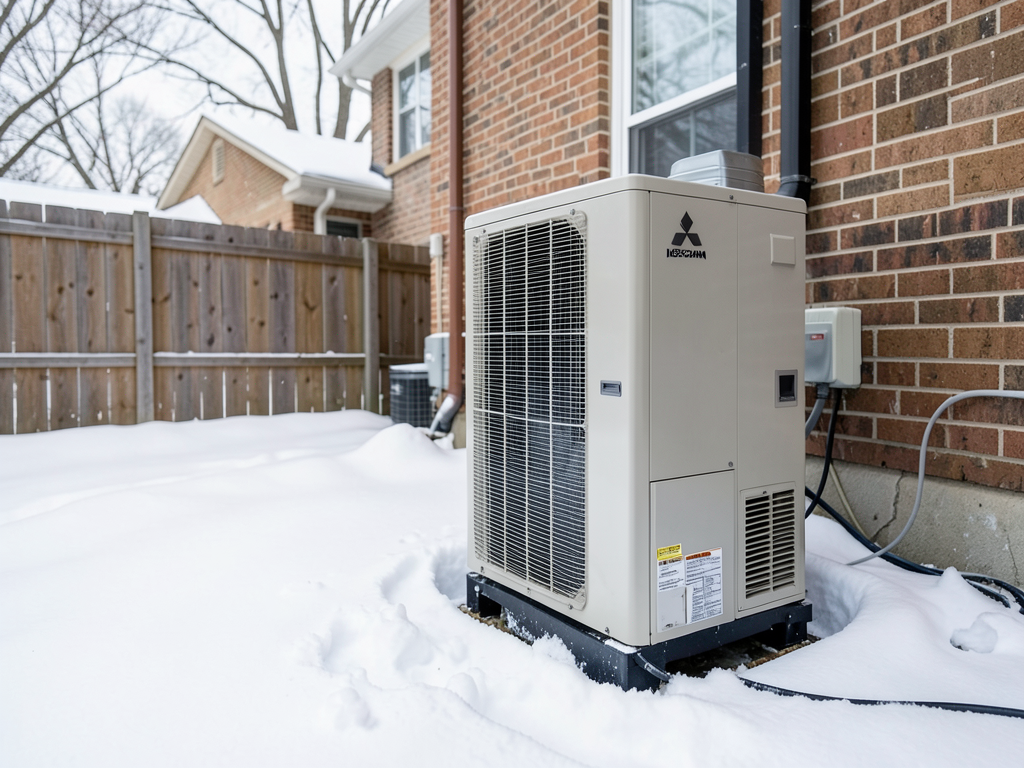
Diagram showing proper placement of mini-split indoor and outdoor units for optimal airflow in a 400-square-foot ADU.
Photo of a cold-climate mini-split heat pump operating in Detroit winter conditions, showing proper clearance from snow and ice.
Cross-section illustration of high-velocity HVAC duct routing through ceiling cavities in a tiny home loft space.
Frequently Asked Questions
What size HVAC system do I need for a 400-square-foot ADU?
For Detroit’s climate, a 400-square-foot ADU typically needs 8,000-10,000 BTU heating and 6,000-8,000 BTU cooling capacity. Add 15% for high humidity and 20% for poor insulation. A 9,000 BTU cold-climate mini-split provides the best balance of efficiency and comfort.
Can I install HVAC myself in my backyard ADU?
Michigan law requires licensed HVAC contractors for system installation. DIY work voids warranties and may violate building codes. Improper refrigerant handling poses environmental and safety risks. Professional installation ensures proper sizing, permits, and warranty coverage. Fast and Professional Boiler Repair Services in Corktown and Midtown Detroit.
How much does it cost to heat and cool a tiny home in Detroit annually?
Annual HVAC costs range from $400-$800 depending on efficiency, insulation, and usage patterns. High-efficiency mini-splits cost 30-40% less to operate than electric resistance heating. DTE Energy rebates can offset 15-20% of initial equipment costs.
What’s the best HVAC system for off-grid tiny homes?
Propane furnaces with DC-powered ventilation fans work best for off-grid applications. They provide reliable heat without electrical demands. Pair with a small DC mini-split for cooling, or use passive cooling strategies like strategic window placement and thermal mass.
How do I prevent mold in my tiny home’s HVAC system?
Install an ERV for continuous ventilation, use a UV light in the air handler to kill mold spores, and maintain indoor humidity between 30-50%. Clean or replace filters every 60-90 days and inspect condensate drains monthly for clogs.
Ready to Install Your ADU HVAC System?
Proper HVAC installation protects your backyard investment and ensures year-round comfort in Detroit’s extreme climate. Don’t risk undersized equipment or code violations that could cost thousands in repairs.
Call (313) 552-7177 today to schedule your free consultation. Our NATE-certified technicians specialize in tiny home and ADU installations throughout Detroit. We’ll help you choose the right system, handle all permits, and ensure your new space stays comfortable through every Michigan season.
Pick up the phone and call (313) 552-7177 before the next cold snap hits. Your backyard ADU deserves professional HVAC installation that’s built to last in Detroit’s challenging climate.
{
“@context”: “https://schema.org”,
“@type”: “BlogPosting”,
“headline”: “Heating and Cooling Your New Backyard ADU or Tiny Home in Detroit”,
“description”: “Learn how to properly heat and cool your Detroit backyard ADU or tiny home. Expert HVAC solutions for Michigan’s extreme climate. Call (313) 552-7177.”,
“wordCount”: 1600,
“datePublished”: “2026-05-10T11:07:00.000Z”,
“dateModified”: “2026-05-10T11:07:00.000Z”,
“inLanguage”: “en-US”,
“mainEntityOfPage”: {
“@type”: “WebPage”,
“@id”: “https://acehvacdetroit.com”
},
“publisher”: {
“@type”: “LocalBusiness”,
“name”: “Ace HVAC Detroit”,
“url”: “https://acehvacdetroit.com”
},
“author”: {
“@type”: “Organization”,
“name”: “Ace HVAC Detroit”,
“url”: “https://acehvacdetroit.com”
},
“image”: {
“@type”: “ImageObject”,
“url”: “https://acehvacdetroit.com/wp-content/uploads/2026/03/heating-and-cooling-your-new-backyard-adu-or-tiny-1-2.png”
}
}
{
“@context”: “https://schema.org”,
“@type”: “HVACBusiness”,
“name”: “Ace HVAC Detroit”,
“url”: “https://acehvacdetroit.com”,
“address”: {
“@type”: “PostalAddress”,
“addressLocality”: “Detroit”
},
“areaServed”: {
“@type”: “City”,
“name”: “Detroit”
}
}
{
“@context”: “https://schema.org”,
“@type”: “FAQPage”,
“mainEntity”: [
{
“@type”: “Question”,
“name”: “What size HVAC system do I need for a 400-square-foot ADU?”,
“acceptedAnswer”: {
“@type”: “Answer”,
“text”: “For Detroit’s climate, a 400-square-foot ADU typically needs 8,000-10,000 BTU heating and 6,000-8,000 BTU cooling capacity. Add 15% for high humidity and 20% for poor insulation. A 9,000 BTU cold-climate mini-split provides the best balance of efficiency and comfort.”
}
},
{
“@type”: “Question”,
“name”: “Can I install HVAC myself in my backyard ADU?”,
“acceptedAnswer”: {
“@type”: “Answer”,
“text”: “Michigan law requires licensed HVAC contractors for system installation. DIY work voids warranties and may violate building codes. Improper refrigerant handling poses environmental and safety risks. Professional installation ensures proper sizing, permits, and warranty coverage. Fast and Professional Boiler Repair Services in Corktown and Midtown Detroit.”
}
},
{
“@type”: “Question”,
“name”: “How much does it cost to heat and cool a tiny home in Detroit annually?”,
“acceptedAnswer”: {
“@type”: “Answer”,
“text”: “Annual HVAC costs range from $400-$800 depending on efficiency, insulation, and usage patterns. High-efficiency mini-splits cost 30-40% less to operate than electric resistance heating. DTE Energy rebates can offset 15-20% of initial equipment costs.”
}
},
{
“@type”: “Question”,
“name”: “What’s the best HVAC system for off-grid tiny homes?”,
“acceptedAnswer”: {
“@type”: “Answer”,
“text”: “Propane furnaces with DC-powered ventilation fans work best for off-grid applications. They provide reliable heat without electrical demands. Pair with a small DC mini-split for cooling, or use passive cooling strategies like strategic window placement and thermal mass.”
}
},
{
“@type”: “Question”,
“name”: “How do I prevent mold in my tiny home’s HVAC system?”,
“acceptedAnswer”: {
“@type”: “Answer”,
“text”: “Install an ERV for continuous ventilation, use a UV light in the air handler to kill mold spores, and maintain indoor humidity between 30-50%. Clean or replace filters every 60-90 days and inspect condensate drains monthly for clogs.”
}
},
{
“@type”: “Question”,
“name”: “Ready to Install Your ADU HVAC System?”,
“acceptedAnswer”: {
“@type”: “Answer”,
“text”: “Proper HVAC installation protects your backyard investment and ensures year-round comfort in Detroit’s extreme climate. Don’t risk undersized equipment or code violations that could cost thousands in repairs.”
}
}
]
}
{
“@context”: “https://schema.org”,
“@type”: “HowTo”,
“name”: “Choosing ADU HVAC Systems”,
“step”: [
{
“@type”: “HowToStep”,
“position”: 1,
“name”: “Ductless Mini-Split Heat Pumps”,
“text”: “These systems provide both heating and cooling without ductwork. Modern cold-climate mini-splits from Mitsubishi and Daikin operate efficiently down to -15°F, making them ideal for Detroit winters. The outdoor compressor mounts on a concrete pad, while slim indoor units mount high on walls to save space.”
},
{
“@type”: “HowToStep”,
“position”: 2,
“name”: “High-Velocity HVAC Systems”,
“text”: “Using small, flexible ducts that fit in tight ceiling cavities, these systems deliver powerful heating and cooling through ceiling outlets. They’re perfect for lofts where traditional ductwork won’t fit. The high air velocity prevents temperature stratification in tall spaces.”
},
{
“@type”: “HowToStep”,
“position”: 3,
“name”: “Through-the-Wall Heat Pumps”,
“text”: “PTAC (Packaged Terminal Air Conditioner) units offer reliable heating and cooling in a single package. They mount through exterior walls and work well in spaces 400-600 square feet. Modern units include heat pump technology that eliminates the need for electric resistance backup heat.”
},
{
“@type”: “HowToStep”,
“position”: 4,
“name”: “Electric Baseboard with Mini-Split Cooling”,
“text”: “For off-grid or extremely small spaces under 300 square feet, electric baseboard heating paired with a small window AC unit provides the most affordable solution. This combination works well in guest houses used seasonally rather than year-round.”
}
],
“image”: “https://acehvacdetroit.com/wp-content/uploads/2026/03/heating-and-cooling-your-new-backyard-adu-or-tiny-1-2.png”
}
{
“@context”: “https://schema.org”,
“@type”: “BreadcrumbList”,
“itemListElement”: [
{
“@type”: “ListItem”,
“position”: 1,
“name”: “Home”,
“item”: “https://acehvacdetroit.com”
},
{
“@type”: “ListItem”,
“position”: 2,
“name”: “Blog”,
“item”: “https://acehvacdetroit.com/blog”
},
{
“@type”: “ListItem”,
“position”: 3,
“name”: “Heating and Cooling Your New Backyard ADU or Tiny Home in Detroit”
}
]
}
{
“@context”: “https://schema.org”,
“@type”: “Service”,
“serviceType”: “HVAC”,
“provider”: {
“@type”: “LocalBusiness”,
“name”: “Ace HVAC Detroit”,
“url”: “https://acehvacdetroit.com”
},
“areaServed”: {
“@type”: “City”,
“name”: “Detroit”
},
“description”: “Learn how to properly heat and cool your Detroit backyard ADU or tiny home. Expert HVAC solutions for Michigan’s extreme climate. Call (313) 552-7177.”
}