
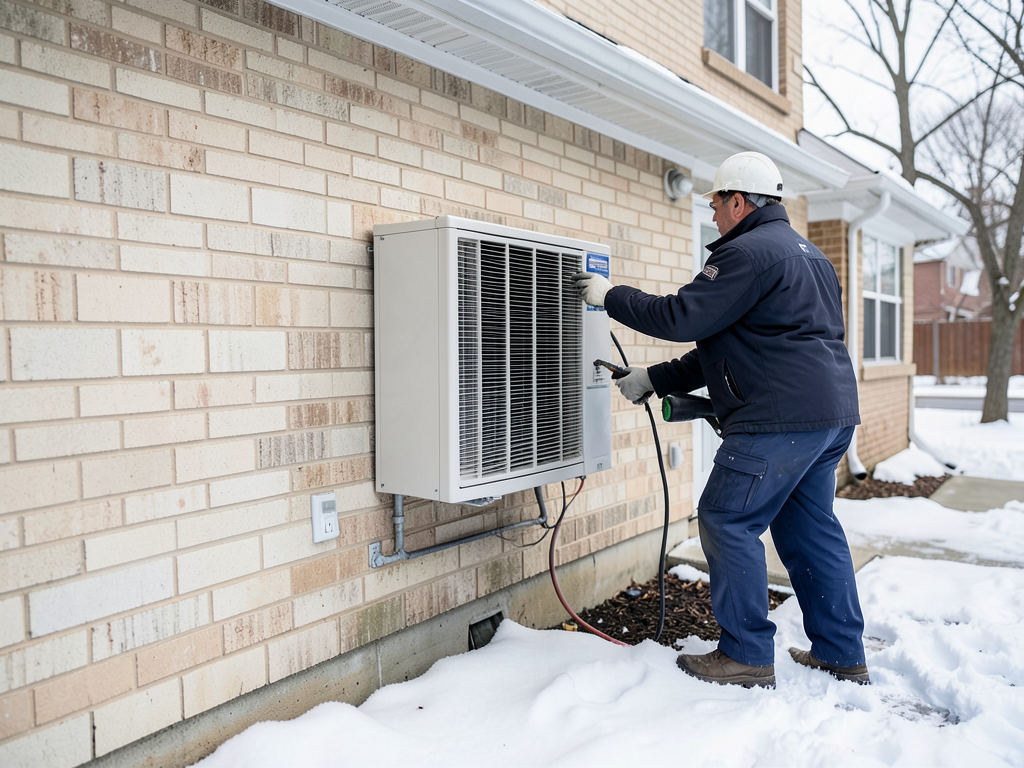
Heating and Cooling Your New Backyard ADU or Tiny Home in Detroit
Building a backyard ADU or tiny home in Detroit means you need a heating and cooling system that works hard in our extreme climate. Detroit winters can drop below zero while summers bring high humidity and heat. A properly sized HVAC system keeps your small space comfortable year-round without wasting energy or breaking your budget. Detroit Sustainability Action Agenda.
The key is choosing equipment designed for compact spaces that can handle Michigan’s temperature swings. You need a system that provides both heating and cooling since your tiny home will face -10°F winter nights and 90°F+ summer days. Energy efficiency matters too since every square foot counts in a small space.
Why Detroit’s Climate Makes ADU HVAC Different
Detroit sits in USDA Plant Hardiness Zone 6a where winter temperatures regularly fall below zero. This means your heating system needs enough capacity to keep a tiny space warm when it’s -15°F outside. At the same time, our humid continental climate creates muggy summers that demand strong dehumidification.
Most national HVAC guides don’t account for these extremes. A system that works fine in Atlanta or Phoenix might struggle when Detroit’s polar vortex hits. You need equipment rated for cold climate performance with backup heating capability.
Detroit’s building codes also require specific permits and inspections for ADU installations. The City of Detroit Mechanical Division reviews all HVAC work to ensure proper ventilation and safety systems are in place. The Best Local AC Installation Specialists for Homeowners in Royal Oak.
Top HVAC Solutions for Detroit Tiny Homes
Several heating and cooling options work well for small spaces. The best choice depends on your budget, power availability, and whether you want a single integrated system or separate heating and cooling units.
Ductless Mini-Split Heat Pumps
Mini-splits offer the most efficient solution for tiny homes. These systems have an outdoor compressor unit connected to one or more indoor air handlers. For a typical 400-square-foot ADU, a 9000-12000 BTU unit provides adequate heating and cooling.
Modern cold-climate mini-splits can operate efficiently down to -15°F, making them perfect for Detroit winters. Look for units with at least 18 SEER2 cooling efficiency and HSPF2 heating efficiency ratings. Top brands like Mitsubishi Hyper-Heat and Fujitsu Halcyon XLTH handle our coldest temperatures. Modern HVAC Solutions for Historic Grosse Pointe Homes (Without Ruining the Aesthetics).
Through-the-Wall Heat Pumps
Through-the-wall units install directly in an exterior wall and work well when floor space is limited. These self-contained units provide both heating and cooling in one package. They’re less efficient than mini-splits but cost less upfront.
PTAC (Packaged Terminal Air Conditioner) units commonly used in hotels work for tiny homes too. Modern PTAC heat pumps can heat down to 20°F, though you’ll need supplemental heat for Detroit’s coldest nights.
High-Efficiency Electric Furnaces with AC
If you prefer traditional forced air, high-efficiency electric furnaces paired with central air conditioning work for tiny spaces. These require ductwork, which takes up valuable space in a small home. Electric heat provides 100% efficiency but costs more to operate than heat pumps. Why You Need a Dedicated Air Conditioning Repair Service in Birmingham Michigan.
Look for ECM (Electronically Commutated Motor) furnaces that use less electricity. Pair with a two-stage air conditioner for better humidity control during Detroit’s muggy summers.
Propane or Natural Gas Systems
If your ADU has access to natural gas or you’re willing to use propane tanks, gas furnaces provide powerful heating. A 40000 BTU gas furnace handles most tiny homes. Add a separate air conditioner or heat pump for cooling.
Propane systems work well for off-grid ADUs. Modern direct-vent gas heaters don’t require chimneys and can be wall-mounted to save floor space.
Calculating the Right Size for Your Space
Proper sizing prevents wasted energy and ensures comfort. For tiny homes under 500 square feet, use these guidelines based on Detroit’s climate:
| Square Footage | Insulation Quality | Recommended BTU Heating | Recommended BTU Cooling |
|---|---|---|---|
| 200-300 | Standard | 5000-7000 | 5000-6000 |
| 300-400 | Standard | 7000-9000 | 6000-8000 |
| 400-500 | Standard | 9000-12000 | 8000-10000 |
| 200-300 | High | 4000-5000 | 4000-5000 |
| 300-400 | High | 5000-7000 | 5000-6000 |
| 400-500 | High | 7000-9000 | 6000-8000 |
Detroit’s climate requires about 40-50 BTU per square foot for heating compared to 20-30 BTU in milder climates. The extra capacity handles our extreme cold snaps.
Always get a professional Manual J load calculation for your specific space. Factors like ceiling height, window quality, and air leakage affect the final sizing. Fast and Professional Boiler Repair Services in Corktown and Midtown Detroit.
Energy Efficiency and Cost Savings
High-efficiency systems save money despite higher upfront costs. Look for ENERGY STAR certified equipment with these ratings:
- SEER2 (Cooling): 18+ for mini-splits, 16+ for central AC
- HSPF2 (Heating): 10+ for heat pumps
- AFUE (Gas furnaces): 95%+
DTE Energy offers rebates up to $500 for high-efficiency HVAC installations in Detroit. The federal government provides tax credits up to $2000 for qualifying heat pumps under the Inflation Reduction Act. DTE Energy rebates.
Smart thermostats help optimize energy use in small spaces. Models like the Nest Learning Thermostat or Ecobee adjust automatically based on your schedule and can save 10-15% on heating and cooling costs.
Ventilation Requirements for Tiny Homes
Tiny homes need proper ventilation to prevent moisture buildup and maintain air quality. The airtight construction typical in small spaces can trap pollutants and humidity.
Energy Recovery Ventilators (ERV) or Heat Recovery Ventilators (HRV) exchange stale indoor air with fresh outdoor air while recovering heat or coolness. For Detroit’s climate, ERVs work better since they also transfer moisture, helping manage summer humidity.
Building codes require mechanical ventilation in new construction. The Michigan Residential Code Section R403.6 mandates specific air exchange rates based on square footage and occupancy.
Off-Grid HVAC Options
If your ADU lacks utility connections, several off-grid HVAC solutions work in Detroit’s climate:
- Propane furnaces with DC-powered thermostats
- Solar-powered mini-splits with battery backup
- Wood stoves with proper clearance and heat shields
- DC air conditioners running from solar panels
Solar systems need careful sizing since heating and cooling use the most power. A 400-watt mini-split might need 2-3 kW of solar panels plus battery storage for nighttime operation.
Wood stoves provide reliable heat but require proper installation per Michigan fire codes. Maintain 36-inch clearances from combustible materials and install proper chimney systems. How to Find Reliable Emergency Furnace Repair in Detroit Before the Next Deep Freeze.
Installation and Permitting in Detroit
Detroit requires permits for all HVAC installations in ADUs. The process includes:
- Submit mechanical permit application to Buildings, Safety Engineering & Environmental Department
- Provide equipment specifications and Manual J calculations
- Schedule inspections (rough-in and final)
- Obtain Certificate of Occupancy for the ADU
Work with licensed HVAC contractors familiar with Detroit’s permitting process. They’ll ensure your installation meets all code requirements and passes inspections.
Detroit’s older neighborhoods often have unique challenges like limited outdoor space for compressor units or historic district restrictions. Your contractor should assess these factors during planning.
Maintenance for Long-Term Performance
Regular maintenance keeps your system efficient and prevents breakdowns during extreme weather. For Detroit’s climate, schedule these services:
- Annual professional tune-up before heating season
- Filter changes every 1-3 months depending on usage
- Coil cleaning to maintain efficiency
- Check refrigerant levels and electrical connections
Detroit’s humidity means you should clean condensate drains regularly to prevent mold growth. Check outdoor units after storms for debris that could block airflow.
Smart maintenance prevents the most common failure point: frozen coils during extreme cold. Keep snow cleared from outdoor units and ensure proper insulation on refrigerant lines.
Cost Considerations and ROI
HVAC installation costs for tiny homes range from $3000 to $8000 depending on the system type. Here’s what to expect:
| System Type | Equipment Cost | Installation Cost | Total Estimated Cost |
|---|---|---|---|
| Mini-Split Heat Pump | $1500-3000 | $1500-2500 | $3000-5500 |
| Through-the-Wall Heat Pump | $800-1500 | $800-1500 | $1600-3000 |
| Electric Furnace + AC | $1200-2000 | $1500-2500 | $2700-4500 |
| Propane System | $1000-2000 | $1500-2500 | $2500-4500 |
High-efficiency systems pay for themselves through lower utility bills within 3-7 years. Factor in available rebates and tax credits when calculating your return on investment.
Common Mistakes to Avoid
Many tiny home owners make these costly errors:
- Choosing undersized equipment that can’t handle Detroit’s cold
- Skipping proper load calculations and guessing at sizing
- Ignoring ventilation requirements and creating moisture problems
- Selecting equipment without cold-climate ratings
- Skipping permits and facing code violations later
Always work with contractors who understand tiny home construction and Detroit’s specific climate challenges.
Emergency Preparedness
Detroit’s extreme weather means you need backup plans. Consider these options:
- Portable electric heaters for temporary backup
- Generator hookup for power outages
- Insulated window coverings to retain heat
- Emergency contact numbers for 24/7 HVAC service
Keep your system’s air filters clean and outdoor units clear of snow to prevent emergency breakdowns during polar vortex events.
Frequently Asked Questions
What size HVAC system do I need for a 400-square-foot ADU in Detroit?
A 400-square-foot ADU in Detroit typically needs 7000-9000 BTU for heating and 6000-8000 BTU for cooling, assuming standard insulation. Detroit’s cold climate requires about 40-50 BTU per square foot compared to 20-30 BTU in milder areas.
Are mini-split heat pumps effective in Detroit’s extreme cold?
Yes, modern cold-climate mini-splits work efficiently down to -15°F. Look for units with Hyper-Heat technology or similar cold-climate ratings. These maintain heating capacity even in sub-zero temperatures, though you might need supplemental heat for extended extreme cold snaps.
Do I need permits for HVAC installation in a Detroit ADU?
Yes, Detroit requires mechanical permits for all HVAC installations. You’ll need to submit equipment specifications, get inspections, and obtain a Certificate of Occupancy. Work with licensed contractors familiar with Detroit’s permitting process to ensure compliance.
How much does it cost to install HVAC in a tiny home?
Installation costs range from $3000 to $8000 depending on the system type. Mini-splits cost $3000-5500 total, while through-the-wall units run $1600-3000. Factor in available rebates and tax credits to reduce your net cost.
Can I install HVAC in my ADU myself to save money?
DIY HVAC installation is not recommended and may violate building codes. Detroit requires licensed contractors for mechanical work, and improper installation can create safety hazards, void warranties, and cause system failures. Professional installation ensures proper sizing, permits, and code compliance.
Ready to Install Your Tiny Home HVAC System?
Choosing the right heating and cooling system for your backyard ADU or tiny home in Detroit doesn’t have to be complicated. The key is selecting equipment designed for our extreme climate while maximizing energy efficiency in your small space.
Don’t wait until winter hits to discover your system can’t handle Detroit’s cold. Call (313) 552-7177 today to schedule a consultation. Our experts will assess your specific needs, calculate the proper sizing, and recommend the best solution for your budget and comfort requirements.
Pick up the phone and call (313) 552-7177 before the next polar vortex hits. We’ll help you stay warm this winter and cool all summer long in your new tiny home or ADU.
Whether you’re building a backyard guest house, home office, or rental unit, we have the experience and local knowledge to ensure your HVAC system performs perfectly in Detroit’s challenging climate. Contact us today to get started on your comfort solution.