
Why Northville Homeowners are Switching to Geothermal Heating and Cooling Systems
Northville homeowners are making the switch to geothermal heating and cooling systems because they deliver unmatched comfort and energy savings in Michigan’s extreme climate. Geothermal systems use the earth’s constant temperature to heat and cool your home, cutting energy bills by up to 70% compared to traditional HVAC systems. With Wayne County’s clay-rich soil and Northville’s mix of historic and modern homes, geothermal technology offers a reliable, long-term solution that pays for itself through lower utility costs and available tax credits. Modern HVAC Solutions for Historic Grosse Pointe Homes (Without Ruining the Aesthetics).
How Geothermal Systems Work in Northville’s Climate
Geothermal heat pumps transfer heat between your home and the ground through a series of underground pipes called a ground loop. In winter, the system pulls heat from the earth to warm your home. In summer, it reverses, moving heat from your home back into the ground. Northville’s clay soil maintains a relatively stable temperature year-round, making it ideal for geothermal installations. The Best Local AC Installation Specialists for Homeowners in Royal Oak.
The systems use a heat pump unit inside your home connected to the ground loop outside. Unlike traditional air-source heat pumps that struggle when temperatures drop below freezing, geothermal systems maintain efficiency even during Michigan’s harshest winters. The ground temperature stays between 45-55°F year-round, providing a consistent heat source that doesn’t fluctuate with outdoor air temperatures.
Benefits of Geothermal for Northville Homes
Geothermal systems offer several advantages specific to Northville properties. The technology works exceptionally well in both the historic homes near downtown and the newer developments around Maybury State Park. Homeowners see immediate benefits including:
- Energy savings of 30-70% on heating and cooling costs
- Quiet operation with no outdoor condensing unit
- Long system lifespan of 25+ years for the heat pump and 50+ years for ground loops
- No carbon monoxide risk since there’s no combustion
- Consistent temperatures throughout your home
Many Northville homeowners also appreciate that geothermal systems eliminate the need for separate heating and cooling equipment. One system handles both functions year-round, reducing maintenance requirements and freeing up space in your mechanical room. EPA geothermal heat pump resources.
Installation Options for Northville Properties
Geothermal installations in Northville typically use one of two ground loop configurations based on your property size and soil conditions. The clay soil common in Wayne County affects installation methods and costs.
Horizontal Loop Systems
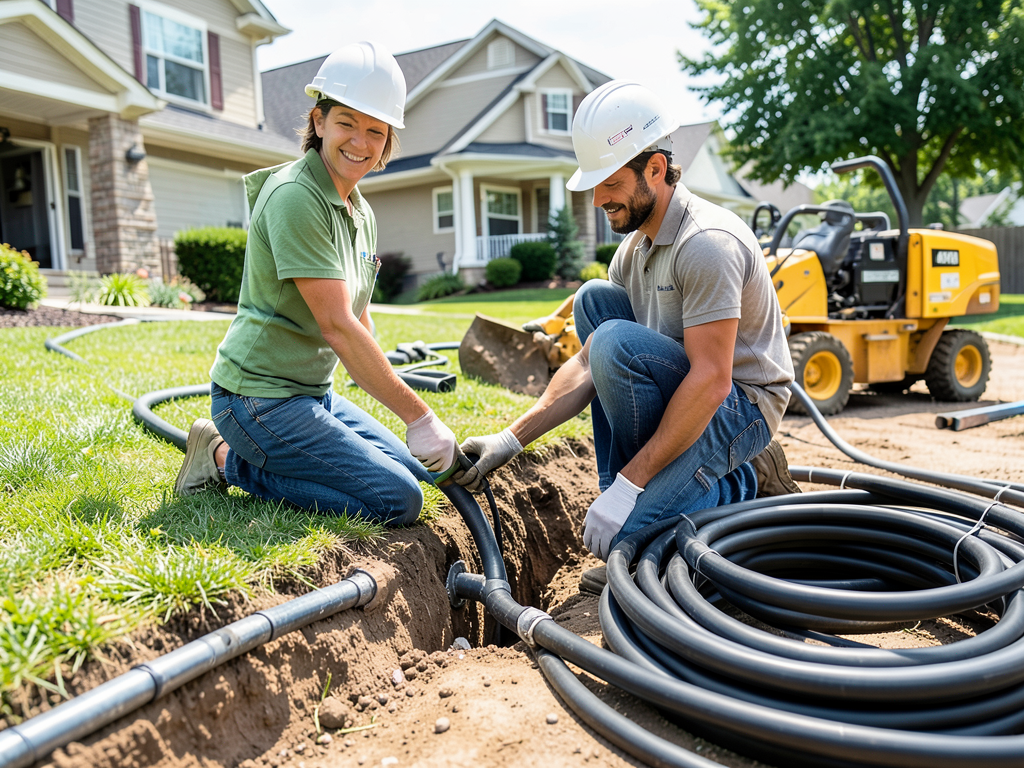
Horizontal loops work well for properties with sufficient yard space. Trenches 4-6 feet deep are excavated and coiled pipe is laid in the ground. This method costs less than vertical drilling but requires 1/4 to 3/4 acre of land. Many homes in the Northville Hills and surrounding areas have the space needed for horizontal installations.
Vertical Loop Systems
Vertical loops are ideal for smaller properties or areas with limited horizontal space. Small-diameter holes are drilled 150-400 feet deep, and U-shaped pipes are inserted. This method works well in established neighborhoods where yard space is limited. The drilling process is similar to well-drilling and causes minimal surface disruption.
Local Soil and Climate Considerations
Northville’s location in Wayne County means dealing with clay-heavy soil that retains moisture. This soil type actually benefits geothermal systems because it conducts heat efficiently between the ground loops and the earth. The high clay content means loops need proper burial depth to avoid freeze-thaw cycles that could affect performance.
Michigan’s climate creates specific design requirements. Systems must handle temperature swings from -20°F to 95°F while maintaining efficiency. The ground loop design accounts for local frost depths, which can reach 42 inches in this area according to Michigan Residential Code requirements.
Cost Factors and Financial Incentives
Geothermal systems require higher upfront investment than conventional HVAC, but federal and local incentives make them more affordable. The federal government offers a 30% tax credit on geothermal system costs through 2032. DTE Energy and Consumers Energy also provide rebates for qualifying installations.
Installation costs vary based on home size, loop type, and existing ductwork. A typical 2,000-square-foot home might see total costs between $25,000-$40,000 before incentives. With the 30% federal tax credit, that brings the net cost down to $17,500-$28,000.
Energy savings typically offset the higher initial cost within 5-10 years. Many Northville homeowners find that monthly energy savings exceed their loan payments, creating positive cash flow from day one.
The Installation Process in Northville
Geothermal installation follows a specific sequence to ensure proper system performance. The process typically takes 2-3 weeks from start to finish.
- Site Assessment
Technicians evaluate your property’s soil conditions, available space, and heating/cooling needs. They determine whether horizontal or vertical loops work best for your situation.
- Permitting
Local permits are obtained from Northville city offices. The process includes reviewing loop placement and ensuring compliance with Michigan building codes.
- Ground Loop Installation
Trenches are dug or holes drilled for the ground loops. Pipe is laid and pressure-tested before backfilling.
- Heat Pump Installation
The indoor unit is installed and connected to your home’s ductwork. Electrical connections are made to power the system.
- System Commissioning
The entire system is tested, balanced, and calibrated. Technicians verify proper operation and efficiency.
Maintenance Requirements for Geothermal Systems
Geothermal systems require less maintenance than traditional HVAC equipment. The ground loops have no moving parts and typically need no service for decades. The indoor heat pump unit requires annual maintenance similar to conventional systems.
Key maintenance tasks include:
- Changing air filters every 1-3 months
- Checking refrigerant levels annually
- Cleaning the heat exchanger coils
- Verifying loop fluid levels and pressure
Many Northville homeowners appreciate that geothermal systems have fewer components that can fail compared to furnaces and air conditioners. There’s no combustion chamber, no flame sensor, and no condensate drain lines to clog.
Comparing Geothermal to Traditional HVAC
Geothermal systems outperform traditional HVAC in several key areas. The following comparison shows why more Northville homeowners are making the switch.
| Feature | Geothermal | Traditional HVAC |
|---|---|---|
| Energy Efficiency | 300-500% (COP 3-5) | 80-95% (AFUE) |
| Lifespan | 25+ years indoor, 50+ years loops | 15-20 years |
| Operating Costs | 30-70% lower | Higher |
| Carbon Emissions | Minimal | Significant |
| Noise Level | Very quiet | Moderate to loud |
Environmental Impact and Sustainability
Geothermal systems represent one of the most environmentally friendly heating and cooling options available. They reduce carbon emissions by up to 70% compared to fossil fuel systems. For Northville homeowners concerned about environmental impact, geothermal offers a way to heat and cool homes without burning fossil fuels.
The systems also reduce strain on the electrical grid. Because they move heat rather than generate it, they use less electricity than electric resistance heating or traditional heat pumps during extreme weather.
Many Northville residents appreciate that geothermal technology aligns with the community’s values around sustainability and environmental stewardship. The systems work well with solar panels, creating the potential for net-zero energy homes.
Is Your Northville Home Right for Geothermal?
Most Northville homes can accommodate geothermal systems, but certain factors affect feasibility. Homes with existing ductwork are easiest to convert. Properties with limited yard space may require vertical loops, which cost more but work in tighter spaces.
Older homes in historic districts near downtown Northville may need ductwork modifications. Many of these homes originally had boiler systems with radiators rather than forced air. In these cases, geothermal can still work with ductless mini-split heads or by adding ductwork. Fast and Professional Boiler Repair Services in Corktown and Midtown Detroit.
The age and condition of your current HVAC system also matters. If your furnace or air conditioner is over 15 years old, replacing it with geothermal becomes more cost-effective since you’re already facing replacement costs.
Local Success Stories
Homeowners across Northville have already made the switch to geothermal with excellent results. Properties near Maybury State Park benefit from the systems’ ability to handle both the summer heat and winter cold. Homes in the Northville Estates area appreciate the quiet operation and consistent temperatures.
Local builders are increasingly including geothermal as an option in new construction. The technology works well in modern, well-insulated homes where the high efficiency provides maximum benefit.
Frequently Asked Questions
How long does it take to install a geothermal system?
Most residential installations take 2-3 weeks from start to finish. This includes site assessment, permitting, ground loop installation, heat pump setup, and system commissioning.
Can geothermal systems provide hot water?
Yes. Many geothermal systems include a desuperheater that captures waste heat to provide domestic hot water. This can further reduce your energy bills.
What happens if the ground loop develops a leak?
Ground loop leaks are rare but can be repaired. Technicians use pressure testing and leak detection equipment to locate problems. Repairs typically involve excavating the affected section and replacing the damaged pipe. Storm Damage HVAC Repair.
Do I need backup heating with a geothermal system?
Most geothermal systems provide 100% of your heating needs without backup. However, some homeowners in extremely cold areas choose to keep a small backup system for extreme conditions.
How deep are the ground loops installed?
Horizontal loops are typically buried 4-6 feet deep. Vertical loops go 150-400 feet deep. The depth depends on soil conditions, property size, and heating/cooling requirements.
Ready to Make the Switch?
Geothermal heating and cooling systems represent the future of home comfort in Northville. With rising energy costs and increasing environmental awareness, more homeowners are discovering the benefits of this proven technology.
The combination of energy savings, environmental benefits, and available incentives makes now an excellent time to consider geothermal for your home. Whether you’re building new or replacing an aging HVAC system, geothermal offers a solution that will serve you well for decades.
Call (313) 552-7177 today to schedule your Northville geothermal assessment. Our experienced technicians will evaluate your property and provide a detailed proposal showing exactly how much you could save with a geothermal system.
Don’t wait for your current HVAC system to fail. Start enjoying the comfort, savings, and peace of mind that geothermal technology provides. Pick up the phone and call (313) 552-7177 before the next heating season arrives. For more information, visit U.S. Department of Energy geothermal information.
{
“@context”: “https://schema.org”,
“@type”: “BlogPosting”,
“headline”: “Why Northville Homeowners are Switching to Geothermal Heating and Cooling Systems”,
“description”: “Discover why Northville homeowners are choosing geothermal HVAC systems. Learn about energy savings, local soil conditions, and federal tax credits available in 2026.”,
“wordCount”: 1677,
“datePublished”: “2026-02-27T12:10:00.000Z”,
“dateModified”: “2026-02-27T12:10:00.000Z”,
“inLanguage”: “en-US”,
“mainEntityOfPage”: {
“@type”: “WebPage”,
“@id”: “https://acehvacdetroit.com”
},
“publisher”: {
“@type”: “LocalBusiness”,
“name”: “Ace HVAC Detroit”,
“url”: “https://acehvacdetroit.com”
},
“author”: {
“@type”: “Organization”,
“name”: “Ace HVAC Detroit”,
“url”: “https://acehvacdetroit.com”
},
“image”: {
“@type”: “ImageObject”,
“url”: “https://acehvacdetroit.com/wp-content/uploads/2026/03/why-northville-homeowners-are-switching-to-geother-1.png”
}
}
{
“@context”: “https://schema.org”,
“@type”: “HVACBusiness”,
“name”: “Ace HVAC Detroit”,
“url”: “https://acehvacdetroit.com”,
“address”: {
“@type”: “PostalAddress”,
“addressLocality”: “Detroit”
},
“areaServed”: {
“@type”: “City”,
“name”: “Detroit”
}
}
{
“@context”: “https://schema.org”,
“@type”: “FAQPage”,
“mainEntity”: [
{
“@type”: “Question”,
“name”: “Is Your Northville Home Right for Geothermal?”,
“acceptedAnswer”: {
“@type”: “Answer”,
“text”: “Most Northville homes can accommodate geothermal systems, but certain factors affect feasibility. Homes with existing ductwork are easiest to convert. Properties with limited yard space may require vertical loops, which cost more but work in tighter spaces.”
}
},
{
“@type”: “Question”,
“name”: “How long does it take to install a geothermal system?”,
“acceptedAnswer”: {
“@type”: “Answer”,
“text”: “Most residential installations take 2-3 weeks from start to finish. This includes site assessment, permitting, ground loop installation, heat pump setup, and system commissioning.”
}
},
{
“@type”: “Question”,
“name”: “Can geothermal systems provide hot water?”,
“acceptedAnswer”: {
“@type”: “Answer”,
“text”: “Yes. Many geothermal systems include a desuperheater that captures waste heat to provide domestic hot water. This can further reduce your energy bills.”
}
},
{
“@type”: “Question”,
“name”: “What happens if the ground loop develops a leak?”,
“acceptedAnswer”: {
“@type”: “Answer”,
“text”: “Ground loop leaks are rare but can be repaired. Technicians use pressure testing and leak detection equipment to locate problems. Repairs typically involve excavating the affected section and replacing the damaged pipe. Storm Damage HVAC Repair.”
}
},
{
“@type”: “Question”,
“name”: “Do I need backup heating with a geothermal system?”,
“acceptedAnswer”: {
“@type”: “Answer”,
“text”: “Most geothermal systems provide 100% of your heating needs without backup. However, some homeowners in extremely cold areas choose to keep a small backup system for extreme conditions.”
}
},
{
“@type”: “Question”,
“name”: “How deep are the ground loops installed?”,
“acceptedAnswer”: {
“@type”: “Answer”,
“text”: “Horizontal loops are typically buried 4-6 feet deep. Vertical loops go 150-400 feet deep. The depth depends on soil conditions, property size, and heating/cooling requirements.”
}
},
{
“@type”: “Question”,
“name”: “Ready to Make the Switch?”,
“acceptedAnswer”: {
“@type”: “Answer”,
“text”: “Geothermal heating and cooling systems represent the future of home comfort in Northville. With rising energy costs and increasing environmental awareness, more homeowners are discovering the benefits of this proven technology.”
}
}
]
}
{
“@context”: “https://schema.org”,
“@type”: “HowTo”,
“name”: “Geothermal Installation Process”,
“step”: [
{
“@type”: “HowToStep”,
“position”: 1,
“name”: “Site Assessment”,
“text”: “Technicians evaluate your property’s soil conditions, available space, and heating/cooling needs. They determine whether horizontal or vertical loops work best for your situation.”
},
{
“@type”: “HowToStep”,
“position”: 2,
“name”: “Permitting”,
“text”: “Local permits are obtained from Northville city offices. The process includes reviewing loop placement and ensuring compliance with Michigan building codes.”
},
{
“@type”: “HowToStep”,
“position”: 3,
“name”: “Ground Loop Installation”,
“text”: “Trenches are dug or holes drilled for the ground loops. Pipe is laid and pressure-tested before backfilling.”
},
{
“@type”: “HowToStep”,
“position”: 4,
“name”: “Heat Pump Installation”,
“text”: “The indoor unit is installed and connected to your home’s ductwork. Electrical connections are made to power the system.”
},
{
“@type”: “HowToStep”,
“position”: 5,
“name”: “System Commissioning”,
“text”: “The entire system is tested, balanced, and calibrated. Technicians verify proper operation and efficiency.”
}
],
“image”: “https://acehvacdetroit.com/wp-content/uploads/2026/03/why-northville-homeowners-are-switching-to-geother-1.png”
}
{
“@context”: “https://schema.org”,
“@type”: “BreadcrumbList”,
“itemListElement”: [
{
“@type”: “ListItem”,
“position”: 1,
“name”: “Home”,
“item”: “https://acehvacdetroit.com”
},
{
“@type”: “ListItem”,
“position”: 2,
“name”: “Blog”,
“item”: “https://acehvacdetroit.com/blog”
},
{
“@type”: “ListItem”,
“position”: 3,
“name”: “Why Northville Homeowners are Switching to Geothermal Heating and Cooling Systems”
}
]
}
{
“@context”: “https://schema.org”,
“@type”: “Service”,
“serviceType”: “HVAC”,
“provider”: {
“@type”: “LocalBusiness”,
“name”: “Ace HVAC Detroit”,
“url”: “https://acehvacdetroit.com”
},
“areaServed”: {
“@type”: “City”,
“name”: “Detroit”
},
“description”: “Discover why Northville homeowners are choosing geothermal HVAC systems. Learn about energy savings, local soil conditions, and federal tax credits available in 2026.”
}