
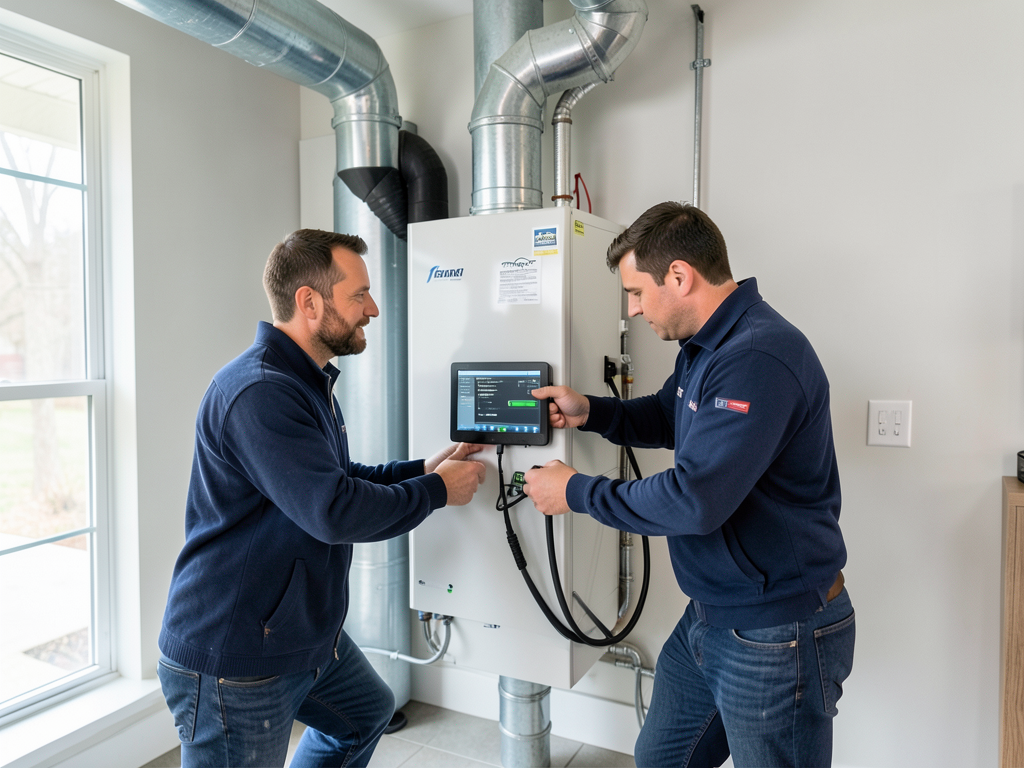
Removing Chemical Smells and VOCs from Your Newly Built Troy Home
That new home smell might seem pleasant at first but could actually be harmful chemicals off-gassing from fresh paint, flooring, cabinets, and other materials. If you’ve noticed persistent chemical odors in your newly built Troy home, you’re experiencing one of the most common challenges for new construction in Metro Detroit.
The good news is that volatile organic compounds (VOCs) can be effectively removed from your indoor air using whole-home HVAC solutions specifically designed for Michigan’s climate. Unlike portable air purifiers that only treat one room, professional-grade systems like Energy Recovery Ventilators and whole-house carbon filtration work throughout your entire home to eliminate these invisible pollutants. Modern HVAC Solutions for Historic Grosse Pointe Homes (Without Ruining the Aesthetics).
Call (313) 552-7177 today to schedule a free indoor air quality assessment. Our Troy-based HVAC specialists will test your home’s VOC levels and recommend the most effective system for your specific situation.
Understanding VOCs: The Invisible Pollutants in Detroit Homes
Volatile organic compounds are chemicals that evaporate at room temperature, releasing gases from solid or liquid products. In new construction, these come from fresh paint, new carpeting, cabinetry adhesives, vinyl flooring, and even engineered wood products.
The problem is particularly noticeable in Troy and other Metro Detroit suburbs where new home construction has surged. During Michigan’s long winters, homes remain sealed tight for months, trapping these chemicals indoors where they can concentrate to levels several times higher than outdoor air.
Common VOC sources in new homes include:
- Formaldehyde from pressed wood products and insulation
- Benzene from paints, adhesives, and cleaning products
- Toluene from carpet adhesives and paint thinners
- Acetone from nail polish remover, furniture polish, and paint
The EPA’s Indoor Air Quality standards recommend keeping VOC levels below 500 parts per billion (ppb), but new homes often test at 1,500-3,000 ppb during the first six months after construction. EPA’s guide to VOCs and indoor air quality.
The Health Impact of Poor Indoor Air Quality
Short-term exposure to high VOC levels can cause headaches, dizziness, eye irritation, and respiratory issues. For Troy families with young children, elderly members, or anyone with asthma or allergies, these chemicals can trigger serious health problems.
Long-term exposure has been linked to more severe conditions according to the EPA’s findings on indoor air pollution. The agency reports that indoor air can be 2-5 times more polluted than outdoor air, and in tightly sealed new homes, that ratio can climb even higher.
Detroit’s industrial heritage also plays a role. Homes in areas like Troy, which developed rapidly during Detroit’s automotive boom, often sit near former industrial sites where soil contamination can affect indoor air quality through vapor intrusion.
According to Michigan’s Department of Environment, Great Lakes, and Energy (EGLE), homes built on former industrial land should undergo additional air quality testing, especially within the first year of occupancy.
5 Effective Ways to Reduce VOCs Immediately
Before investing in professional equipment, try these immediate steps to reduce chemical odors in your Troy home: Fast and Professional Boiler Repair Services in Corktown and Midtown Detroit.
- Increase ventilation – Open windows when weather permits, even for just 15-30 minutes daily. Michigan’s Code for residential construction requires mechanical ventilation in new homes, but many homeowners don’t realize their systems need to be activated.
- Control humidity – Keep indoor humidity between 30-50%. High humidity accelerates VOC off-gassing. Use your air conditioner’s dehumidification mode during summer months.
- Remove source materials – Replace chemical air fresheners with natural alternatives. Store paints, solvents, and cleaning products in sealed containers in a garage or shed.
- Use activated carbon filters – Upgrade your HVAC filter to a MERV 13 or higher rating with activated carbon. Standard fiberglass filters only trap particles, not gases.
- Run exhaust fans – Use bathroom and kitchen exhaust fans for at least 30 minutes after activities that release VOCs, like cooking or showering.
Professional Solutions: Air Scrubbers vs. ERVs
When DIY methods aren’t enough, whole-home systems provide comprehensive VOC removal. Here’s how the main options compare:
| System Type | VOC Removal | Energy Efficiency | Best For |
|---|---|---|---|
| Energy Recovery Ventilator (ERV) | Excellent | Excellent | Troy’s climate, year-round use |
| Whole-House Carbon Filter | Very Good | Good | Existing HVAC systems |
| UV-C Air Scrubber | Good | Excellent | Bacteria, mold, some VOCs |
Energy Recovery Ventilators are particularly effective for Troy homes because they exchange stale indoor air with fresh outdoor air while transferring heat and moisture. This means you get fresh air without losing the energy you’ve already paid to heat or cool your home.
According to ASHRAE Standard 62.2, new homes should provide 0.35 air changes per hour or one air change every three hours. Many Troy homes built in the past decade have mechanical ventilation systems, but they’re often not properly balanced or maintained. ASHRAE Standard 62.2 for residential ventilation.
The Detroit Factor: Why Our Outdoor Air Affects Your Indoor Air
Metro Detroit’s unique industrial history creates specific air quality challenges. The area’s legacy of automotive manufacturing means certain industrial chemicals remain in the soil and groundwater, potentially affecting indoor air through vapor intrusion.
Troy, located in Oakland County, sits on glacial till soil that can trap pollutants near the surface. During temperature inversions common in Michigan winters, these trapped chemicals can concentrate near ground level and enter homes through foundation cracks.
The Michigan Department of Health and Human Services recommends vapor intrusion testing for homes built on or near former industrial sites. Many Troy neighborhoods developed on land that was farmland or light industrial use before residential construction began.
Detroit’s humid continental climate also affects VOC behavior. High summer humidity accelerates off-gassing from materials, while winter’s dry air can cause materials to release stored chemicals more slowly but continuously.
When to Call a Detroit IAQ Specialist
DIY methods work for mild cases, but professional testing becomes necessary when:
- Chemical odors persist after 3-4 months
- Family members experience recurring headaches or respiratory issues
- DIY test kits show VOC levels above 1,000 ppb
- You’re planning to stay in the home long-term
Professional indoor air quality testing uses calibrated equipment that measures specific VOC compounds, not just total VOC levels. A certified technician can identify which chemicals are present and recommend targeted solutions.
The testing process typically includes:
- Visual inspection of potential VOC sources
- Air sampling with photoionization detectors
- Analysis of humidity and temperature patterns
- Evaluation of your HVAC system’s ventilation capacity
According to the EPA’s Building Assessment guidelines, professional IAQ testing should be conducted by certified professionals who follow standardized protocols for sample collection and analysis.
Cost-Benefit Analysis: Professional HVAC Mitigation vs. Portable Units
Many Troy homeowners start with portable air purifiers, but these units have significant limitations. A typical portable unit treats only 500-1,500 square feet and requires frequent filter changes that can cost $50-100 each.
Whole-home systems, while more expensive upfront ($2,000-5,000 installed), provide several advantages:
- Continuous treatment of your entire home
- No monthly filter replacement costs
- Integration with your existing HVAC system
- Improved overall air quality, not just VOC removal
Over a five-year period, whole-home systems typically cost less than portable units when you factor in filter replacements and the limited effectiveness of treating only one room at a time.
Energy Recovery Ventilators also provide year-round benefits beyond VOC removal. They reduce humidity in summer, prevent dry air in winter, and can lower heating and cooling costs by 10-15% according to the Department of Energy’s ventilation guidelines.
Maintaining Your VOC Mitigation System
Once installed, your whole-home air quality system requires regular maintenance to remain effective. Most Troy homeowners schedule professional service twice yearly, coinciding with their heating and cooling system maintenance.
Key maintenance tasks include:
- Replacing carbon filters every 6-12 months
- Cleaning ERV heat exchange cores annually
- Checking ventilation rates with an airflow meter
- Testing VOC levels quarterly to ensure system effectiveness
Many HVAC companies in Metro Detroit now offer indoor air quality service plans that include VOC monitoring as part of routine maintenance. These plans typically cost $15-25 per month and include two professional visits annually.
According to the EPA’s Energy Star program, properly maintained ventilation systems can reduce indoor VOC levels by up to 80% compared to homes without mechanical ventilation.
Special Considerations for Troy’s New Construction
Troy’s rapid growth means many homes are built in phases, with some neighborhoods having homes ranging from brand new to several years old. This creates unique air quality challenges as newer homes off-gas while nearby older homes may have different ventilation issues.
New construction in Troy must comply with Michigan’s Residential Code, which includes specific requirements for mechanical ventilation in homes built after 2015. However, many builders only install the minimum required systems, which may not be sufficient for optimal air quality.
The city of Troy’s building department recommends that homeowners test their ventilation systems within the first year of occupancy, especially if they notice persistent chemical odors or experience health symptoms.
Local HVAC contractors familiar with Troy’s specific building patterns can often identify common ventilation issues in homes from particular developments or builders, allowing for more targeted solutions. The Best Local AC Installation Specialists for Homeowners in Royal Oak.
Frequently Asked Questions
How long do VOCs typically off-gas from new construction?
Most VOCs off-gas most heavily during the first 6-12 months, with formaldehyde and other persistent compounds continuing to release gases for up to 5 years. The rate depends on temperature, humidity, and ventilation rates.
Can I test VOC levels myself before calling a professional?
Yes, consumer-grade VOC meters are available for $150-300, but they provide only approximate readings. Professional testing uses calibrated equipment and provides specific chemical identification, which is crucial for effective treatment.
Will opening windows help remove VOCs in winter?
Opening windows helps but isn’t practical in Michigan winters. Even 15 minutes of fresh air exchange can reduce VOC levels by 30-50%, but you’ll lose significant heat energy. Mechanical ventilation systems provide fresh air without the energy loss.
Are certain building materials worse for VOC emissions?
Yes. Pressed wood products, vinyl flooring, and oil-based paints typically emit the highest VOC levels. Homes built with solid wood, natural stone, and low-VOC certified materials have significantly lower initial emissions.
Take Action Today
Chemical odors in your new Troy home aren’t just unpleasant—they could be affecting your family’s health. While some off-gassing is normal in new construction, high VOC levels require professional attention.
Don’t wait for symptoms to worsen or for your family’s health to be compromised. Modern whole-home air quality solutions can eliminate these chemicals while improving your home’s overall comfort and energy efficiency.
Call (313) 552-7177 today to schedule your free indoor air quality assessment. Our Troy-based HVAC specialists will test your home’s VOC levels and recommend the most effective system for your specific situation. We serve all of Metro Detroit with fast, professional service and transparent pricing.
Pick up the phone and call (313) 552-7177 before the next season’s temperature changes cause another spike in chemical odors. Your family deserves to breathe clean, healthy air in your new home.