
The Right Way to Winterize Your Outdoor AC Unit in Clinton Township Before the Snow Hits
Winter in Clinton Township hits hard and fast. One morning you’re enjoying crisp autumn air, and by nightfall you’re facing a foot of snow and freezing temperatures that can wreck your outdoor AC unit. The right winterization process protects your investment from ice damage, corrosion, and rodent infestations that plague Macomb County homes every winter. Storm Damage HVAC Repair.
Before the first freeze arrives, you need to shut down power, clean the coils, check insulation, and create a barrier against snow and debris. Skip any step and you risk cracked pipes, rusted components, and a system that fails when spring arrives. This guide walks you through exactly what to do, when to do it, and why professional winterization might save you hundreds in spring repairs. EPA recommendations for refrigerant line insulation.
Why Clinton Township Homes Need Special AC Winter Protection
Clinton Township sits in the heart of Macomb County where winter weather patterns create unique challenges for outdoor HVAC equipment. Heavy lake-effect snow from Lake St. Clair piles up quickly, while freeze-thaw cycles cause ice to expand inside pipes and coils. The area’s older homes, many built in the 1960s and 1970s around the Groesbeck corridor, often have outdoor units placed in less-than-ideal spots where snow drifts accumulate. HVAC Redford Township.
Local wildlife adds another layer of risk. Mice and squirrels seek warm shelter during Clinton Township’s bitter winters, and your AC unit’s electrical components and wiring make perfect nesting spots. A single rodent can chew through wires, creating shorts that destroy the control board. The Michigan Department of Agriculture reports that rodent damage to HVAC equipment spikes during the first hard freeze, when animals are most desperate for shelter. The Best Local AC Installation Specialists for Homeowners in Royal Oak.
According to the International Mechanical Code Section 301.4, outdoor equipment must maintain proper clearances from snow accumulation to prevent ice damage to refrigerant lines. Clinton Township’s average annual snowfall of 32 inches means your unit needs specific protection beyond just covering it with a tarp. International Mechanical Code Section 301.4.
7 Critical Steps to Winterize Your AC Unit in Clinton Township
Following these steps in order protects your system from the most common winter damage patterns we see in Macomb County. Each step addresses a specific threat that could cost you hundreds in spring repairs.. Read more about How to Properly Protect Your Outdoor AC Condenser from Detroit Snow and Ice.
- Shut Off Power at the Disconnect
Locate the exterior disconnect box near your AC unit – usually a gray or tan metal box mounted to your home’s exterior. Flip the switch to cut power completely. This prevents the unit from accidentally turning on during an unseasonably warm winter day, which could cause water to freeze in the system and crack pipes. The National Electrical Code requires this disconnect be within sight of the equipment for safety.
- Clean the Condenser Coils Thoroughly
Use a garden hose with moderate pressure to spray away dirt, grass clippings, and debris from the aluminum fins. Clinton Township’s clay soil tends to splash onto units during spring rains, creating a perfect environment for corrosion. Let the unit dry completely – moisture trapped under a cover accelerates rust formation. Avoid pressure washers, which can bend the delicate fins and reduce efficiency by up to 30%.
- Check and Replace Pipe Insulation
Examine the foam insulation on refrigerant lines where they exit the house. Michigan winters cause this foam to crack and separate, exposing copper pipes to freezing temperatures. Replace any damaged sections with UV-resistant foam sleeves rated for outdoor use. The EPA recommends insulation thickness of at least 3/4 inch for refrigerant lines in northern climates to prevent freeze damage.. Read more about Dealing With Ice Buildup on Your Outdoor Heat Pump During a Michigan Winter.
- Clear Debris and Vegetation
Remove all leaves, twigs, and grass from around the unit. Clinton Township’s mature trees, especially along the Moravian Road area, drop massive amounts of leaves that trap moisture against the metal cabinet. Trim back any bushes or plants to maintain at least 2 feet of clearance on all sides. This prevents snow from piling against the unit and allows proper air circulation.. Read more about How to Landscape Around Your AC Unit Without Ruining Its Efficiency in Bloomfield Hills.
- Install a Proper AC Cover
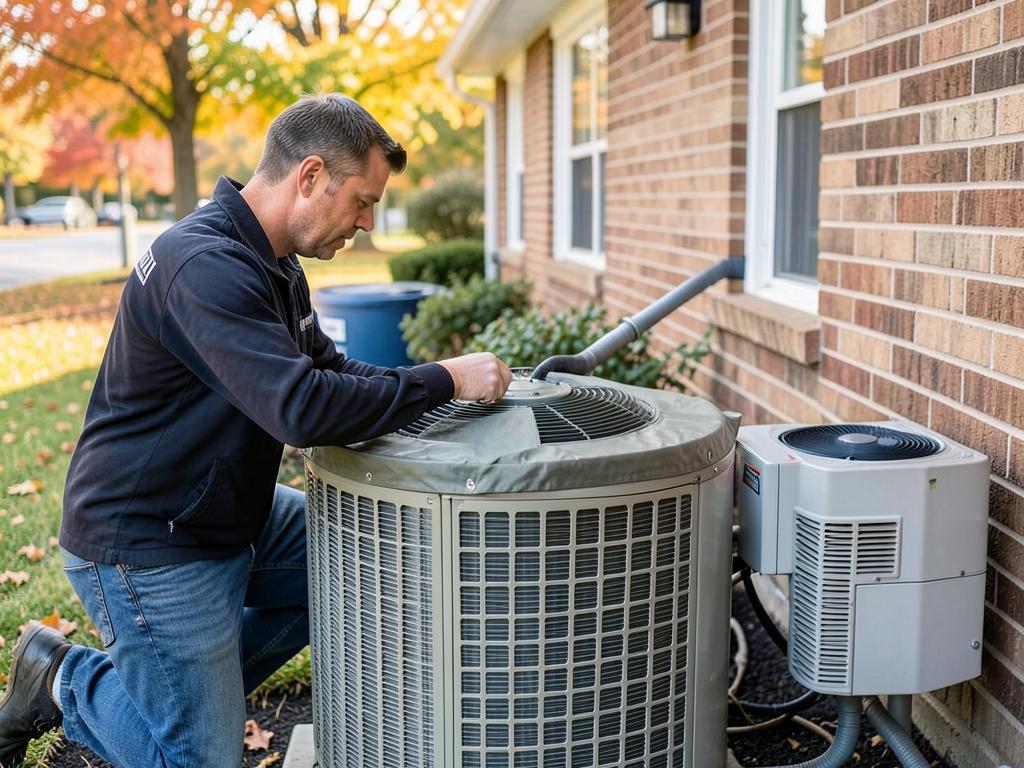
Use a breathable, waterproof cover specifically designed for your AC model – not a generic tarp. The cover should fit snugly but not tight, allowing some air circulation to prevent condensation. Many Clinton Township homeowners make the mistake of using plastic tarps, which trap moisture and create a greenhouse effect that accelerates corrosion. Look for covers with ventilation panels and secure straps to prevent wind damage.
- Protect the Electrical Components
Apply dielectric grease to electrical connections and terminals to prevent corrosion from road salt and moisture. Clinton Township’s proximity to I-94 means your unit gets exposed to salt spray during winter storms. Check that all wire connections are tight and free from rodent damage. Consider installing a weatherproof electrical box cover if your disconnect is in an exposed location.
- Create a Snow Barrier
Install a simple plywood barrier on the north and west sides of the unit to block prevailing winds and drifting snow. Use pressure-treated lumber and secure it with stakes driven into the ground. This prevents snow from piling up against the unit, which can cause ice dams and water infiltration when it melts. The barrier should extend at least 18 inches above the top of the unit.
DIY vs Professional Winterization: What Clinton Township Homeowners Should Know
Many homeowners in Clinton Township attempt DIY winterization to save money, but this approach often leads to costly mistakes. The biggest error is using the wrong type of cover – a cheap tarp from the hardware store might seem like a good idea, but it actually traps moisture and accelerates rust formation. Professional-grade covers use breathable materials that prevent condensation while keeping out snow and debris. Fast and Professional Boiler Repair Services in Corktown and Midtown Detroit.
Another common DIY mistake involves improper power shut-off. Some homeowners simply unplug the unit or flip a breaker inside the house, but this doesn’t provide the same protection as the exterior disconnect switch required by code. Without proper power disconnection, the unit could accidentally start during a warm spell, causing water to freeze in the system and crack expensive components.
Professional winterization services in Clinton Township typically cost between $150-300, depending on your system’s size and accessibility. This investment pays for itself by preventing the most common winter damage patterns. A single cracked refrigerant line can cost $500-800 to repair, while rodent damage to electrical components often runs $300-600. Professional technicians also check for existing issues like refrigerant leaks or worn bearings that could fail during winter operation.
The timing matters significantly in Macomb County. Schedule your winterization service by mid-October to avoid the rush when the first cold snap hits. Most Clinton Township HVAC companies get booked solid the week before the first predicted freeze, leaving homeowners who wait scrambling for service.
Rodent Prevention: The Hidden Winter Threat to Your AC Unit
Rodent damage to outdoor AC units in Clinton Township spikes dramatically during the first hard freeze. Mice and squirrels view your condenser as the perfect winter shelter – it’s warm, protected from wind, and contains soft wiring they can use for nesting material. The damage isn’t just inconvenient; it can be expensive. A single rodent can chew through a $200 control board in one night.
Prevention starts with eliminating attractants. Remove any vegetation touching the unit, as rodents use these as bridges to access your equipment. Consider installing a physical barrier using 1/4-inch hardware cloth around the base of the unit, buried 6 inches into the ground to prevent burrowing. Some Clinton Township homeowners have success with natural deterrents like peppermint oil-soaked cotton balls placed in strategic locations, though these need frequent replacement.
Professional pest control services can install specialized mesh covers over ventilation openings that keep rodents out while allowing proper airflow. These covers cost around $50-75 but prevent thousands in potential damage. The Michigan Department of Natural Resources recommends checking your unit weekly during winter for signs of rodent activity – look for droppings, nesting material, or chewed wires.
If you hear strange noises coming from your AC unit during winter – scratching, scurrying, or chewing sounds – don’t ignore them. These sounds often indicate active rodent infestation that requires immediate attention before expensive damage occurs.
Frequently Asked Questions About AC Winterization in Clinton Township
When should I winterize my AC unit in Clinton Township?
Schedule winterization by mid-October before the first hard freeze typically arrives in late October or early November. Macomb County’s first freeze usually occurs around October 20-25, but waiting until you see frost on your car windows means you’re already behind schedule.
Should I cover my AC unit completely or leave it partially exposed?
Use a breathable cover that fits your specific model, not a generic tarp. The cover should protect from snow and debris but allow some air circulation to prevent condensation. Complete coverage with non-breathable materials traps moisture and accelerates rust formation.
How much does professional AC winterization cost in Macomb County?
Professional winterization services in Clinton Township typically range from $150-300, depending on your system’s size and accessibility. This investment prevents much more expensive spring repairs from ice damage or rodent infestations.
Can I just turn off the breaker inside my house instead of using the exterior disconnect?
No. The exterior disconnect switch provides proper safety isolation required by the National Electrical Code. Indoor breakers don’t guarantee the unit won’t accidentally start during a warm winter day, which could cause freeze damage.
What are the signs my AC unit was damaged during winter?
Common signs include strange noises when starting up in spring, reduced cooling efficiency, visible rust or corrosion on the cabinet, and higher energy bills. If you notice any of these issues, have a professional inspect your system before summer heat arrives.
Protect Your Investment Before the First Snow Falls
Clinton Township’s harsh winters don’t wait for convenient timing. The first heavy snowfall can arrive as early as mid-November, and once that happens, it’s too late to properly protect your AC unit. Taking action now prevents the most common winter damage patterns we see throughout Macomb County every spring.
Whether you choose DIY winterization or hire a professional, the key is completing all seven steps before temperatures drop below freezing. Missing even one step leaves your system vulnerable to the specific threats that plague our area – from ice expansion in pipes to rodent damage to electrical components.
Don’t wait until you’re facing a $500-800 repair bill in April. The cost of prevention is always less than the cost of emergency repairs. If you’re unsure about any step in the process or want the peace of mind that comes with professional service, we’re here to help. How to Find Reliable Emergency Furnace Repair in Detroit Before the Next Deep Freeze.
Call (313) 552-7177 today to schedule your Clinton Township AC winterization service. Our technicians know the specific challenges our local climate creates and can ensure your system survives the winter without damage. Don’t let Michigan’s harsh weather catch you unprepared – pick up the phone and call before the next storm hits.
Remember, a properly winterized AC unit means one less thing to worry about when spring finally arrives and you’re ready to stay cool again.
{
“@context”: “https://schema.org”,
“@type”: “BlogPosting”,
“headline”: “The Right Way to Winterize Your Outdoor AC Unit in Clinton Township Before the Snow Hits”,
“description”: “Protect your AC from Michigan’s harsh winters with our complete Clinton Township winterization guide. Learn the 7-step process before the first freeze hits Macomb County.”,
“wordCount”: 1889,
“datePublished”: “2026-04-07T07:32:00.000Z”,
“dateModified”: “2026-04-07T07:32:00.000Z”,
“inLanguage”: “en-US”,
“mainEntityOfPage”: {
“@type”: “WebPage”,
“@id”: “https://acehvacdetroit.com”
},
“publisher”: {
“@type”: “LocalBusiness”,
“name”: “Ace HVAC Detroit”,
“url”: “https://acehvacdetroit.com”
},
“author”: {
“@type”: “Organization”,
“name”: “Ace HVAC Detroit”,
“url”: “https://acehvacdetroit.com”
},
“image”: {
“@type”: “ImageObject”,
“url”: “https://acehvacdetroit.com/wp-content/uploads/2026/03/the-right-way-to-winterize-your-outdoor-ac-unit-in-1.png”
}
}
{
“@context”: “https://schema.org”,
“@type”: “HVACBusiness”,
“name”: “Ace HVAC Detroit”,
“url”: “https://acehvacdetroit.com”,
“address”: {
“@type”: “PostalAddress”,
“addressLocality”: “Detroit”
},
“areaServed”: {
“@type”: “City”,
“name”: “Detroit”
}
}
{
“@context”: “https://schema.org”,
“@type”: “FAQPage”,
“mainEntity”: [
{
“@type”: “Question”,
“name”: “When should I winterize my AC unit in Clinton Township?”,
“acceptedAnswer”: {
“@type”: “Answer”,
“text”: “Schedule winterization by mid-October before the first hard freeze typically arrives in late October or early November. Macomb County’s first freeze usually occurs around October 20-25, but waiting until you see frost on your car windows means you’re already behind schedule.”
}
},
{
“@type”: “Question”,
“name”: “Should I cover my AC unit completely or leave it partially exposed?”,
“acceptedAnswer”: {
“@type”: “Answer”,
“text”: “Use a breathable cover that fits your specific model, not a generic tarp. The cover should protect from snow and debris but allow some air circulation to prevent condensation. Complete coverage with non-breathable materials traps moisture and accelerates rust formation.”
}
},
{
“@type”: “Question”,
“name”: “How much does professional AC winterization cost in Macomb County?”,
“acceptedAnswer”: {
“@type”: “Answer”,
“text”: “Professional winterization services in Clinton Township typically range from $150-300, depending on your system’s size and accessibility. This investment prevents much more expensive spring repairs from ice damage or rodent infestations.”
}
},
{
“@type”: “Question”,
“name”: “Can I just turn off the breaker inside my house instead of using the exterior disconnect?”,
“acceptedAnswer”: {
“@type”: “Answer”,
“text”: “No. The exterior disconnect switch provides proper safety isolation required by the National Electrical Code. Indoor breakers don’t guarantee the unit won’t accidentally start during a warm winter day, which could cause freeze damage.”
}
},
{
“@type”: “Question”,
“name”: “What are the signs my AC unit was damaged during winter?”,
“acceptedAnswer”: {
“@type”: “Answer”,
“text”: “Common signs include strange noises when starting up in spring, reduced cooling efficiency, visible rust or corrosion on the cabinet, and higher energy bills. If you notice any of these issues, have a professional inspect your system before summer heat arrives.”
}
}
]
}
{
“@context”: “https://schema.org”,
“@type”: “HowTo”,
“name”: “How to Winterize Your AC Unit”,
“step”: [
{
“@type”: “HowToStep”,
“position”: 1,
“name”: “Shut Off Power at the Disconnect”,
“text”: “Locate the exterior disconnect box near your AC unit – usually a gray or tan metal box mounted to your home’s exterior. Flip the switch to cut power completely. This prevents the unit from accidentally turning on during an unseasonably warm winter day, which could cause water to freeze in the system and crack pipes. The National Electrical Code requires this disconnect be within sight of the equipment for safety.”
},
{
“@type”: “HowToStep”,
“position”: 2,
“name”: “Clean the Condenser Coils Thoroughly”,
“text”: “Use a garden hose with moderate pressure to spray away dirt, grass clippings, and debris from the aluminum fins. Clinton Township’s clay soil tends to splash onto units during spring rains, creating a perfect environment for corrosion. Let the unit dry completely – moisture trapped under a cover accelerates rust formation. Avoid pressure washers, which can bend the delicate fins and reduce efficiency by up to 30%.”
},
{
“@type”: “HowToStep”,
“position”: 3,
“name”: “Check and Replace Pipe Insulation”,
“text”: “Examine the foam insulation on refrigerant lines where they exit the house. Michigan winters cause this foam to crack and separate, exposing copper pipes to freezing temperatures. Replace any damaged sections with UV-resistant foam sleeves rated for outdoor use. The EPA recommends insulation thickness of at least 3/4 inch for refrigerant lines in northern climates to prevent freeze damage.”
},
{
“@type”: “HowToStep”,
“position”: 4,
“name”: “Clear Debris and Vegetation”,
“text”: “Remove all leaves, twigs, and grass from around the unit. Clinton Township’s mature trees, especially along the Moravian Road area, drop massive amounts of leaves that trap moisture against the metal cabinet. Trim back any bushes or plants to maintain at least 2 feet of clearance on all sides. This prevents snow from piling against the unit and allows proper air circulation.”
},
{
“@type”: “HowToStep”,
“position”: 5,
“name”: “Install a Proper AC Cover”,
“text”: “Use a breathable, waterproof cover specifically designed for your AC model – not a generic tarp. The cover should fit snugly but not tight, allowing some air circulation to prevent condensation. Many Clinton Township homeowners make the mistake of using plastic tarps, which trap moisture and create a greenhouse effect that accelerates corrosion. Look for covers with ventilation panels and secure straps to prevent wind damage.”
},
{
“@type”: “HowToStep”,
“position”: 6,
“name”: “Protect the Electrical Components”,
“text”: “Apply dielectric grease to electrical connections and terminals to prevent corrosion from road salt and moisture. Clinton Township’s proximity to I-94 means your unit gets exposed to salt spray during winter storms. Check that all wire connections are tight and free from rodent damage. Consider installing a weatherproof electrical box cover if your disconnect is in an exposed location.”
},
{
“@type”: “HowToStep”,
“position”: 7,
“name”: “Create a Snow Barrier”,
“text”: “Install a simple plywood barrier on the north and west sides of the unit to block prevailing winds and drifting snow. Use pressure-treated lumber and secure it with stakes driven into the ground. This prevents snow from piling up against the unit, which can cause ice dams and water infiltration when it melts. The barrier should extend at least 18 inches above the top of the unit.”
}
],
“image”: “https://acehvacdetroit.com/wp-content/uploads/2026/03/the-right-way-to-winterize-your-outdoor-ac-unit-in-1.png”
}
{
“@context”: “https://schema.org”,
“@type”: “BreadcrumbList”,
“itemListElement”: [
{
“@type”: “ListItem”,
“position”: 1,
“name”: “Home”,
“item”: “https://acehvacdetroit.com”
},
{
“@type”: “ListItem”,
“position”: 2,
“name”: “Blog”,
“item”: “https://acehvacdetroit.com/blog”
},
{
“@type”: “ListItem”,
“position”: 3,
“name”: “The Right Way to Winterize Your Outdoor AC Unit in Clinton Township Before the Snow Hits”
}
]
}
{
“@context”: “https://schema.org”,
“@type”: “Service”,
“serviceType”: “HVAC”,
“provider”: {
“@type”: “LocalBusiness”,
“name”: “Ace HVAC Detroit”,
“url”: “https://acehvacdetroit.com”
},
“areaServed”: {
“@type”: “City”,
“name”: “Detroit”
},
“description”: “Protect your AC from Michigan’s harsh winters with our complete Clinton Township winterization guide. Learn the 7-step process before the first freeze hits Macomb County.”
}