
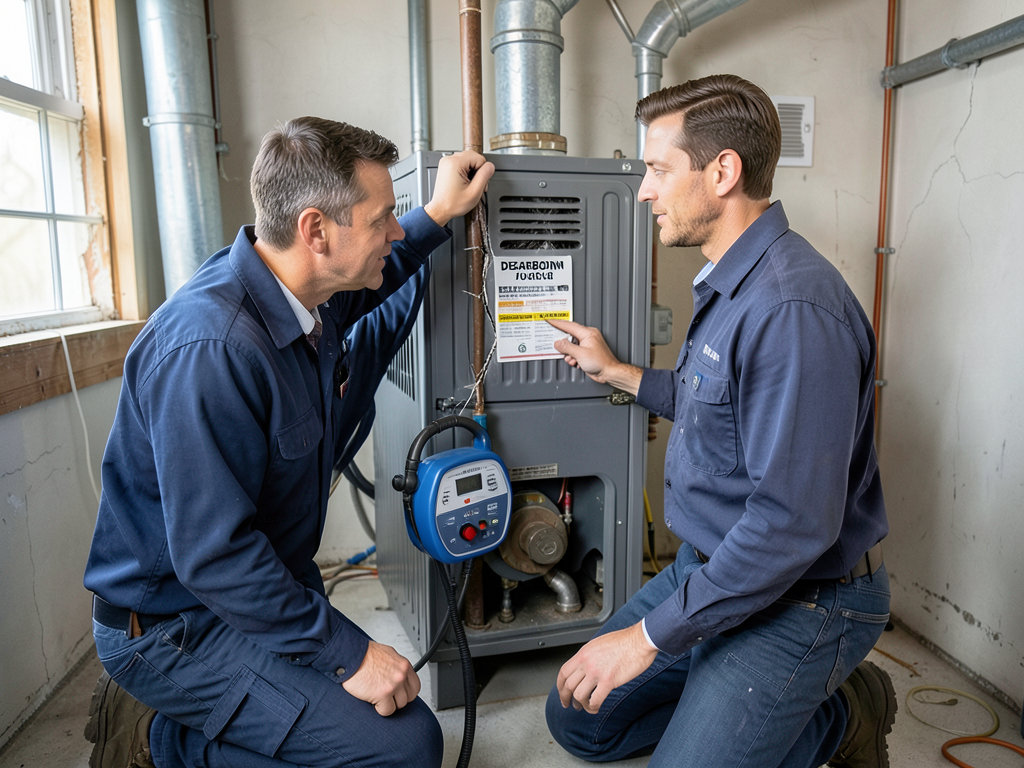
5 HVAC Red Flags to Watch for When Buying a House in Dearborn
Buying a home in Dearborn means preparing for Michigan’s extreme seasonal swings from humid 90-degree summers to sub-zero winters. The HVAC system needs to handle both reliably. Before you sign on the dotted line, here are five red flags that could signal expensive repairs or dangerous safety issues lurking in the mechanical room. Michigan Mechanical Code requirements.
1. Rust and Corrosion on the Furnace Cabinet or Flue Pipes
Take a flashlight and look at the base of the furnace where it meets the floor. If you see orange-brown rust streaks or white powdery corrosion on the cabinet or vent pipes, that’s moisture damage. In Dearborn’s older neighborhoods like Ford Road or Maple-Dearborn, many homes have basements with high humidity from clay soil that doesn’t drain well. Rust on the heat exchanger or flue can mean cracks that leak deadly carbon monoxide into your living space. Storm Damage HVAC Repair.
What it looks like: Orange streaks running down the cabinet, white flaky deposits on metal pipes, or a damp feeling near the base.
What to do: Call a licensed HVAC technician to pressure-test the heat exchanger. Michigan Mechanical Code requires sealed combustion in new installations, but many Dearborn homes still have older atmospheric units that are more vulnerable to corrosion.
2. Water Pooling Around the Indoor Air Handler or Condensate Drain
Find the indoor unit—often in a basement utility closet or crawlspace. Look for standing water, mineral deposits, or algae stains around the condensate drain pan. Dearborn’s high summer humidity means these drains work overtime. A clogged or cracked drain line causes water to back up, potentially damaging electrical components or creating mold conditions in your basement.. Read more about Finding Out Why There is Water Pooling Around Your Furnace in Mexicantown.
What it looks like: Water stains on the floor, green or black algae growth in the drain trap, or a musty smell near the unit.
What to do: Inspect the drain line for blockages. The International Mechanical Code requires a secondary drain pan with a float switch for attic installations, but many basements lack this backup. Installing a condensate pump with a safety switch prevents costly water damage.
3. Weak or Uneven Airflow from Vents
Turn the system on and walk through the house with a tissue or light piece of paper. Hold it near each vent. If the paper barely moves or airflow feels weak in certain rooms, you could have duct leaks, crushed flex duct, or a failing blower motor. In Dearborn’s 1950s-70s ranches and colonials, original ductwork often settles or gets damaged during remodeling.
What it looks like: Some vents blow strong while others feel like a gentle breeze, or certain rooms stay hot in summer and cold in winter.
What to do: A duct leakage test measures how much conditioned air escapes. Michigan energy rebates through DTE Energy cover sealing leaky ducts in homes over 10 years old. Don’t ignore this—poor airflow makes your system work harder and shortens its life.
4. Strange Noises from the Outdoor Condenser Unit
Listen to the outdoor condenser while it’s running. A healthy unit makes a steady hum. If you hear grinding, rattling, or screeching, the fan motor bearings might be failing or the compressor could be struggling. Dearborn’s summer thunderstorms and winter road salt can accelerate outdoor unit wear, especially if the unit sits near a driveway or walkway.
What it sounds like: Metal-on-metal grinding, a loud clank when starting up, or a high-pitched squeal.
What to do: Turn off the power and inspect the fan blade for damage or debris. Check that the unit sits level on its pad—uneven mounting causes vibration and premature bearing wear. If noises persist, the compressor might be failing, which often means replacement is the most cost-effective fix.
5. Missing or Outdated Thermostat and Safety Controls
Check the thermostat. Is it an old dial unit or a modern programmable model? More importantly, does the system have safety controls like a high-limit switch or a carbon monoxide detector near the furnace? In Dearborn’s older housing stock, many homes lack these modern safety features that prevent overheating or alert you to dangerous conditions. Modern HVAC Solutions for Historic Grosse Pointe Homes (Without Ruining the Aesthetics).
What it looks like: A basic mercury thermostat, no CO detector visible, or a furnace without a visible emergency shut-off switch.
What to do: Upgrade to a programmable or smart thermostat for better efficiency. Install UL-listed carbon monoxide detectors on every level per Michigan Residential Code. A high-limit switch prevents the furnace from overheating if airflow gets restricted—a critical safety feature missing in many pre-1980s homes.
Local Context: Why Dearborn Homes Need Special Attention
Dearborn’s housing stock includes many mid-century brick ranches and bungalows built between 1940 and 1970. These homes often have original ductwork that settles over decades, especially in areas with Dearborn’s clay-heavy soil that retains moisture. The city’s proximity to the Rouge River means some neighborhoods have higher water tables, increasing basement humidity that accelerates rust and mold growth around HVAC equipment.
Additionally, many Dearborn homes use natural gas for heating. Michigan’s cold winters mean furnaces run nearly continuously from November through March. A system that barely survived last winter might fail during the first polar vortex of the season you own the home.
Before You Buy: The Smart Homebuyer’s HVAC Checklist
- Request the seller’s HVAC maintenance records for the past 3-5 years
- Have a licensed HVAC contractor perform a pre-purchase inspection
- Check for open permits or unpermitted work that might affect system safety
- Verify the system’s age—most furnaces last 15-20 years, AC units 10-15 years
- Ask about utility bills from the past year to gauge efficiency
Don’t let HVAC problems become your problem after closing. A $100 inspection now can save you thousands in emergency repairs or premature replacement costs. How to Find Reliable Emergency Furnace Repair in Detroit Before the Next Deep Freeze.
Frequently Asked Questions
How can I tell how old my furnace is?
Look for the manufacturer’s label on the unit. The first four digits of the serial number often indicate the week and year of manufacture. For example, 1423XXXXX means built in the 14th week of 2023. If you can’t find the label, check building permits—most furnace replacements require a mechanical permit that’s on file with the city.
Should I replace the HVAC system before selling my Dearborn home?
If your system is over 15 years old or showing multiple red flags, replacing it before listing can increase your home’s value and make it more attractive to buyers. New HVAC systems are a strong selling point in Michigan’s competitive market, especially if you can show recent DTE energy rebates or efficiency certifications. DTE Energy HVAC rebates.
What’s the average cost of a new HVAC system in Dearborn?
Replacement costs vary based on home size and system type, but expect $5,000-$12,000 for a complete furnace and AC replacement in a typical Dearborn home. High-efficiency systems with smart thermostats can cost more upfront but save 20-30% on utility bills annually.
Ready to Buy Your Dearborn Dream Home? Call Us First
Before you make an offer on that perfect Dearborn house, let our licensed HVAC technicians give the system a thorough inspection. We’ll check for all five red flags and provide a detailed report on what’s working, what needs attention, and what might need replacement soon.
Call (313) 552-7177 today to schedule your pre-purchase HVAC inspection. Don’t wait until the inspection contingency expires—knowing the true condition of the heating and cooling system could save you thousands and give you negotiating leverage.
Pick up the phone and call (313) 552-7177 before the next storm hits. Your future comfort and safety depend on making an informed decision about the HVAC system that will keep your family comfortable through every Michigan season.
You may also find this helpful. How to Tell if Your Rivertown Loft Has an Oversized or Undersized AC System.
You may also find this helpful. How to Stop Those Annoying Popping and Banging Sounds in Your Sherwood Forest Air Ducts.
You may also find this helpful. Keeping Your Historic Palmer Woods Hardwood Floors From Cracking With Proper Humidity Control.
You may also find this helpful. Why Your Air Tight New Construction Home in Northville Needs an ERV System to Breathe.
You may also find this helpful. How to Choose a Backup Generator That Can Handle Your HVAC System in Northville.
You may also find this helpful. Converting Your Old Chimney Venting to a High Efficiency Sidewall Exit in Wyandotte.
You may also find this helpful. Why Switching From Window Units to Central Air is More Affordable Than You Think in Ferndale.