
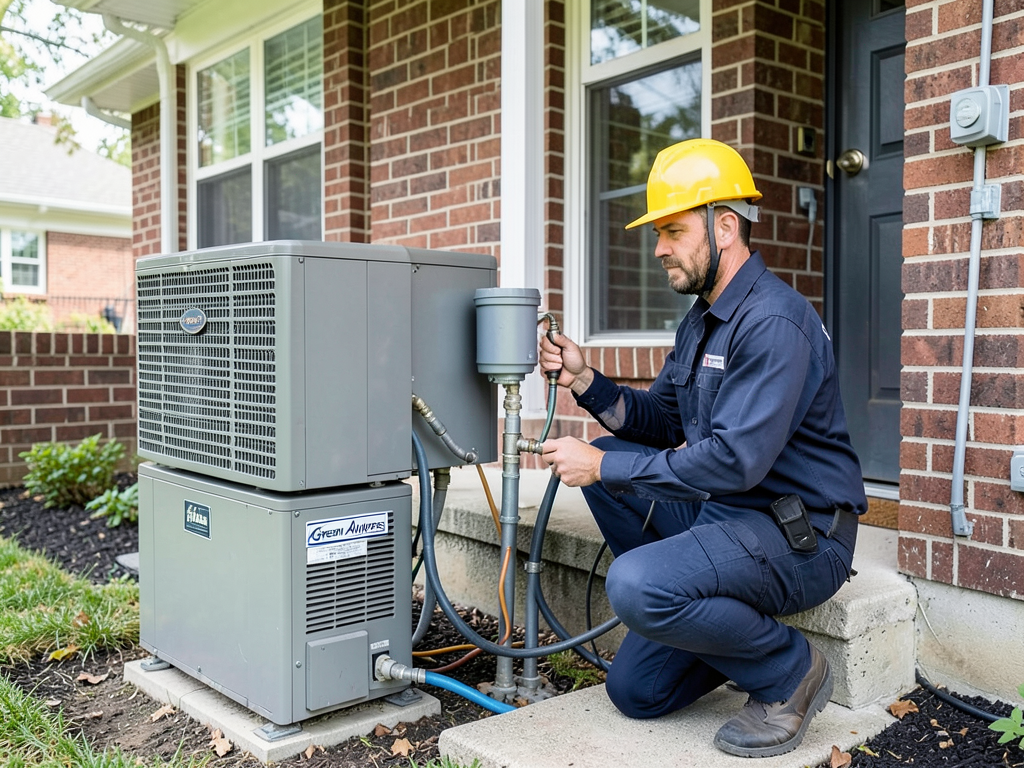
Switching to a Dual-Fuel Hybrid Heating System in Green Acres (The Pros and Cons)
Detroit winters can drop below zero while summers bring 90-degree humidity. A dual-fuel hybrid heating system gives Green Acres homeowners the flexibility to switch between an electric heat pump and a gas furnace based on outdoor temperatures. This guide breaks down exactly how these systems work in Southeast Michigan’s climate, what they cost to operate, and whether the investment makes sense for your home.. Read more about Dealing With Ice Buildup on Your Outdoor Heat Pump During a Michigan Winter.
How a Dual-Fuel System Works in Detroit’s Climate
A dual-fuel system pairs a high-efficiency heat pump with a natural gas furnace. When temperatures stay above freezing the heat pump handles heating using electricity. Once outdoor temperatures drop below the balance point—typically around 30-35°F in Metro Detroit—the system automatically switches to the gas furnace. This eliminates the efficiency loss heat pumps experience in extreme cold while still capturing the energy savings during milder months. Energy Saver Guide.
The balance point varies by home. Factors include insulation quality, window efficiency, and how well your home retains heat. During a typical Detroit winter the heat pump handles about 60-70% of your heating needs, with the gas furnace taking over during the coldest stretches.
Cost Comparison: Gas vs Electric vs Hybrid in Metro Detroit
DTE Energy’s current winter gas rates average $0.90 per therm while electricity runs about $0.16 per kWh. A standard 80% efficient gas furnace costs roughly $15-18 per million BTUs while electric resistance heating hits $47-50 per million BTUs. High-efficiency heat pumps can drop that to $15-20 per million BTUs in moderate weather. DTE Energy Rebates.
Over a full heating season a hybrid system typically costs 20-30% less to operate than an all-electric system and about 10-15% less than a standard gas furnace alone. The savings depend on your home’s characteristics and how cold the winter gets. During a mild winter with few polar vortex events the heat pump handles more of the load, increasing savings.
Performance During Detroit’s Extreme Weather
When temperatures plunge below zero the gas furnace becomes essential. Modern cold-climate heat pumps can extract heat from air as cold as -15°F, but efficiency drops dramatically and they may struggle to keep up with heat loss on the coldest Detroit nights. The gas furnace provides reliable backup without the high operating costs of electric resistance heat. Modern HVAC Solutions for Historic Grosse Pointe Homes (Without Ruining the Aesthetics).
During shoulder seasons—late fall and early spring—the heat pump shines. These periods often see temperatures in the 40s and 50s where heat pumps operate at 200-300% efficiency compared to 80-95% for even the best gas furnaces. The system automatically handles these transitions without manual intervention.. Read more about Where to Place Carbon Monoxide Detectors Based on Your Furnace Location in a Southwest Detroit Bungalow.
Available Michigan Incentives and Rebates
The federal 25C tax credit covers 30% of heat pump installation costs up to $2,000 through 2032. DTE Energy offers rebates up to $1,500 for qualifying high-efficiency heat pump installations. Consumers Energy provides similar incentives in their service territory. The Best Local AC Installation Specialists for Homeowners in Royal Oak.
Additional savings come through the Inflation Reduction Act’s HOMES rebate program, which offers point-of-sale discounts for energy efficiency improvements. Michigan utilities also participate in the Clean Energy Credit program, providing instant rebates at the time of purchase for qualifying equipment.
Installation Requirements and Local Codes
Detroit requires mechanical permits for all furnace and air conditioning replacements. The Michigan Mechanical Code mandates proper venting, combustion air supply, and carbon monoxide detector installation for gas appliances. Homes in Green Acres built before 1980 often need electrical panel upgrades to handle heat pump loads. Why You Need a Dedicated Air Conditioning Repair Service in Birmingham Michigan.
The City of Detroit inspects all new HVAC installations to verify compliance with local codes. This includes checking refrigerant line sizing, electrical connections, and proper condensate drainage. Homes with asbestos-wrapped ductwork require specialized removal before installation.
Top Dual-Fuel Brands for Southeast Michigan
Carrier’s Infinity series offers cold-climate heat pumps with HSPF2 ratings up to 9.5 and SEER2 ratings to 20.5. These units include variable-speed compressors that maintain efficiency in sub-freezing temperatures. Trane’s XV20i heat pump pairs with their modulating gas furnaces for seamless temperature control.
Lennox’s SLP99V furnace operates at 99% efficiency and integrates with their cold-climate heat pumps. These premium systems include smart thermostats that learn your home’s patterns and optimize switching between fuel sources. Budget-friendly options from Goodman and Amana provide solid performance at lower price points.
Maintenance Differences from Traditional Systems
Hybrid systems require twice-annual maintenance—once for heating season and once for cooling season. The heat pump coil needs cleaning twice yearly while the gas furnace requires annual burner inspection and heat exchanger checking. Refrigerant levels must be monitored since the system runs year-round.
Air filters should be changed every 1-3 months depending on household dust levels. Green Acres homes near construction or with pets may need more frequent changes. The system’s control board and sensors require periodic calibration to ensure proper fuel switching.
Environmental Impact and Carbon Footprint
A hybrid system reduces carbon emissions by 30-40% compared to standard gas heating. The exact reduction depends on DTE’s fuel mix, which includes about 15% renewable energy. During moderate weather the system runs on electricity that’s increasingly sourced from wind and solar.
Natural gas still produces CO2 when burned, but at about half the rate of coal-generated electricity. The system’s ability to use the most efficient fuel source for current conditions minimizes overall environmental impact while maintaining comfort during extreme weather.
Is a Hybrid System Right for Your Green Acres Home?
Homes built before 1970 in Green Acres often have the worst energy performance due to minimal insulation and single-pane windows. These homes see the biggest savings from hybrid systems since they currently waste the most energy. Newer homes with good insulation see smaller but still significant savings.
Consider your home’s characteristics: age, insulation levels, window quality, and current system efficiency. Homes with electric baseboard heat see the fastest payback since they’re switching from the most expensive heating method. Homes with newer gas furnaces may see payback in 7-10 years rather than 5-7.
Installation Timeline and What to Expect
Most hybrid system installations take 1-2 days. The first day involves removing the old equipment, preparing the site, and installing the new indoor and outdoor units. The second day covers electrical connections, refrigerant charging, and system testing. Permitting adds 1-2 weeks to the process.
During installation your home will lack heating or cooling for several hours. Technicians protect floors and furnishings with drop cloths and clean up thoroughly. The new system includes a smart thermostat that’s programmed during installation and demonstrated to you before completion.
Common Questions About Hybrid Systems
Many homeowners worry about the complexity of hybrid systems. Modern controls handle all switching automatically. You won’t notice when the system changes from heat pump to gas furnace. The thermostat displays which fuel source is active, but you don’t need to manage it.
Noise levels are comparable to standard systems. The outdoor unit runs during heating season, but cold-climate heat pumps are designed for quiet operation. Indoor noise is minimal since both the furnace and air handler use variable-speed blowers that ramp up gradually.
Long-Term Reliability and System Lifespan
Heat pumps typically last 12-15 years while gas furnaces often reach 15-20 years. In a hybrid system the furnace sees less use since it only operates during extreme cold, potentially extending its life. The heat pump runs year-round for both heating and cooling, so it may need replacement slightly sooner.
Both components come with 10-year parts warranties when installed by licensed contractors. Labor warranties vary but typically cover 1-2 years. Regular maintenance is key to achieving maximum lifespan from both components.
Making the Switch: Next Steps
Start with a home energy assessment to determine your current system’s efficiency and identify improvement opportunities. Many utilities offer free or discounted assessments. This evaluation helps size the new system correctly and identifies whether additional insulation or air sealing would improve performance.
Gather quotes from multiple contractors, but verify they’re licensed in Detroit and have experience with hybrid systems. Ask about their experience with Green Acres homes specifically, since the neighborhood’s housing stock varies widely in age and construction style.
Frequently Asked Questions
How much does a dual-fuel system cost in Green Acres?
Installation typically ranges from $8,000 to $15,000 depending on home size and equipment selection. The federal tax credit and utility rebates can reduce this by $2,000 to $3,500.. Read more about How to Claim Federal Tax Credits on Your New HVAC System in Metro Detroit.
Will a heat pump keep my home warm during a polar vortex?
Modern cold-climate heat pumps work down to -15°F but become less efficient. The gas furnace automatically takes over during extreme cold, ensuring reliable heating regardless of outdoor temperatures. How to Find Reliable Emergency Furnace Repair in Detroit Before the Next Deep Freeze.
Do I need to modify my electrical panel?
Homes built before 1990 often need electrical upgrades to handle heat pump loads. A load calculation determines if your panel has sufficient capacity or needs expansion.
How long until I see energy savings?
Most homeowners see immediate savings on their utility bills. The exact payback period depends on your current system’s efficiency and energy rates, typically ranging from 5-10 years.
Can I keep my existing air conditioner?
The heat pump replaces your air conditioner since it provides both heating and cooling. This eliminates the need for separate AC maintenance and can free up outdoor space.
Ready to explore whether a dual-fuel system makes sense for your Green Acres home? Call (313) 552-7177 today to schedule your free assessment and learn about current rebates available in your area.
You may also find this helpful. How to Choose an HVAC Financing Plan That Won’t Break Your Monthly Budget.
{
“@context”: “https://schema.org”,
“@type”: “BlogPosting”,
“headline”: “Switching to a Dual-Fuel Hybrid Heating System in Green Acres (The Pros and Cons)”,
“description”: “Learn how dual-fuel hybrid heating systems work in Green Acres Detroit. Compare gas vs electric costs, DTE rebates, and find the best installers for Michigan’s climate.”,
“wordCount”: 1592,
“datePublished”: “2026-04-15T07:06:00.000Z”,
“dateModified”: “2026-04-15T07:06:00.000Z”,
“inLanguage”: “en-US”,
“mainEntityOfPage”: {
“@type”: “WebPage”,
“@id”: “https://acehvacdetroit.com”
},
“publisher”: {
“@type”: “LocalBusiness”,
“name”: “Ace HVAC Detroit”,
“url”: “https://acehvacdetroit.com”
},
“author”: {
“@type”: “Organization”,
“name”: “Ace HVAC Detroit”,
“url”: “https://acehvacdetroit.com”
},
“image”: {
“@type”: “ImageObject”,
“url”: “https://acehvacdetroit.com/wp-content/uploads/2026/03/switching-to-a-dual-fuel-hybrid-heating-system-in-1.png”
}
}
{
“@context”: “https://schema.org”,
“@type”: “HVACBusiness”,
“name”: “Ace HVAC Detroit”,
“url”: “https://acehvacdetroit.com”,
“address”: {
“@type”: “PostalAddress”,
“addressLocality”: “Detroit”
},
“areaServed”: {
“@type”: “City”,
“name”: “Detroit”
}
}
{
“@context”: “https://schema.org”,
“@type”: “FAQPage”,
“mainEntity”: [
{
“@type”: “Question”,
“name”: “Is a Hybrid System Right for Your Green Acres Home?”,
“acceptedAnswer”: {
“@type”: “Answer”,
“text”: “Homes built before 1970 in Green Acres often have the worst energy performance due to minimal insulation and single-pane windows. These homes see the biggest savings from hybrid systems since they currently waste the most energy. Newer homes with good insulation see smaller but still significant savings.”
}
},
{
“@type”: “Question”,
“name”: “How much does a dual-fuel system cost in Green Acres?”,
“acceptedAnswer”: {
“@type”: “Answer”,
“text”: “Installation typically ranges from $8,000 to $15,000 depending on home size and equipment selection. The federal tax credit and utility rebates can reduce this by $2,000 to $3,500.”
}
},
{
“@type”: “Question”,
“name”: “Will a heat pump keep my home warm during a polar vortex?”,
“acceptedAnswer”: {
“@type”: “Answer”,
“text”: “Modern cold-climate heat pumps work down to -15°F but become less efficient. The gas furnace automatically takes over during extreme cold, ensuring reliable heating regardless of outdoor temperatures. How to Find Reliable Emergency Furnace Repair in Detroit Before the Next Deep Freeze.”
}
},
{
“@type”: “Question”,
“name”: “Do I need to modify my electrical panel?”,
“acceptedAnswer”: {
“@type”: “Answer”,
“text”: “Homes built before 1990 often need electrical upgrades to handle heat pump loads. A load calculation determines if your panel has sufficient capacity or needs expansion.”
}
},
{
“@type”: “Question”,
“name”: “How long until I see energy savings?”,
“acceptedAnswer”: {
“@type”: “Answer”,
“text”: “Most homeowners see immediate savings on their utility bills. The exact payback period depends on your current system’s efficiency and energy rates, typically ranging from 5-10 years.”
}
},
{
“@type”: “Question”,
“name”: “Can I keep my existing air conditioner?”,
“acceptedAnswer”: {
“@type”: “Answer”,
“text”: “The heat pump replaces your air conditioner since it provides both heating and cooling. This eliminates the need for separate AC maintenance and can free up outdoor space.”
}
}
]
}
{
“@context”: “https://schema.org”,
“@type”: “BreadcrumbList”,
“itemListElement”: [
{
“@type”: “ListItem”,
“position”: 1,
“name”: “Home”,
“item”: “https://acehvacdetroit.com”
},
{
“@type”: “ListItem”,
“position”: 2,
“name”: “Blog”,
“item”: “https://acehvacdetroit.com/blog”
},
{
“@type”: “ListItem”,
“position”: 3,
“name”: “Switching to a Dual-Fuel Hybrid Heating System in Green Acres (The Pros and Cons)”
}
]
}
{
“@context”: “https://schema.org”,
“@type”: “Service”,
“serviceType”: “HVAC”,
“provider”: {
“@type”: “LocalBusiness”,
“name”: “Ace HVAC Detroit”,
“url”: “https://acehvacdetroit.com”
},
“areaServed”: {
“@type”: “City”,
“name”: “Detroit”
},
“description”: “Learn how dual-fuel hybrid heating systems work in Green Acres Detroit. Compare gas vs electric costs, DTE rebates, and find the best installers for Michigan’s climate.”
}