
What is a MERV Rating and Why Does It Matter for Detroit Homes?
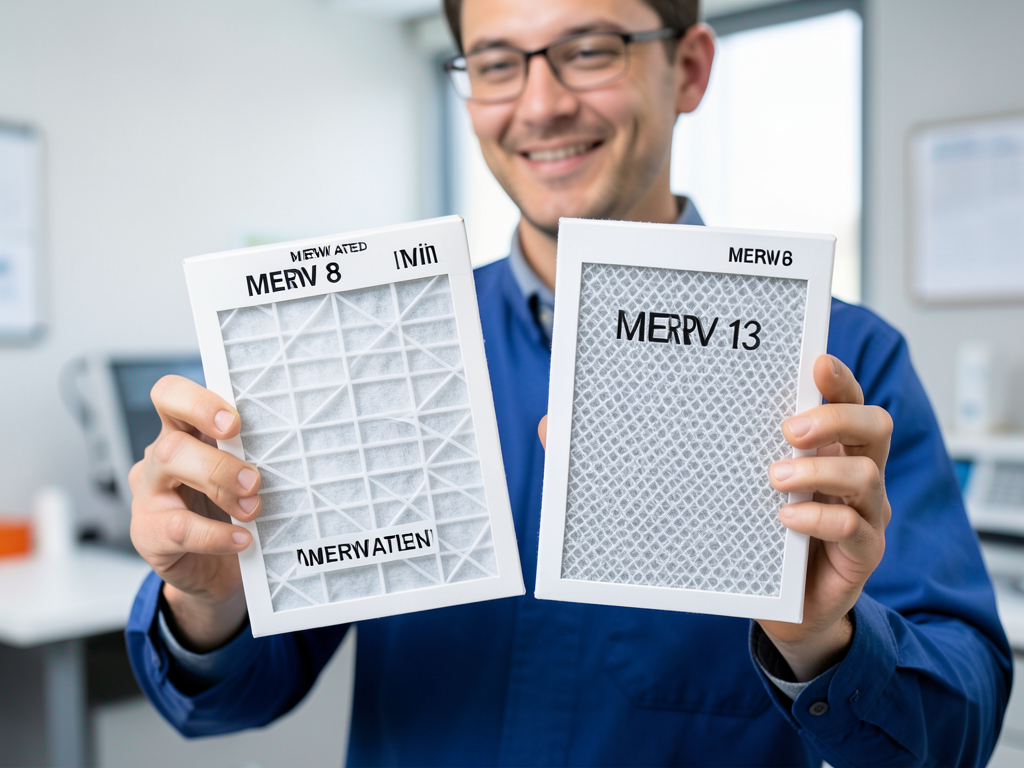
MERV stands for Minimum Efficiency Reporting Value. It measures how effectively a filter captures airborne particles between 0.3 and 10 microns. The scale runs from 1 to 20, with higher numbers trapping smaller particles. But here’s the catch that most hardware store employees won’t tell you: a higher MERV rating means the filter creates more resistance to airflow through your furnace.. Read more about Choosing the Right Air Filter for Your Farmington Home Without Killing Your Furnace Motor.
In Detroit’s climate, where furnaces run hard for six months straight, that resistance becomes critical. Your furnace’s blower motor must work harder to push air through a dense filter. This extra strain can lead to premature motor failure, cracked heat exchangers, and skyrocketing energy bills during the coldest months when you can least afford it.. Read more about Why Your Furnace Turns Off and On Every Few Minutes (And What Huntington Woods Homeowners Should Check First).
Detroit homes face unique air quality challenges. Between industrial particulates from the Rouge complex, seasonal pollen from the Metroparks, and the heavy dust kicked up by our freeze-thaw cycles, many homeowners think they need the highest MERV rating available. That’s where the damage begins. Storm Damage HVAC Repair.
The sweet spot for most Detroit homes falls between MERV 8 and MERV 11. These ratings capture common allergens like pollen, dust mites, and pet dander while maintaining adequate airflow for your system to operate efficiently. Going beyond MERV 11 without proper system modifications is like putting your furnace on a treadmill it wasn’t built to run on.. Read more about How to Keep Pet Hair and Dander Out of Your Royal Oak HVAC System.
Understanding this balance is crucial because replacing a blower motor in Detroit typically costs $600 to $1,200, while a cracked heat exchanger can run $1,500 to $3,500. The wrong filter choice can turn a $20 maintenance item into a $2,000 repair bill. EPA guide on air cleaners and filters.
Call (313) 552-7177 today to schedule your inspection and find the right filter for your system.. Read more about Is a MERV 13 Filter Too Powerful for Your Grosse Ile HVAC System?.
How MERV Ratings Affect Your Detroit Home’s Air Quality
Air quality in Southeast Michigan presents a complex challenge. Detroit sits in a unique geographical position where industrial emissions from the Rouge complex mix with agricultural particulates from the Thumb region. Add in seasonal factors like ragweed in September and maple pollen in April, and you’ve got year-round filtration needs.
A MERV 8 filter captures particles as small as 3 microns, including dust, pollen, and mold spores. This covers about 90% of common household allergens. For most Detroit families, this provides significant relief without compromising system performance.
Moving to MERV 11 increases filtration to particles as small as 1 micron. This captures pet dander, fine dust, and some bacteria. The trade-off? Static pressure in your ductwork increases by approximately 0.05 to 0.10 inches of water column. Your furnace must work harder to maintain the same airflow.
MERV 13 and above target particles down to 0.3 microns, including smoke, some viruses, and ultrafine particulates. While this sounds ideal for air quality, the pressure drop can exceed 0.20 inches of water column. For older Detroit homes with original ductwork from the 1940s and 1950s, this can be catastrophic.
The physics are straightforward: when your furnace can’t move enough air across the heat exchanger, the metal gets hotter than designed. This thermal stress can crack the heat exchanger, allowing carbon monoxide to leak into your home. The EPA estimates that even small cracks can release dangerous levels of CO.
Detroit’s climate makes this especially problematic. During January deep freezes, your furnace runs continuously. A high-MERV filter that might work fine in April can cause system failure in February when the demand is highest.
Consider this: a MERV 13 filter might improve your air quality by 15%, but it could reduce your furnace’s efficiency by 20% and increase operating costs by $30 to $50 per month during peak season. Is that trade-off worth the risk?
MERV 8 vs. 11 vs. 13: Which is Right for You?
Choosing the right MERV rating depends on your specific situation. Let’s break down the options for Detroit homeowners:
| MERV Rating | Particle Size Captured | Best For | Risk Level |
|---|---|---|---|
| MERV 8 | 3.0 – 10.0 microns | Basic allergens, dust, pollen | Very Low |
| MERV 11 | 1.0 – 3.0 microns | Pet owners, moderate allergies | Low to Moderate |
| MERV 13 | 0.3 – 1.0 microns | Severe allergies, smoke concerns | High |
For most Detroit homes, MERV 8 provides the best balance. It captures the majority of common allergens while maintaining proper airflow. If you have pets or mild allergies, MERV 11 might be worth considering, but only if your system is relatively new and your ductwork is in good condition.
MERV 13 and higher should only be used with specific system modifications. These might include upgrading your blower motor, installing larger ductwork, or using a dedicated air purification system rather than relying on your furnace filter. Why You Need a Dedicated Air Conditioning Repair Service in Birmingham Michigan.
Detroit’s housing stock adds another layer of complexity. Homes in areas like Boston-Edison, Indian Village, and Palmer Woods often have original ductwork from the 1920s and 1930s. These narrow ducts were designed for lower airflow rates. Adding a high-MERV filter to these systems is asking for trouble.
Modern high-efficiency furnaces handle higher pressure drops better than older models. If your furnace is less than 10 years old and has a variable-speed blower, you have more flexibility with filter choices. However, even these systems have limits. Modern HVAC Solutions for Historic Grosse Pointe Homes (Without Ruining the Aesthetics).
The age of your home matters too. Homes built before 1980 often have asbestos-wrapped ductwork or deteriorating duct seals. Adding a high-resistance filter can cause air to bypass the filter entirely through these gaps, reducing effectiveness while still straining your system.
Seasonal considerations also play a role. During spring allergy season, you might want to temporarily upgrade to a higher MERV rating. But this should be a short-term adjustment, not a year-round solution. The risk of system damage during winter months outweighs the air quality benefits.
The Risks of Using a MERV Rating That is Too High
Using a filter with too high a MERV rating creates several specific problems for your furnace system. Understanding these risks helps you make an informed decision.
- Reduced Airflow
The primary issue is decreased airflow across your heat exchanger. When airflow drops below design specifications, the heat exchanger temperature rises. This can cause the system to cycle on its high-limit switch, reducing efficiency and comfort. - Increased Energy Consumption
Your blower motor works harder to push air through the restrictive filter. This increased load can raise your monthly energy bills by 15% to 25% during peak heating season. In Detroit, where heating accounts for 60% of annual energy use, this adds up quickly. - Premature Motor Failure
The extra strain on your blower motor reduces its lifespan. A motor that should last 15 to 20 years might fail in 8 to 10 years. Replacement costs typically range from $400 to $800 for the motor alone, plus labor. - Heat Exchanger Damage
The most serious risk is heat exchanger cracking. When the metal overheats repeatedly, it expands and contracts beyond design limits. Small cracks can release carbon monoxide into your home, creating a serious safety hazard. - System Short Cycling
Restricted airflow can cause your furnace to overheat and shut down prematurely. This short cycling reduces efficiency, increases wear on components, and leaves your home colder than desired.
The Michigan Residential Code (MRC) Section 504.4 requires proper combustion air for fuel-burning appliances. A high-MERV filter can indirectly violate this by causing your furnace to pull air from unintended sources, potentially creating backdraft conditions.
Detroit’s climate makes these risks more pronounced. Our winters feature extended periods of sub-zero temperatures. Your furnace runs continuously for days during polar vortex events. A filter that might work fine in a mild climate can cause system failure during a Michigan winter.
Older furnaces are particularly vulnerable. Units over 15 years old often have single-speed blowers that cannot compensate for increased pressure drop. The motors in these systems were designed for lower static pressure applications.
Variable-speed furnaces handle high-MERV filters better but aren’t immune to problems. While they can adjust their speed to maintain airflow, this comes at the cost of increased energy consumption and motor wear. The system may still experience reduced efficiency and comfort issues.
Another consideration is your home’s specific layout. Multi-story homes in areas like Royal Oak or Ferndale often have longer duct runs. The additional friction loss in these systems compounds the pressure drop from a high-MERV filter, creating even more strain on your equipment.
How Often to Change Furnace Filters in Michigan Winters
Filter replacement frequency in Detroit depends on several factors specific to our climate and lifestyle. The standard recommendation of every 90 days goes out the window when you’re dealing with Michigan winters.
- Standard MERV 8 filters: Replace every 30 to 60 days during heating season
- MERV 11 filters: Replace every 20 to 45 days during heating season
- MERV 13+ filters: Replace every 15 to 30 days during heating season
The more restrictive the filter, the more frequently it needs replacement. This happens because the filter media fills up faster, creating even more pressure drop as it loads with particles.
Detroit’s specific conditions accelerate filter loading. Our clay soil generates fine dust that gets tracked indoors. Industrial particulates from local manufacturing settle in ductwork. And during winter, we keep windows closed, recirculating the same air through our systems repeatedly. The Best Local AC Installation Specialists for Homeowners in Royal Oak.
Pet owners in Detroit face additional challenges. Our long winters mean pets spend more time indoors, increasing dander and hair in the air. A home with two dogs might need to replace a MERV 8 filter every 30 days instead of every 60.
Construction activity in your neighborhood affects filter life too. If you live near active construction sites in areas like Midtown or Corktown, your filters will load faster with drywall dust and concrete particulates.
Smoke from fireplaces and wood stoves also impacts filter life. Many Detroit homes use supplemental heating sources during extreme cold snaps. This adds particulates that your furnace filter must capture.
Here’s a simple test: hold your filter up to a bright light. If you can’t see light through at least 50% of the surface area, it’s time for replacement regardless of the calendar. Restricted airflow reduces efficiency immediately, costing you money every day you delay.
Smart thermostats can help monitor filter life. Many newer models track run time and can alert you when it’s time for replacement. This takes the guesswork out of maintenance and ensures optimal system performance.
Consider seasonal filter strategies. Use a basic MERV 8 filter during the harshest winter months when your system runs continuously. Switch to a higher MERV rating during shoulder seasons when your furnace runs less frequently and the risk of system strain is lower.
Professional Recommendations for Detroit HVAC Systems
After 15 years of servicing Detroit homes, we’ve developed specific recommendations based on local conditions. These guidelines help you balance air quality with system longevity.
- Assess Your System Age
If your furnace is over 10 years old, stick with MERV 8 or lower. Older systems cannot handle the pressure drop from higher-rated filters. - Check Your Ductwork
Homes built before 1980 often have undersized ducts. If you see visible gaps or deteriorating duct tape, avoid high-MERV filters entirely. - Evaluate Your Health Needs
If allergies are severe, consider a dedicated air purifier rather than relying on your furnace filter. This provides better filtration without straining your HVAC system. - Test Your System
Have a professional measure your system’s static pressure with different filter options. This diagnostic test reveals exactly how much strain each filter creates. - Monitor Energy Bills
Track your energy usage after changing filter types. A sudden 15%+ increase in heating costs might indicate your filter is restricting airflow.
For Detroit’s historic homes, we often recommend a two-pronged approach. Use a basic MERV 8 filter during winter when your system runs hardest. Add a standalone HEPA air purifier in main living areas for improved air quality without HVAC strain.
New construction in Detroit’s developing neighborhoods can handle higher MERV ratings better. These homes typically have properly sized ductwork and modern high-efficiency furnaces. Even here, we rarely recommend going beyond MERV 11 without system modifications.
Commercial buildings and multi-family properties have different requirements. These systems often include dedicated air handling units with stronger blowers designed for higher pressure drops. The residential guidelines don’t apply to these installations.
Smart filter technology is emerging in 2026. Some manufacturers now offer pressure-sensing filters that change color when airflow drops below optimal levels. These provide visual feedback about when replacement is truly needed, not just when the calendar says so.
Consider your specific location within Detroit. Homes near industrial areas like Zug Island might benefit from activated carbon pre-filters that capture odors and chemicals before they reach your main furnace filter. This extends filter life while improving air quality.
The bottom line: in Detroit’s climate, protecting your furnace from strain is often more important than maximizing air filtration. A system that runs efficiently all winter provides better comfort and air quality than one that fails in February.
Frequently Asked Questions
What happens if I use a MERV 13 filter in my older furnace?
Your furnace will struggle to move enough air across the heat exchanger. This causes the system to run hotter than designed, potentially cracking the heat exchanger and creating carbon monoxide risks. You’ll also see higher energy bills and reduced comfort as the system short cycles.
How can I tell if my filter is restricting airflow?
Signs include weak airflow from vents, hot air coming from supply registers, your furnace cycling on and off frequently, and unusually high heating bills. You can also check if your filter is visibly dirty or if light barely passes through it when held up to a lamp.
Are expensive HEPA filters worth it for home use?
Not when installed in standard furnace systems. HEPA filters are designed for dedicated air purifiers or specialized HVAC equipment. In a regular furnace, they create too much resistance and can damage your system. For true HEPA-level filtration, use a standalone air purifier.
How does Detroit’s climate affect filter choice?
Our long, cold winters mean furnaces run continuously for months. This makes airflow restriction more problematic than in milder climates. Additionally, our industrial heritage means more particulates in the air, which can quickly clog high-MERV filters during peak heating season.
Can I use different MERV ratings for different seasons?
Yes, this is actually a smart strategy. Use a lower MERV rating during peak heating season when airflow is most critical. Upgrade to a higher rating during spring and fall when your system runs less frequently and can handle the additional resistance.
What’s the difference between MERV, MPR, and FPR ratings?
MERV is the standard rating used by ASHRAE. MPR (Microparticle Performance Rating) is 3M’s proprietary system. FPR (Filter Performance Rating) is Home Depot’s system. They measure similar characteristics but use different scales. MERV is the most widely recognized and recommended standard. ASHRAE filtration standards.
Should I worry about filter size and fit?
Absolutely. An improperly sized filter allows air to bypass the filtration media entirely. This reduces effectiveness and can pull dirty air directly into your system. Always measure your filter slot and use the exact size recommended by your furnace manufacturer.
Ready to optimize your home’s air quality without risking your furnace? Call (313) 552-7177 today to schedule a professional assessment. Our Detroit HVAC experts will test your system’s static pressure, evaluate your specific needs, and recommend the perfect filter solution for your home. Don’t wait until your furnace fails during the next polar vortex. Fast and Professional Boiler Repair Services in Corktown and Midtown Detroit.
You may also find this helpful. Why Your Golden Retriever is Making Your Grosse Pointe Farms HVAC System Struggle.
You may also find this helpful. How to Keep Your University District Pipes From Freezing With Better Furnace Airflow.
{
“@context”: “https://schema.org”,
“@type”: “BlogPosting”,
“headline”: “Why the Most Expensive Air Filter Might Actually Be Damaging Your Furnace”,
“description”: “Learn why high-MERV filters can strain Detroit furnaces, increase energy bills, and cause breakdowns. Find the right balance for your Southeast Michigan home.”,
“wordCount”: 2618,
“datePublished”: “2026-04-28T10:23:00.000Z”,
“dateModified”: “2026-04-28T10:23:00.000Z”,
“inLanguage”: “en-US”,
“mainEntityOfPage”: {
“@type”: “WebPage”,
“@id”: “https://acehvacdetroit.com”
},
“publisher”: {
“@type”: “LocalBusiness”,
“name”: “Ace HVAC Detroit”,
“url”: “https://acehvacdetroit.com”
},
“author”: {
“@type”: “Organization”,
“name”: “Ace HVAC Detroit”,
“url”: “https://acehvacdetroit.com”
},
“image”: {
“@type”: “ImageObject”,
“url”: “https://acehvacdetroit.com/wp-content/uploads/2026/03/why-the-most-expensive-air-filter-might-actually-b-1.png”
}
}
{
“@context”: “https://schema.org”,
“@type”: “HVACBusiness”,
“name”: “Ace HVAC Detroit”,
“url”: “https://acehvacdetroit.com”,
“address”: {
“@type”: “PostalAddress”,
“addressLocality”: “Detroit”
},
“areaServed”: {
“@type”: “City”,
“name”: “Detroit”
}
}
{
“@context”: “https://schema.org”,
“@type”: “FAQPage”,
“mainEntity”: [
{
“@type”: “Question”,
“name”: “What is a MERV Rating and Why Does It Matter for Detroit Homes?”,
“acceptedAnswer”: {
“@type”: “Answer”,
“text”: “MERV stands for Minimum Efficiency Reporting Value. It measures how effectively a filter captures airborne particles between 0.3 and 10 microns. The scale runs from 1 to 20, with higher numbers trapping smaller particles. But here’s the catch that most hardware store employees won’t tell you: a higher MERV rating means the filter creates more resistance to airflow through your furnace.”
}
},
{
“@type”: “Question”,
“name”: “MERV 8 vs. 11 vs. 13: Which is Right for You?”,
“acceptedAnswer”: {
“@type”: “Answer”,
“text”: “Choosing the right MERV rating depends on your specific situation. Let’s break down the options for Detroit homeowners:”
}
},
{
“@type”: “Question”,
“name”: “What happens if I use a MERV 13 filter in my older furnace?”,
“acceptedAnswer”: {
“@type”: “Answer”,
“text”: “Your furnace will struggle to move enough air across the heat exchanger. This causes the system to run hotter than designed, potentially cracking the heat exchanger and creating carbon monoxide risks. You’ll also see higher energy bills and reduced comfort as the system short cycles.”
}
},
{
“@type”: “Question”,
“name”: “How can I tell if my filter is restricting airflow?”,
“acceptedAnswer”: {
“@type”: “Answer”,
“text”: “Signs include weak airflow from vents, hot air coming from supply registers, your furnace cycling on and off frequently, and unusually high heating bills. You can also check if your filter is visibly dirty or if light barely passes through it when held up to a lamp.”
}
},
{
“@type”: “Question”,
“name”: “Are expensive HEPA filters worth it for home use?”,
“acceptedAnswer”: {
“@type”: “Answer”,
“text”: “Not when installed in standard furnace systems. HEPA filters are designed for dedicated air purifiers or specialized HVAC equipment. In a regular furnace, they create too much resistance and can damage your system. For true HEPA-level filtration, use a standalone air purifier.”
}
},
{
“@type”: “Question”,
“name”: “How does Detroit’s climate affect filter choice?”,
“acceptedAnswer”: {
“@type”: “Answer”,
“text”: “Our long, cold winters mean furnaces run continuously for months. This makes airflow restriction more problematic than in milder climates. Additionally, our industrial heritage means more particulates in the air, which can quickly clog high-MERV filters during peak heating season.”
}
},
{
“@type”: “Question”,
“name”: “Can I use different MERV ratings for different seasons?”,
“acceptedAnswer”: {
“@type”: “Answer”,
“text”: “Yes, this is actually a smart strategy. Use a lower MERV rating during peak heating season when airflow is most critical. Upgrade to a higher rating during spring and fall when your system runs less frequently and can handle the additional resistance.”
}
},
{
“@type”: “Question”,
“name”: “What’s the difference between MERV, MPR, and FPR ratings?”,
“acceptedAnswer”: {
“@type”: “Answer”,
“text”: “MERV is the standard rating used by ASHRAE. MPR (Microparticle Performance Rating) is 3M’s proprietary system. FPR (Filter Performance Rating) is Home Depot’s system. They measure similar characteristics but use different scales. MERV is the most widely recognized and recommended standard. ASHRAE filtration standards.”
}
},
{
“@type”: “Question”,
“name”: “Should I worry about filter size and fit?”,
“acceptedAnswer”: {
“@type”: “Answer”,
“text”: “Absolutely. An improperly sized filter allows air to bypass the filtration media entirely. This reduces effectiveness and can pull dirty air directly into your system. Always measure your filter slot and use the exact size recommended by your furnace manufacturer.”
}
}
]
}
{
“@context”: “https://schema.org”,
“@type”: “HowTo”,
“name”: “How to Choose the Right Furnace Filter”,
“step”: [
{
“@type”: “HowToStep”,
“position”: 1,
“name”: “Assess Your System Age”,
“text”: “If your furnace is over 10 years old, stick with MERV 8 or lower. Older systems cannot handle the pressure drop from higher-rated filters.”
},
{
“@type”: “HowToStep”,
“position”: 2,
“name”: “Check Your Ductwork”,
“text”: “Homes built before 1980 often have undersized ducts. If you see visible gaps or deteriorating duct tape, avoid high-MERV filters entirely.”
},
{
“@type”: “HowToStep”,
“position”: 3,
“name”: “Evaluate Your Health Needs”,
“text”: “If allergies are severe, consider a dedicated air purifier rather than relying on your furnace filter. This provides better filtration without straining your HVAC system.”
},
{
“@type”: “HowToStep”,
“position”: 4,
“name”: “Test Your System”,
“text”: “Have a professional measure your system’s static pressure with different filter options. This diagnostic test reveals exactly how much strain each filter creates.”
},
{
“@type”: “HowToStep”,
“position”: 5,
“name”: “Monitor Energy Bills”,
“text”: “Track your energy usage after changing filter types. A sudden 15%+ increase in heating costs might indicate your filter is restricting airflow.”
}
],
“image”: “https://acehvacdetroit.com/wp-content/uploads/2026/03/why-the-most-expensive-air-filter-might-actually-b-1.png”
}
{
“@context”: “https://schema.org”,
“@type”: “BreadcrumbList”,
“itemListElement”: [
{
“@type”: “ListItem”,
“position”: 1,
“name”: “Home”,
“item”: “https://acehvacdetroit.com”
},
{
“@type”: “ListItem”,
“position”: 2,
“name”: “Blog”,
“item”: “https://acehvacdetroit.com/blog”
},
{
“@type”: “ListItem”,
“position”: 3,
“name”: “Why the Most Expensive Air Filter Might Actually Be Damaging Your Furnace”
}
]
}
{
“@context”: “https://schema.org”,
“@type”: “Service”,
“serviceType”: “HVAC”,
“provider”: {
“@type”: “LocalBusiness”,
“name”: “Ace HVAC Detroit”,
“url”: “https://acehvacdetroit.com”
},
“areaServed”: {
“@type”: “City”,
“name”: “Detroit”
},
“description”: “Learn why high-MERV filters can strain Detroit furnaces, increase energy bills, and cause breakdowns. Find the right balance for your Southeast Michigan home.”
}